Petroleum testing
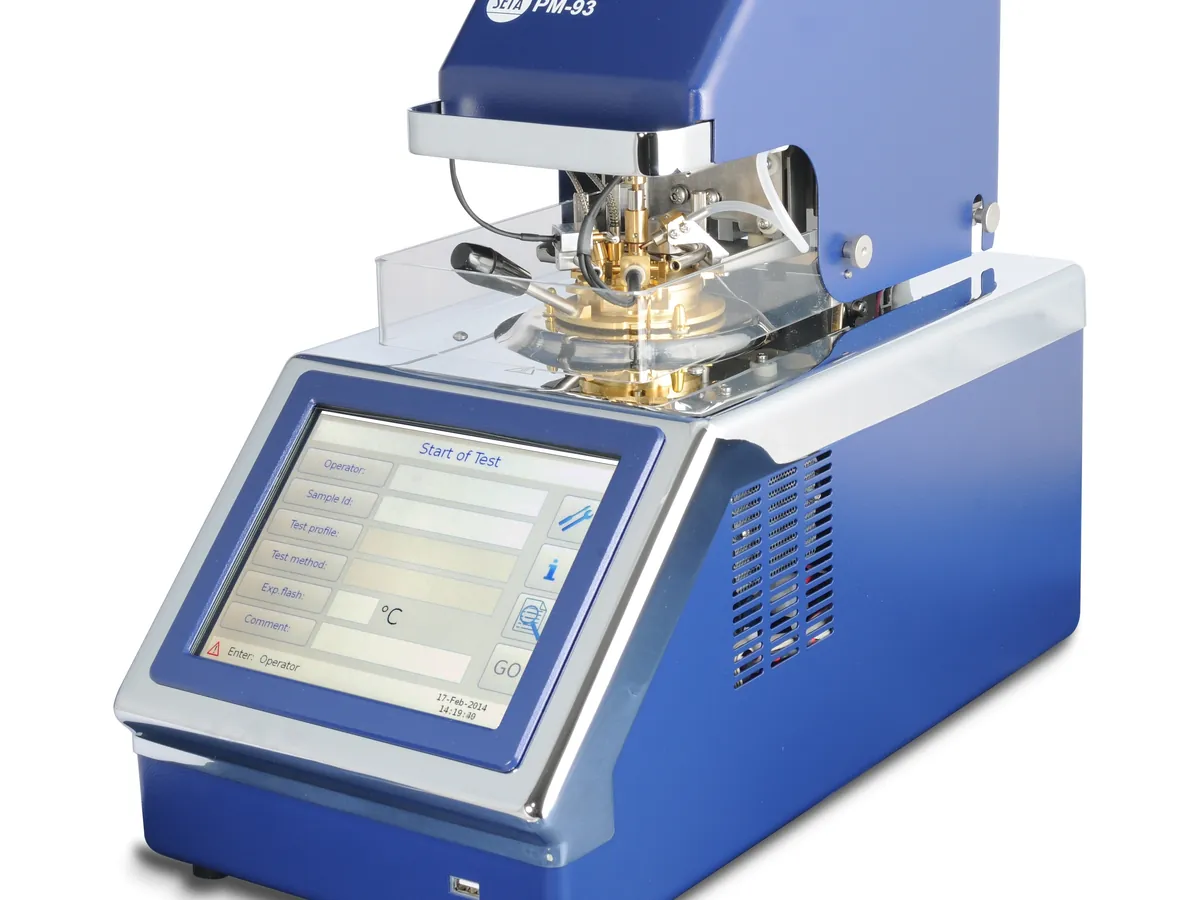
Flash Point Tester (Pensky-Martens Closed Cup)
Heats a fuel or oil in a closed brass cup while stirring and dips a small flame or electric igniter into the vapour space at set intervals. The lowest temperature at which the vapour flashes is the flash point, a key safety and quality property.
- Petroleum refining
- Fuel terminals and depots
- Lubricant blending
- Marine fuel testing
- Biodiesel production
- Power utilities (transformer oil)
- Independent testing laboratories
PREVENTIVE MAINTENANCE
Maintenance checklist
Each test
- Clean and dry cup, lid, shutter and stirrer
- Check the flame size against the gauge bead, or check igniter glow
- Wipe spilled sample from the heater
Weekly
- Check the shutter moves freely and closes fully
- Inspect gas tubing and connections
- Check the flash detector is clean and correctly positioned
Monthly / per SOP
- Run a certified reference material or check standard and plot it on a control chart
- Compare the barometer with a reference barometer
Annual
- Calibrate the temperature sensor against a traceable reference
- Check cup dimensions and lid fit for wear
- Service and test the fire detection and suppression system
- Preventive maintenance by the supplier
SAFETY
Safety precautions
Before you work on the PMCC tester
- Fuels and their vapours are flammable. Keep sample containers closed, small and away from the heater; store bulk samples in a flammables cabinet.
- Test in a draught-free position but in a well-ventilated room; switch extraction back on after the test to clear vapours.
- Keep a CO₂ or dry powder extinguisher and a fire blanket at the tester. Never use water on an oil fire.
- Make sure the automatic fire detection and suppression system works and is never bypassed.
- Check gas connections for leaks with soapy water, never with a flame; shut the gas valve when not in use.
- The cup, heater and sample are hot. Use heat-resistant gloves and let the cup cool before handling.
- Never leave a running test unattended. If a fire persists, cut power and gas and close the lid if it is safe to do so.
- Wear safety glasses, a flame-resistant lab coat and chemical-resistant gloves; read the SDS of each product tested.
In LimsPulse · Calibration Management
Keep every PMCC tester in control: usage logs, calibration and maintenance schedules, and automatic blocking of overdue instruments.