Burette & Volumetric Glassware
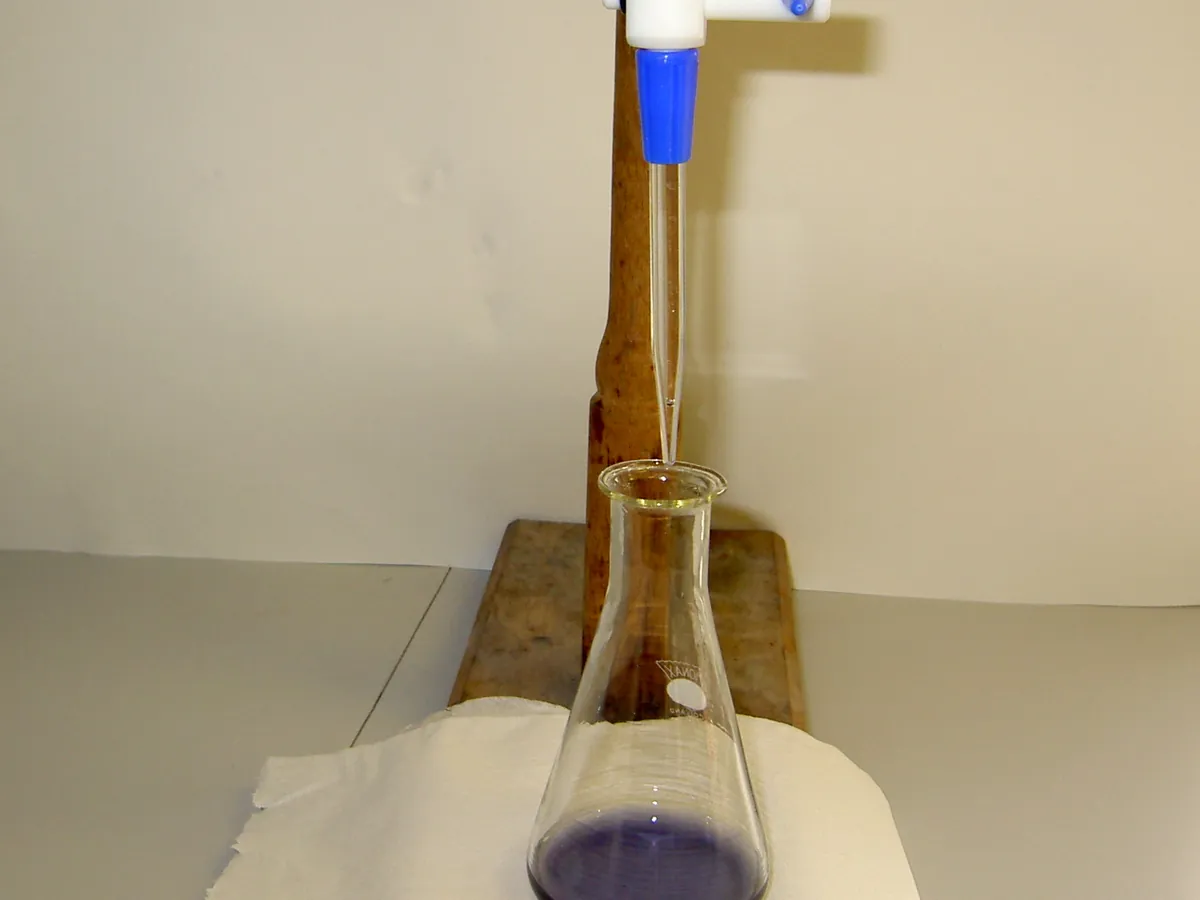
Glass apparatus made to contain or deliver accurately known volumes: burettes, volumetric flasks, bulb pipettes and graduated pipettes. The backbone of titrations, standard preparation and dilutions.
- Pharmaceutical
- Chemicals
- Universities
- Food & beverage
- Environmental
Test your Burette & glassware knowledge
Multiple-choice questions
Pick an answer to see whether you are right and why.
Q1. What does 'TD' or 'Ex' marked on a pipette mean?
basicQ2. How should a clear liquid in a burette be read?
basicQ3. Water delivered from a burette at the 50 mL mark weighs 49.8611 g at 22 °C (Z = 1.0033 mL/g). What is the error?
intermediateQ4. What is the usual reference temperature for volumetric glassware?
basicQ5. Drops of water stay on the inside of a burette after draining. What does this mean?
intermediate
Viva questions
Think of your answer first, then open it to compare.
1. What is the difference between Class A and Class B glassware?
Class A has the tightest tolerances and is used for quantitative analysis such as titrations and standard preparation. Class B tolerances are roughly twice as wide and suit less critical work.
2. Why should volumetric flasks not be dried in a hot oven?
Repeated heating can permanently change the volume of glass, so the flask may no longer contain its marked volume. Volumetric glassware is dried at room temperature or at a low temperature.
Keep every Burette & glassware in control: usage logs, calibration and maintenance schedules, and automatic blocking of overdue instruments.