Volumetric & glassware
Burette & Volumetric Glassware
Glass apparatus made to contain or deliver accurately known volumes: burettes, volumetric flasks, bulb pipettes and graduated pipettes. The backbone of titrations, standard preparation and dilutions.
- Pharmaceutical
- Chemicals
- Universities
- Food & beverage
- Environmental
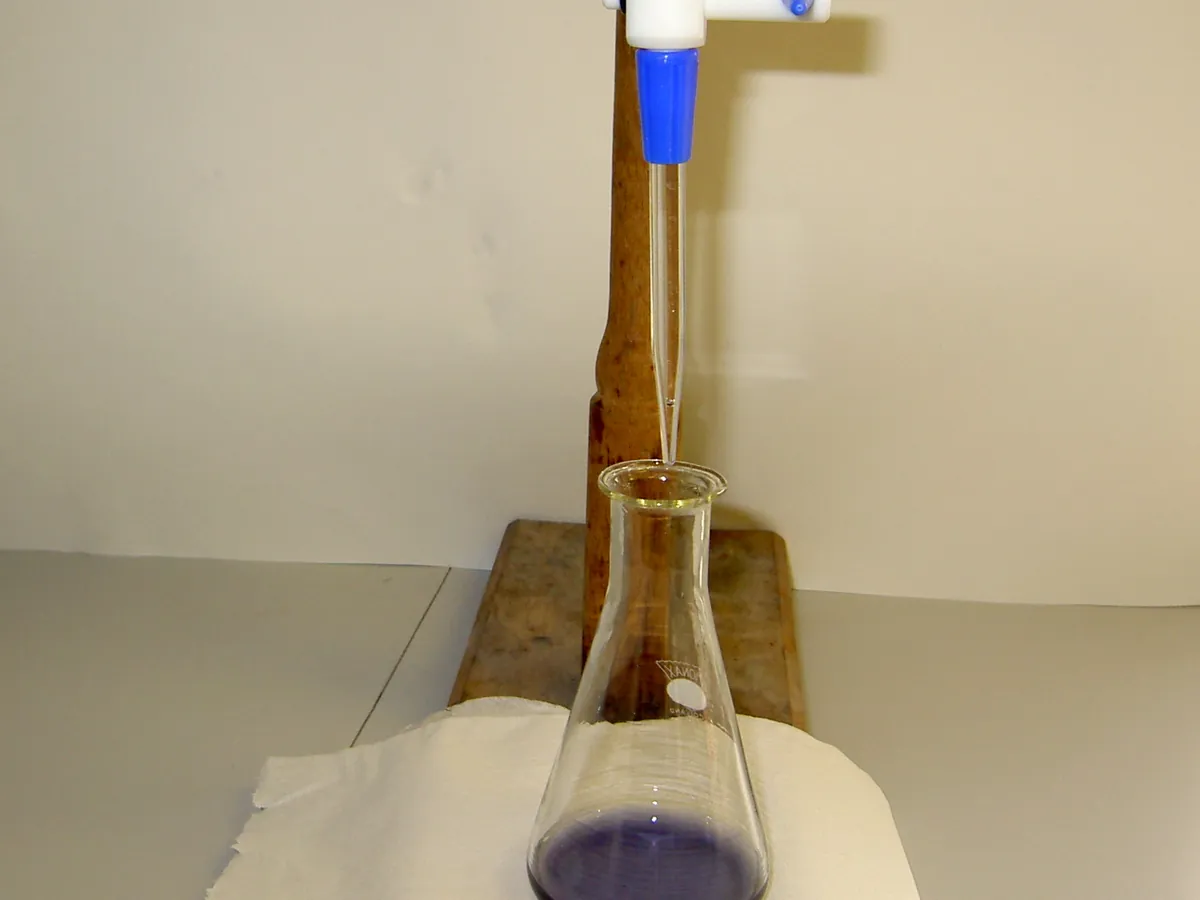
Follow your site SOP
This is a typical operating sequence for learning. Your instrument model and approved SOP take precedence.
STAGE 1
Preparation
- 1Select Class A glassware for quantitative work and check it is clean, undamaged and within its check date (if your site requires one).
- 2Rinse the burette two or three times with small portions of the titrant.
- 3Fill above zero, open the stopcock to clear air from the tip, then set the zero.
- Do not use chipped or cracked glassware; chips at the tip change the delivered volume.
STAGE 2
Titration
- 1Add titrant steadily while swirling; slow to drop-by-drop near the endpoint.
- 2Rinse the sides of the flask with water near the endpoint so all titrant reacts.
- 3Read the final volume at eye level to the nearest 0.01 mL (estimate between graduations) for a 50 mL burette with 0.1 mL graduations.
STAGE 3
Volumetric flasks and pipettes
- 1Make flasks up to the mark at room temperature, after dissolving and cooling any warm solutions.
- 2Mix flasks by inverting many times after making up to volume.
- 3With bulb pipettes, let the liquid drain freely with the tip against the vessel wall, wait the stated time and do not blow out unless marked to do so.
- Never pipette by mouth; use a pipette filler.
STAGE 4
After use
- 1Empty and rinse with purified water; clean with a suitable detergent when needed.
- 2Dry at room temperature or at a low temperature; avoid high oven temperatures for volumetric glassware.
In LimsPulse · Calibration Management
Keep every Burette & glassware in control: usage logs, calibration and maintenance schedules, and automatic blocking of overdue instruments.