Limit Tests for Chloride & Sulphate
A semi-quantitative check that a raw material does not contain more chloride or sulphate than a set limit. The sample solution is treated with silver nitrate (chloride) or barium chloride (sulphate), and the opalescence formed is compared with that of a standard containing a known amount of the ion.
- Wet chemistry: comparative opalescence (nephelometric comparison by eye)
- Analytical balance
- Burette & glassware
Reference: General description based on the approach of USP <221>, Ph. Eur. 2.4.4 (chlorides), Ph. Eur. 2.4.13 (sulphates) and the IP appendices. Sample mass, volumes, reagents and limits are given in the individual monograph.
Why this method works
Chloride ions react with silver nitrate in dilute nitric acid to form a fine white precipitate of silver chloride, seen as opalescence. Sulphate ions react with barium chloride in dilute hydrochloric acid to form barium sulphate, also seen as opalescence or turbidity. The acid stops other ions (such as carbonate or phosphate) from precipitating. The test and standard are prepared in the same way and compared side by side: if the test is not more opalescent than the standard, the sample is within the limit.
Instruments used
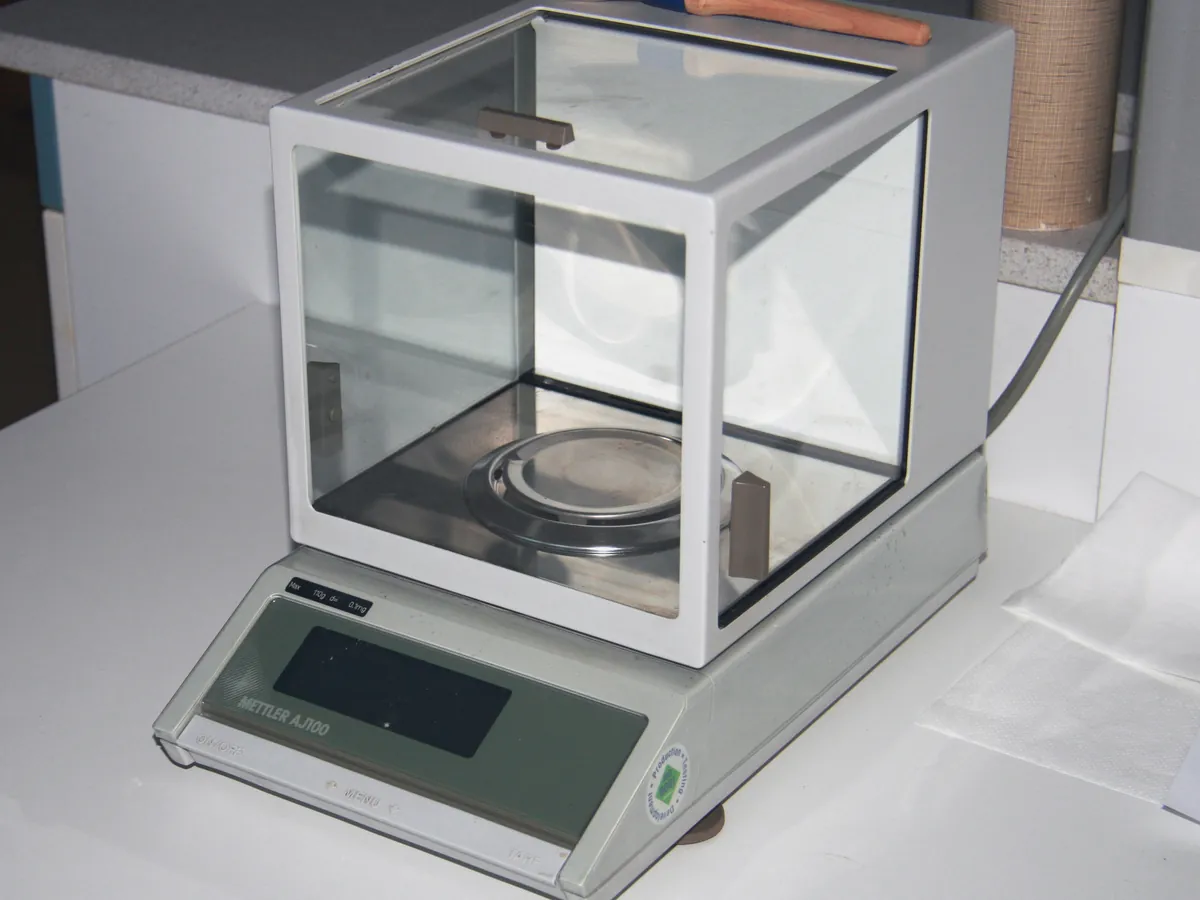
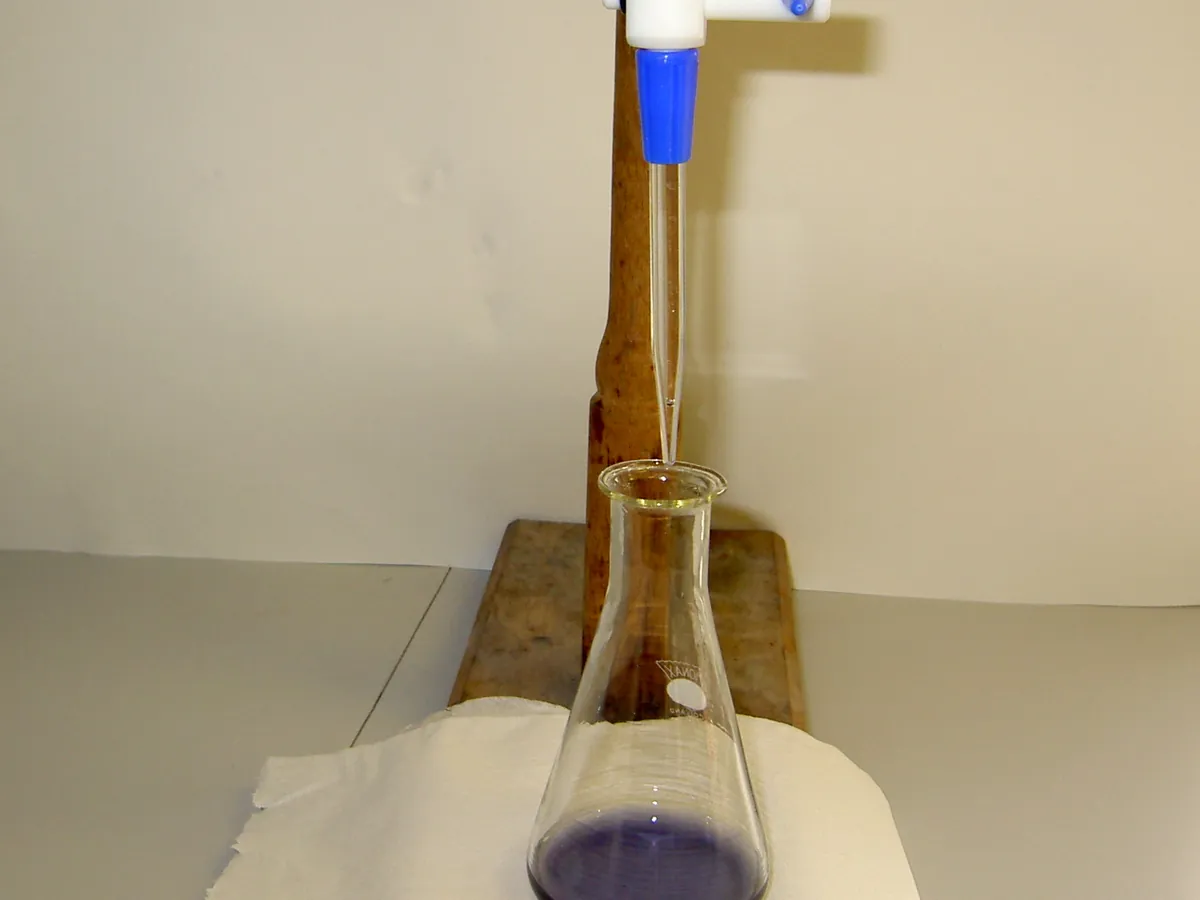
Reagents & standards
| Reagent | Grade / specification |
|---|---|
| Silver nitrate solution | For example about 0.1 M (as specified in the monograph or chapter) |
| Dilute nitric acid | As specified (acidifies the chloride test) |
| Barium chloride solution | For example about 25% w/v or as specified (sulphate test) |
| Dilute hydrochloric acid | As specified (acidifies the sulphate test) |
| Chloride standard | Sodium chloride solution of known Cl⁻ content, for example 5 ppm (5 µg/mL) Cl⁻ |
| Sulphate standard | Potassium sulphate solution of known SO₄²⁻ content, for example 10 ppm (10 µg/mL) SO₄²⁻ |
| Water | Purified water free of chloride and sulphate |
Preparing the sample
- 01
Weigh
Weigh the sample mass given in the monograph.
- 02
Dissolve
Dissolve in water in a matched Nessler cylinder or test tube.
- 03
Standard
Measure the standard volume into a matched cylinder.
- 04
Acidify & add reagent
Add acid, then AgNO₃ or BaCl₂ to both, at the same time.
- 05
Stand
Let stand for the stated time (protect chloride tests from light).
- 06
Compare
View against a dark background, looking down or across the tubes.
Procedure
- 1Weigh the sample mass stated in the monograph and dissolve it in water in a Nessler cylinder or matched test tube.
- 2In a second, identical cylinder, place the stated volume of chloride (or sulphate) standard solution and dilute with water to the same volume as the test.
- 3Chloride: add the stated volume of dilute nitric acid and then silver nitrate solution to both cylinders, mix and let stand for about 5 minutes protected from light.
- 4Sulphate: add the stated volume of dilute hydrochloric acid and then barium chloride solution to both cylinders, mix and let stand for the stated time (often 5–10 minutes or more).
- 5Compare the opalescence of the two tubes side by side against a black background, viewing in the same way for both.
- 6If the sample solution is coloured or not clear, follow the monograph's instructions (for example filtration or a modified standard).
Standard preparation
- 1Chloride standard: dilute a sodium chloride stock to the stated concentration, for example 5 µg/mL Cl⁻. Use the volume given in the monograph so the standard contains the limit amount of chloride.
- 2Sulphate standard: dilute a potassium sulphate stock to the stated concentration, for example 10 µg/mL SO₄²⁻. Some procedures 'seed' the solution so that barium sulphate forms reproducibly.
Notes for analysts
- These are 'pass / fail' tests, not assays: the result is 'complies' or 'does not comply'.
- Prepare test and standard at the same time and in identical tubes; small differences in timing or light change the opalescence.
- Silver chloride darkens in light, so protect chloride tests from direct light.
- Where more accurate results are needed, ion chromatography can measure chloride and sulphate quantitatively.
Method parameters (typical)
| Vessels | Matched Nessler cylinders or test tubes of the same glass, diameter and volume |
|---|---|
| Final volume | Equal in test and standard (as specified, for example 50 mL in Nessler cylinders) |
| Standing time | As specified; chloride about 5 minutes protected from light |
| Viewing | Against a dark background, under the same lighting for both tubes |
System suitability & sequence
Typical sequence
- 1Standard tube
- 2Sample tube (prepared at the same time)
- 3Visual comparison
Calculation with a worked example
Where
- Mass of ion
- Volume of standard (mL) × concentration of standard (µg/mL)
- Mass of sample
- Sample weight taken for the test (g)
Given
- Chloride standard
- 10 mL of 5 µg/mL Cl⁻ = 50 µg Cl⁻
- Sample for chloride
- 0.25 g
- Sulphate standard
- 15 mL of 10 µg/mL SO₄²⁻ = 150 µg SO₄²⁻
- Sample for sulphate
- 1.0 g
Working
- Chloride: 10 mL × 5 µg/mL = 50 µg Cl⁻; 50 µg ÷ 0.25 g = 200 µg/g = 200 ppm
- Sulphate: 15 mL × 10 µg/mL = 150 µg SO₄²⁻; 150 µg ÷ 1.0 g = 150 µg/g = 150 ppm
- So a sample tube no more opalescent than its standard contains not more than 200 ppm chloride or 150 ppm sulphate
Illustrative limits: chloride not more than 200 ppm; sulphate not more than 150 ppm. Report 'complies' or 'does not comply' with the monograph limit.
What result passes
- Any opalescence in the sample tube is not more intense than that in the standard tube.
- The actual limit (ppm) is set by the monograph through the sample mass and standard volume.
Validation parameters (ICH Q2(R2))
| Parameter | Typical requirement |
|---|---|
| Approach | Compendial limit test; verify suitability for the material (no interference from colour, insoluble matter or other ions) |
| Specificity | Acid conditions limit interference from carbonate, phosphate and similar anions |
| Detection | The standard at the limit must give visible opalescence; a spiked sample can confirm this |
Run this method in LimsPulse: specifications and STPs under version control, results calculated and checked against limits, and a signed Certificate of Analysis.