Burette & glassware · Calibration procedure
Gravimetric volume check
Delivers water from the burette (or other glassware) at several graduations, weighs it, converts to volume with a Z factor and compares the error with the class tolerance.
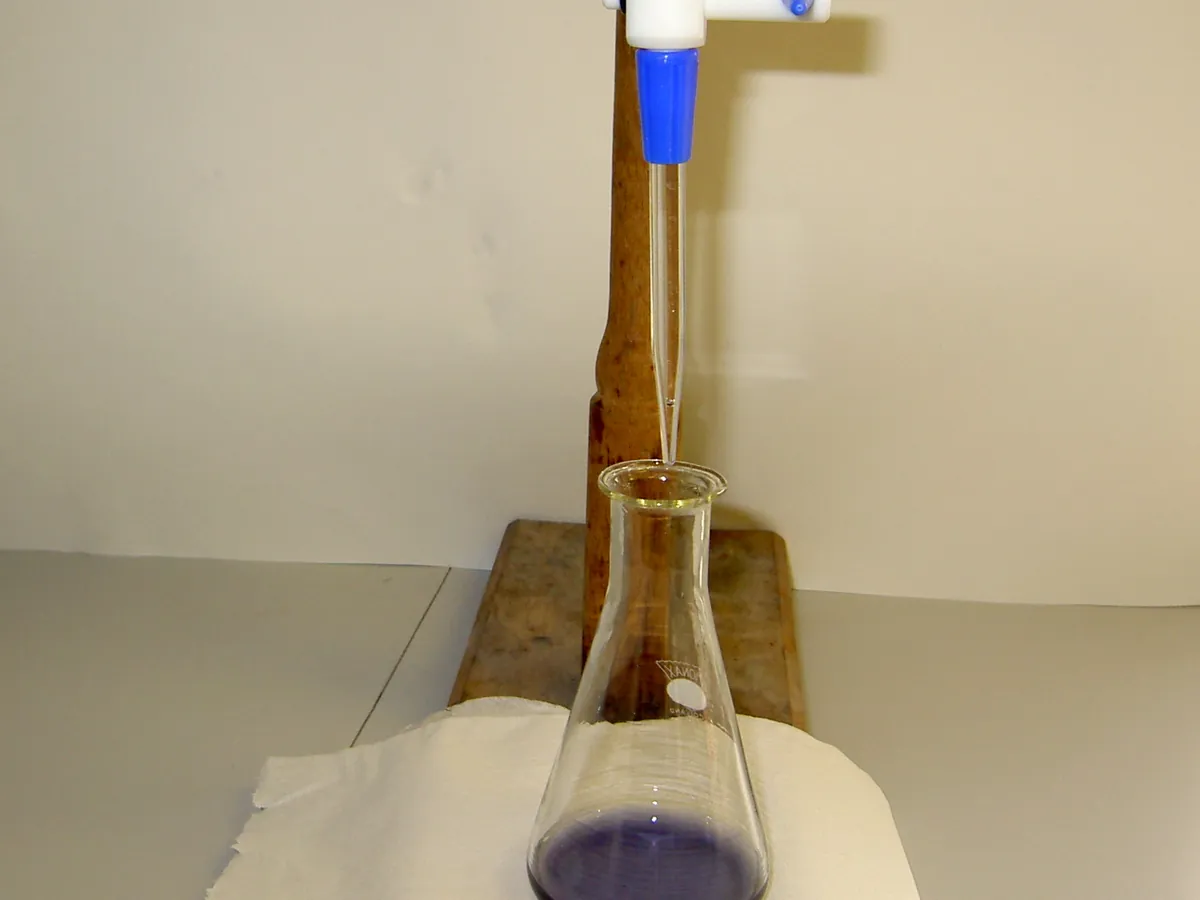
PURPOSE
Why this is checked
A burette's graduations should deliver the marked volume within the tolerance for its class. Weighing delivered water is the reference method (ISO 4787) and confirms that the burette is fit for quantitative titrations.
Frequency
On receipt (if certificates are not individual) and periodically as defined in your SOP, for example annually for burettes and pipettes in critical use.
Learn how the Burette & glassware worksYOU WILL NEED
Standards & tools
- Calibrated analytical balance (0.1 mg readability for up to 50 mL; 1 mg acceptable for larger volumes, as per SOP)
- Degassed distilled or deionised water
- Calibrated thermometer
- Z factor table (for example ISO 4787 / ISO 8655-6)
BEFORE YOU START
Prerequisites
- Glassware clean so that water drains evenly
- Water and glassware equilibrated to room temperature (ideally near 20 °C)
- Burette clamped vertically and free of air bubbles
PROCEDURE
Step by step
- 1Fill the burette above zero, clear the tip of air and set the meniscus to zero.
- 2Weigh a clean, dry flask with a stopper.
- 3Deliver water to the first test mark (for example 10 mL) at the normal rate, wait the stated waiting time and set the meniscus exactly.
- 4Touch off the last drop on the flask wall and weigh the flask.
- 5Refill and repeat for each test volume (for example 10, 20, 30, 40 and 50 mL) or deliver successive portions, as your SOP requires.
- 6Record water temperature and convert each mass to volume.
RECORD
Example observation table
| Nominal (mL) | Mass (g) | Z (mL/g, 22 °C) | Volume (mL) | Error (mL) |
|---|---|---|---|---|
| 10.00 | 9.9712 | 1.0033 | 10.004 | +0.004 |
| 20.00 | 19.9418 | 1.0033 | 20.008 | +0.008 |
| 30.00 | 29.9135 | 1.0033 | 30.012 | +0.012 |
| 40.00 | 39.8902 | 1.0033 | 40.022 | +0.022 |
| 50.00 | 49.8611 | 1.0033 | 50.026 | +0.026 |
CALCULATION
How to calculate the result
Volume V (mL) = m (g) × Z (mL/g); Error = V − Nominal
- 50 mL Class A burette, water at 22 °C (Z = 1.0033 mL/g)
- At 50 mL: V = 49.8611 × 1.0033 = 50.026 mL
- Error = 50.026 − 50.00 = +0.026 mL
- Class A tolerance for a 50 mL burette is commonly ±0.05 mL → passes
ACCEPTANCE CRITERIA
Pass if
- Error at every test point within the class tolerance, for example ±0.05 mL for a 50 mL Class A burette, ±0.03 mL for 25 mL and ±0.02 mL for 10 mL (see ISO 385 or your SOP).
- For other glassware use the tolerances for its type and class, for example ±0.10 mL for a 100 mL Class A volumetric flask.
IF IT FAILS
What to do
- Repeat after cleaning the glassware and checking technique and temperature.
- Withdraw glassware that still fails and label it 'not for quantitative use', or discard it.
- Assess titrations performed with the item since the last passing check.
In LimsPulse · Calibration Management
LimsPulse schedules this calibration, records the result against limits, and blocks the instrument everywhere if it fails or goes overdue.