Total Plate Count (Aerobic Mesophilic Count) in Food by Pour Plate
Estimates the number of aerobic mesophilic microorganisms in a food by mixing decimal dilutions of the sample with Plate Count Agar, incubating at 30 °C for 72 hours and counting all colonies. It is the most widely used general indicator of hygiene, shelf life and process control.
- Food & beverage
- Pour plate, colony-count technique at 30 °C
- LAF
- Autoclave
- Incubator
- Colony counter
- Analytical balance
- Water bath
- Micropipette
Reference: Typical method based on ISO 4833-1 with general rules from ISO 7218 and sample preparation per ISO 6887. Always follow the current edition and your validated SOP.
Why this method works
A weighed portion of food is homogenised in a diluent to make the initial suspension (usually 1:10), and further decimal dilutions are made. One millilitre of each dilution is mixed with molten Plate Count Agar in a Petri dish. Each viable cell or cluster that can grow aerobically at 30 °C forms one visible colony, counted as a colony-forming unit (cfu). Plates from dilutions that give counts within the countable range are used, and a weighted mean across two successive dilutions gives the count per gram or millilitre of food. The count does not identify organisms; it shows the overall microbial load, which reflects raw material quality, hygiene during processing and storage conditions.
Instruments used
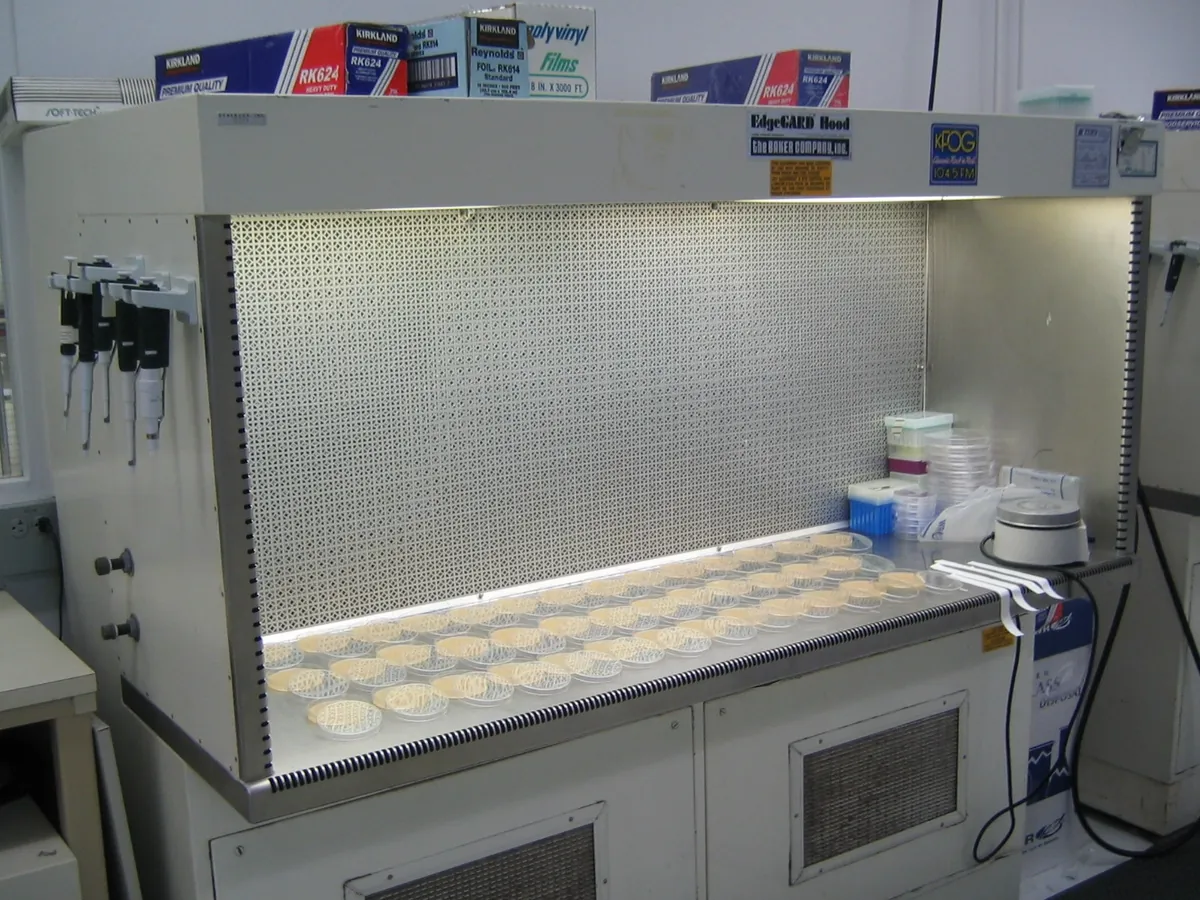
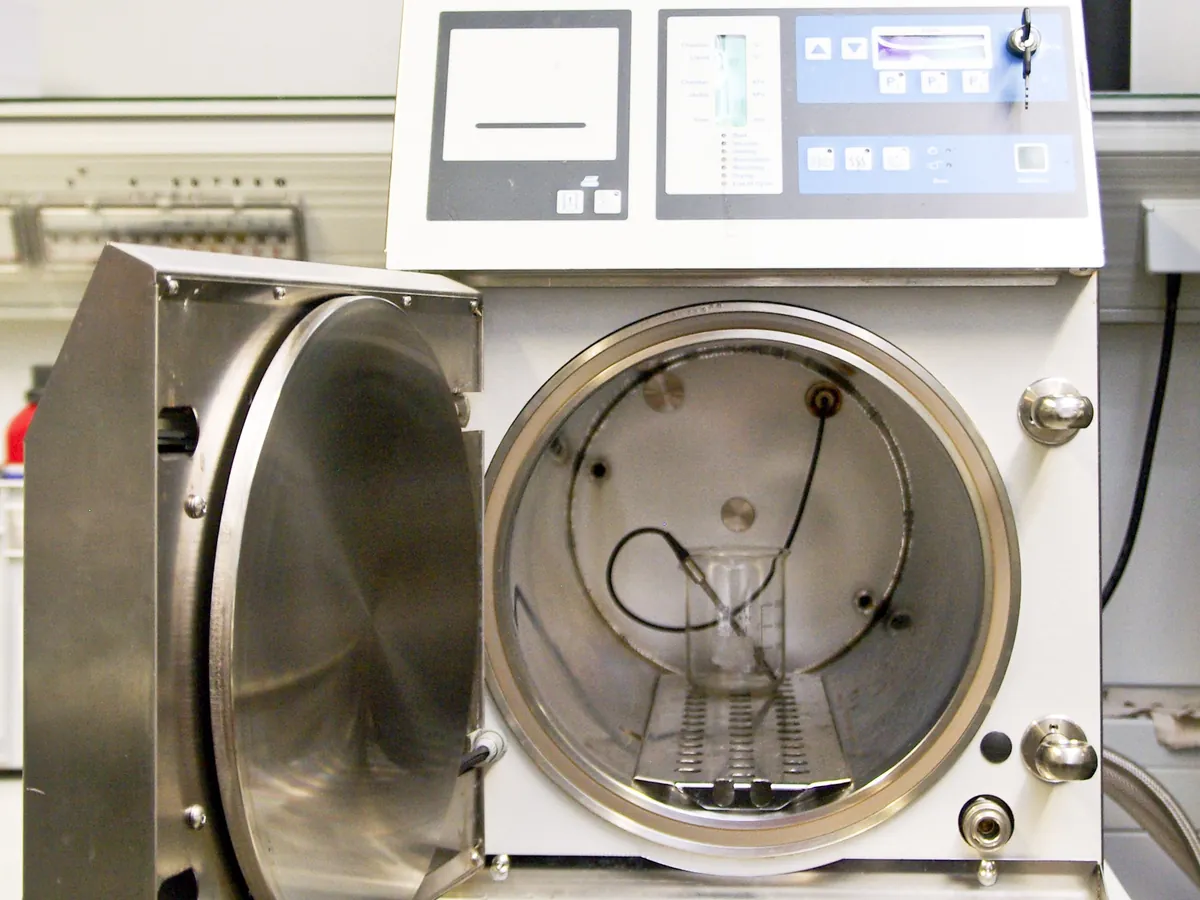
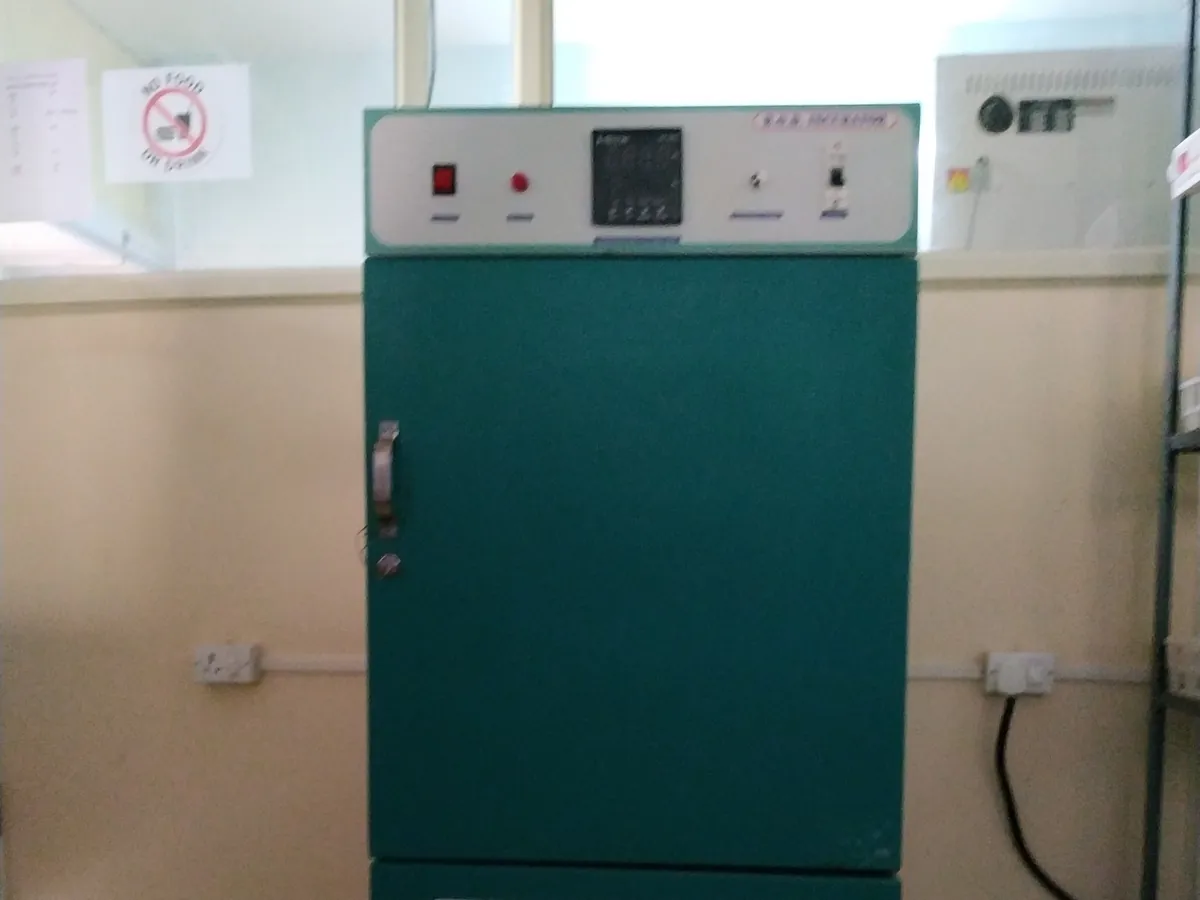
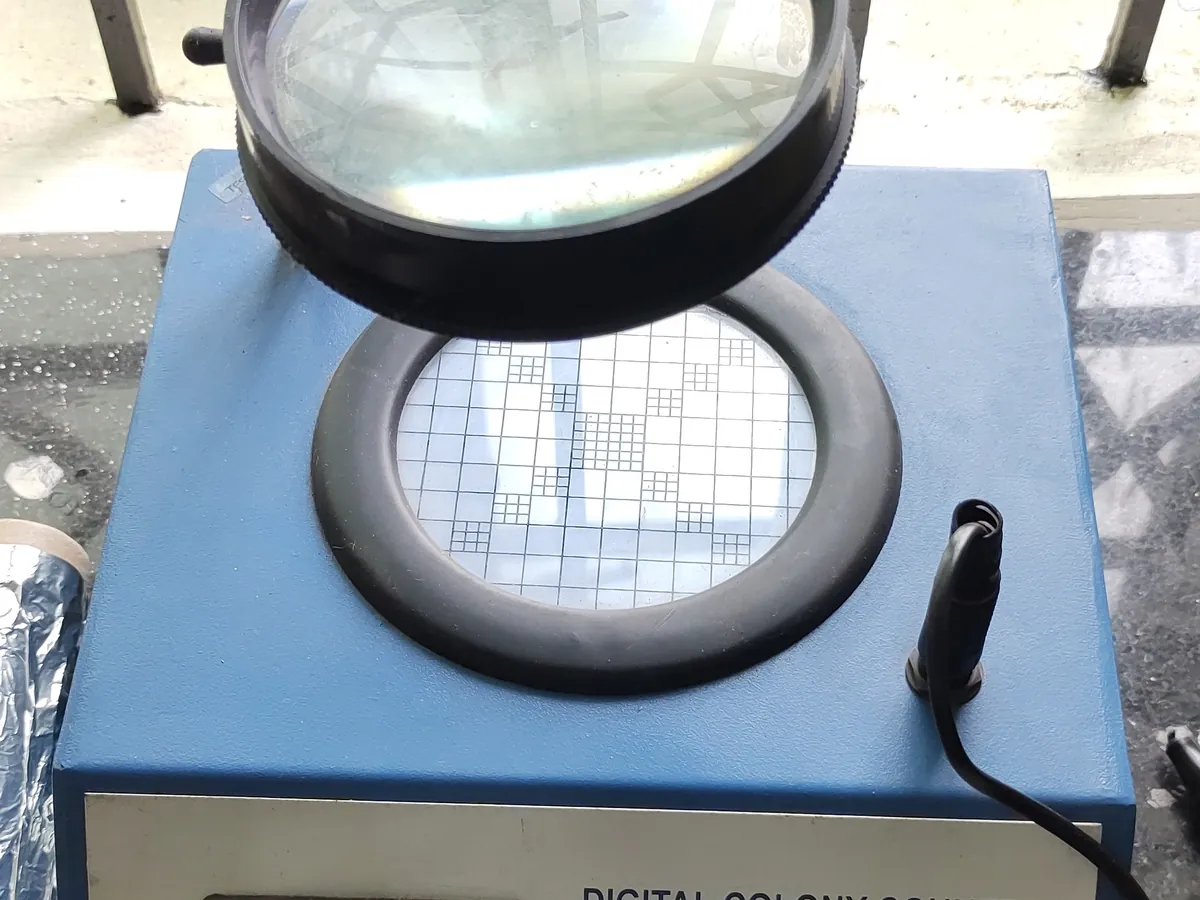

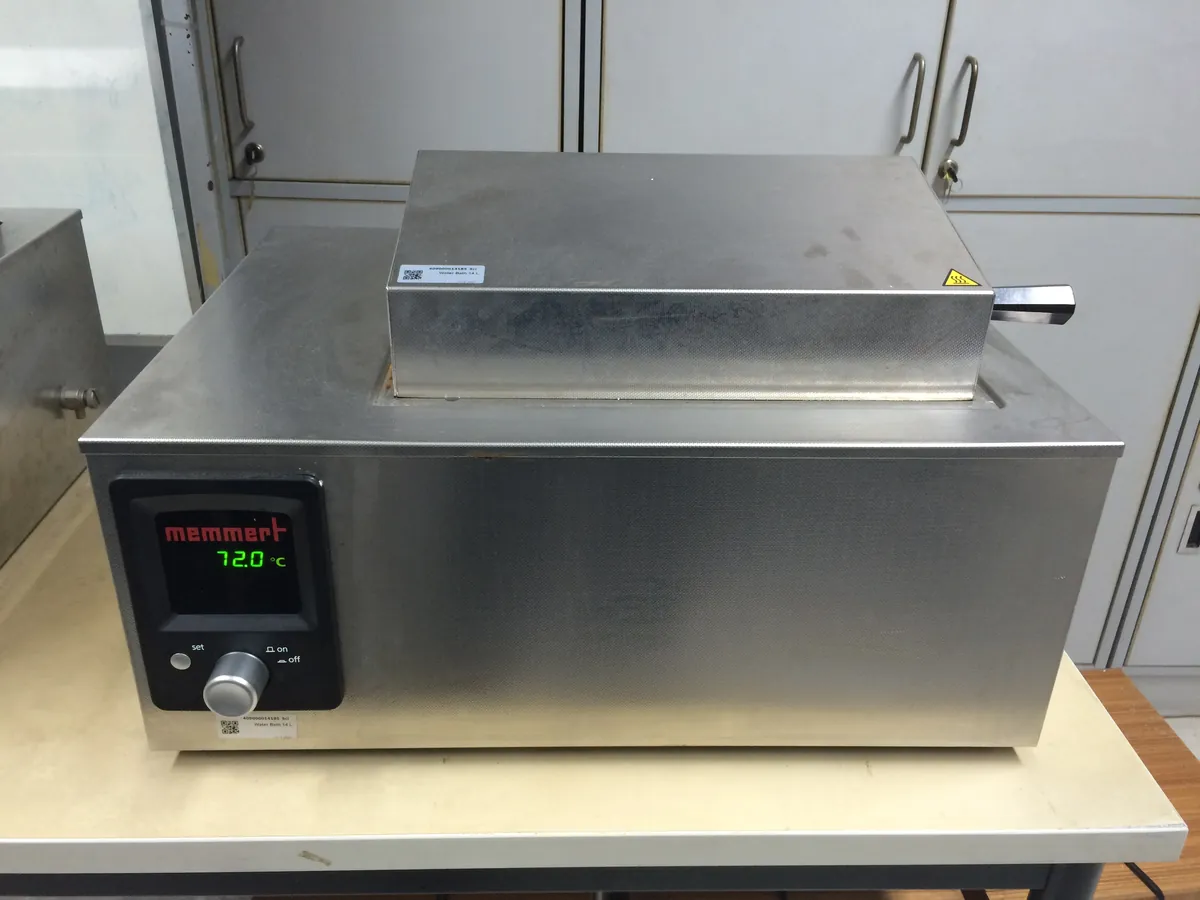
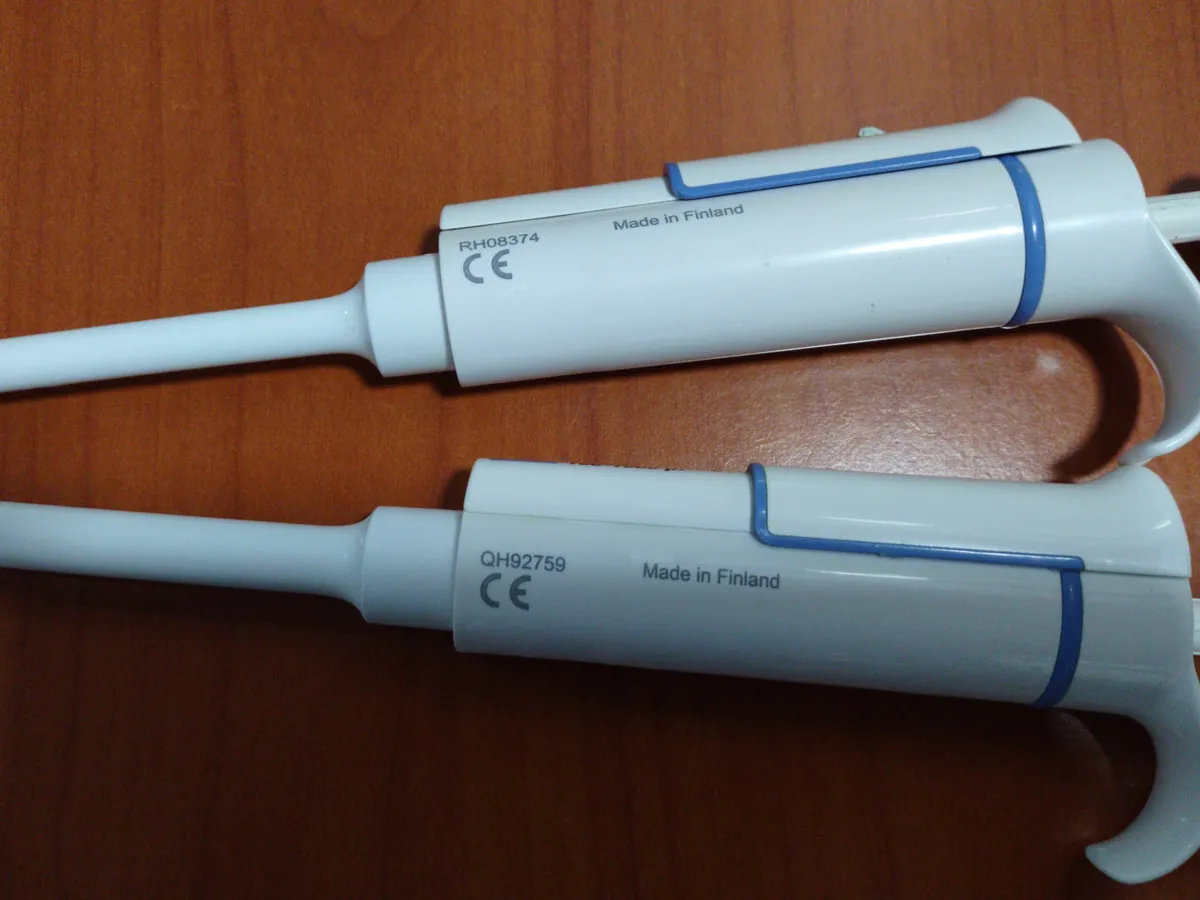
Reagents & standards
| Reagent | Grade / specification |
|---|---|
| Plate Count Agar (PCA) | Tryptone, yeast extract and glucose agar; prepared and sterilised per the manufacturer, held molten at about 44–47 °C before pouring |
| Diluent | Buffered peptone water or peptone salt solution (maximum recovery diluent), as specified in ISO 6887 for the food type |
| Dilution blanks | Pre-dispensed 9 mL tubes and 90 mL (or 225 mL) bottles of diluent, sterilised and volume-checked |
| Optional overlay agar | A thin second layer of PCA if spreading colonies are expected (e.g. from Bacillus or Proteus) |
| Control strains for media performance | Reference strains as listed in ISO 11133 for PCA (e.g. a Bacillus and an E. coli strain), used to check each media batch |
Preparing the sample
- 01
Receive and record
Check sample condition and temperature on receipt, log it and store as specified until testing.
- 02
Weigh test portion
Aseptically weigh 10 g (or 25 g) into a sterile stomacher bag or blender jar.
- 03
Initial suspension
Add nine times the weight of diluent (1:10) and homogenise.
- 04
Decimal dilutions
Transfer 1 mL into 9 mL diluent to make 10^-2, 10^-3 and further as needed.
- 05
Plate
Pipette 1 mL of each chosen dilution into duplicate sterile Petri dishes.
- 06
Pour, set, incubate
Add molten PCA, mix, allow to set, invert and incubate at 30 °C for 72 h.
Procedure
- 1Disinfect the work surface and laminar air flow cabinet. Bring diluents to room temperature.
- 2Mix the sample thoroughly in its container. Aseptically weigh 10 g (or 25 g) of the test portion, taken from several points of the sample, into a sterile stomacher bag.
- 3Add 90 mL (or 225 mL) of diluent to give the 1:10 initial suspension (10^-1). Homogenise in a peristaltic blender for 1–3 minutes, or use a rotary blender for tough foods.
- 4Allow large particles to settle for a few minutes (no more than about 15 minutes at room temperature).
- 5Using a fresh sterile pipette tip each time, transfer 1 mL of the 10^-1 suspension into 9 mL of diluent and mix well (10^-2). Repeat to make 10^-3, 10^-4 and so on, choosing dilutions so that at least one will give 10–300 colonies per plate.
- 6Pipette 1 mL of each chosen dilution into the centre of two labelled sterile 90 mm Petri dishes (or one per dilution if your SOP follows the current ISO 7218 single-plate approach with at least two successive dilutions).
- 7Within 15 minutes of preparing the dilutions, pour about 12–15 mL of molten PCA cooled to 44–47 °C into each dish.
- 8Mix the inoculum and agar immediately by gentle swirling (for example, clockwise, anticlockwise, and back and forth) and let the plates set on a cool, level surface.
- 9If spreaders are expected, add a thin overlay of about 4 mL PCA once the first layer has set.
- 10Invert the plates and incubate at 30 ± 1 °C for 72 ± 3 hours. Avoid stacking more than about six plates high so heat reaches all of them evenly.
- 11After incubation, count all colonies on plates with not more than 300 colonies using a colony counter. Count pinpoint colonies too; record spreading colonies as directed in your SOP.
Standard preparation
- 1Media performance: test each new batch of PCA for productivity and sterility using reference strains as described in ISO 11133, before release for use.
- 2Pipette and dilution checks: verify micropipette calibration and diluent blank volumes (9.0 ± 0.2 mL is a common tolerance) on a set schedule.
- 3Positive control (optional per SOP): include a reference material or a known-count culture with each run to check that the whole procedure recovers the expected count.
Notes for analysts
- ISO 4833-1 covers the pour plate technique at 30 °C; ISO 4833-2 is the surface-plating version. Some regulations and older methods use 35 °C or 37 °C for 48 h; always use the conditions stated in your specification.
- The 0.1 factor in the formula gives plates at the next higher dilution one-tenth the weight, because they contain one-tenth as much sample.
- Recent editions of ISO 7218 allow one plate per dilution provided at least two successive dilutions are plated; the same formula is then used with n1 = n2 = 1.
- Spreading colonies can hide other colonies; if spreaders cover more than about a quarter of a plate, that plate is usually not counted.
- The worked example values are illustrative.
Method parameters (typical)
| Test portion and initial dilution | 10 g in 90 mL (or 25 g in 225 mL) diluent, 1:10 |
|---|---|
| Medium | Plate Count Agar (PCA) |
| Inoculum | 1 mL per Petri dish (pour plate) |
| Agar temperature at pouring | 44–47 °C |
| Time from dilution to pouring | Not more than 15 minutes |
| Incubation | 30 ± 1 °C, 72 ± 3 h, aerobic, plates inverted |
| Countable range | Plates with not more than 300 colonies; at least one plate with 10 or more colonies for the weighted mean |
| Reporting | cfu/g or cfu/mL, two significant figures, as a.b × 10^x |
System suitability & sequence
| Parameter | Limit |
|---|---|
| Medium sterility control | Uninoculated PCA plate incubated with the run shows no growth |
| Diluent sterility control | 1 mL of diluent pour-plated shows no growth |
| Air / environment control | Settle plate exposed in the LAF during plating within the laboratory's limit |
| Duplicate agreement | Duplicate plates at one dilution agree within the laboratory's precision criterion (e.g. checked by analyst or by control charts) |
| Dilution consistency | Counts fall roughly tenfold between successive dilutions; a large deviation points to a dilution or pipetting error |
Typical sequence
- 1Medium sterility control plate
- 2Diluent sterility control plate
- 3Sample dilution 10^-1 (duplicate plates, if expected counts are low)
- 4Sample dilution 10^-2 (duplicate plates)
- 5Sample dilution 10^-3 (duplicate plates)
- 6Further dilutions as needed for heavily contaminated foods
- 7Optional positive control or reference material
- 8LAF settle plate exposed during plating
Calculation with a worked example
Where
- N
- Count of aerobic mesophilic microorganisms, cfu per g or mL
- ΣC
- Sum of colonies on all plates retained from two successive dilutions (at least one plate with 10 or more colonies)
- V
- Volume of inoculum per plate, in mL (1 mL for pour plate)
- n1
- Number of plates retained at the first (lower) dilution
- n2
- Number of plates retained at the second (next higher) dilution
- d
- Dilution of the first retained dilution (e.g. 10^-2); for a liquid tested undiluted d = 1
Given
- Food
- Ready-to-eat salad
- Volume plated
- 1 mL per plate
- 10^-2 plates
- 168 and 215 colonies
- 10^-3 plates
- 14 and 25 colonies
- 10^-4 plates
- 2 and 1 colonies (not needed; the two successive dilutions with countable plates are 10^-2 and 10^-3)
Working
- 1Retain the two successive dilutions with plates in the countable range (≤ 300 colonies): 10^-2 and 10^-3.
- 2
ΣC = 168 + 215 + 14 + 25 = 422 colonies
- 3n1 = 2 plates at 10^-2; n2 = 2 plates at 10^-3; d = 10^-2 = 0.01; V = 1 mL
- 4
Denominator = 1 × (2 + 0.1 × 2) × 0.01 = 1 × 2.2 × 0.01 = 0.022
- 5N = 422 ÷ 0.022 = 19,181.8 cfu/g
- 6
Round to two significant figures: 19,000 cfu/g
Aerobic mesophilic count = 1.9 × 10^4 cfu/g (weighted mean of 10^-2 and 10^-3 dilutions).
What result passes
- Compare the result with the product specification or the applicable microbiological criteria (for example FSSAI microbiological standards, EU Regulation (EC) No 2073/2005 process hygiene criteria, or customer specifications). Limits are product-specific; there is no single universal TPC limit.
- Where criteria use sampling plans (n, c, m, M), assess all n sample units together: results ≤ m are satisfactory, results between m and M are acceptable only up to c units, and any result > M is unsatisfactory.
- If no colonies grow on the 10^-1 plates, report the count as less than 10 cfu/g (less than 1 ÷ d, with d = 10^-1).
- If all plates exceed 300 colonies, report an estimated count from the highest dilution or repeat with further dilutions, as your SOP directs.
Validation parameters (ICH Q2(R2))
| Parameter | Typical requirement |
|---|---|
| Method status | ISO 4833-1 is a reference method; laboratories verify it in-house rather than fully validate it |
| Repeatability and reproducibility | Assessed by duplicate testing and participation in proficiency testing schemes |
| Measurement uncertainty | Estimated from replicate data, often as a standard deviation of log10 counts (see ISO 19036) |
| Alternative (rapid) methods | Must be validated against the reference method, e.g. per ISO 16140 series |
Run this method in LimsPulse: specifications and STPs under version control, results calculated and checked against limits, and a signed Certificate of Analysis.