Enumeration of Coliforms and E. coli in Food (Colony-Count Technique)
Counts coliforms and E. coli in a food as hygiene indicators. Decimal dilutions are pour-plated in Violet Red Bile Lactose agar for coliforms and in Tryptone Bile X-glucuronide agar for E. coli; characteristic colonies are counted after incubation and the result is reported in cfu/g.
- Food & beverage
- Pour plate on selective media: VRBL (coliforms, 30 or 37 °C) and TBX (E. coli, 44 °C)
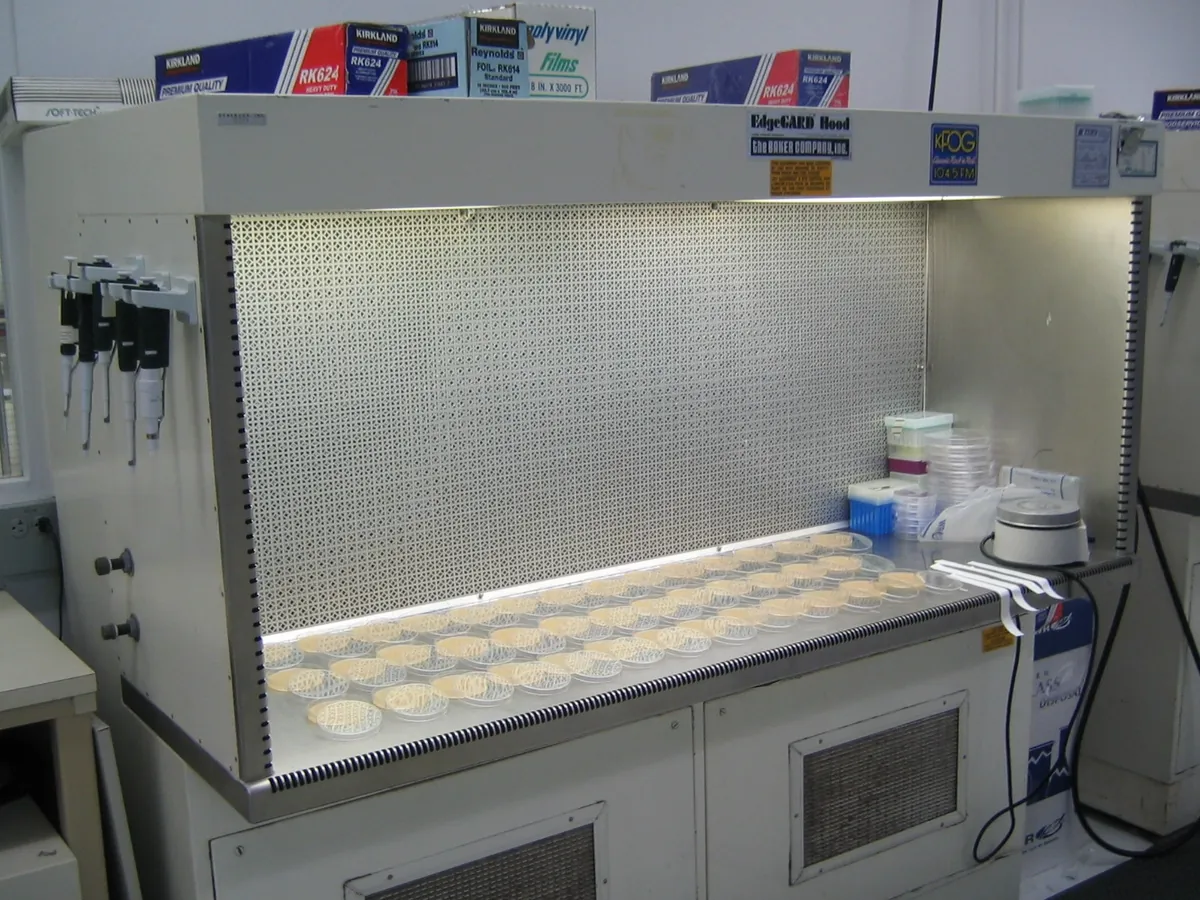
- LAF
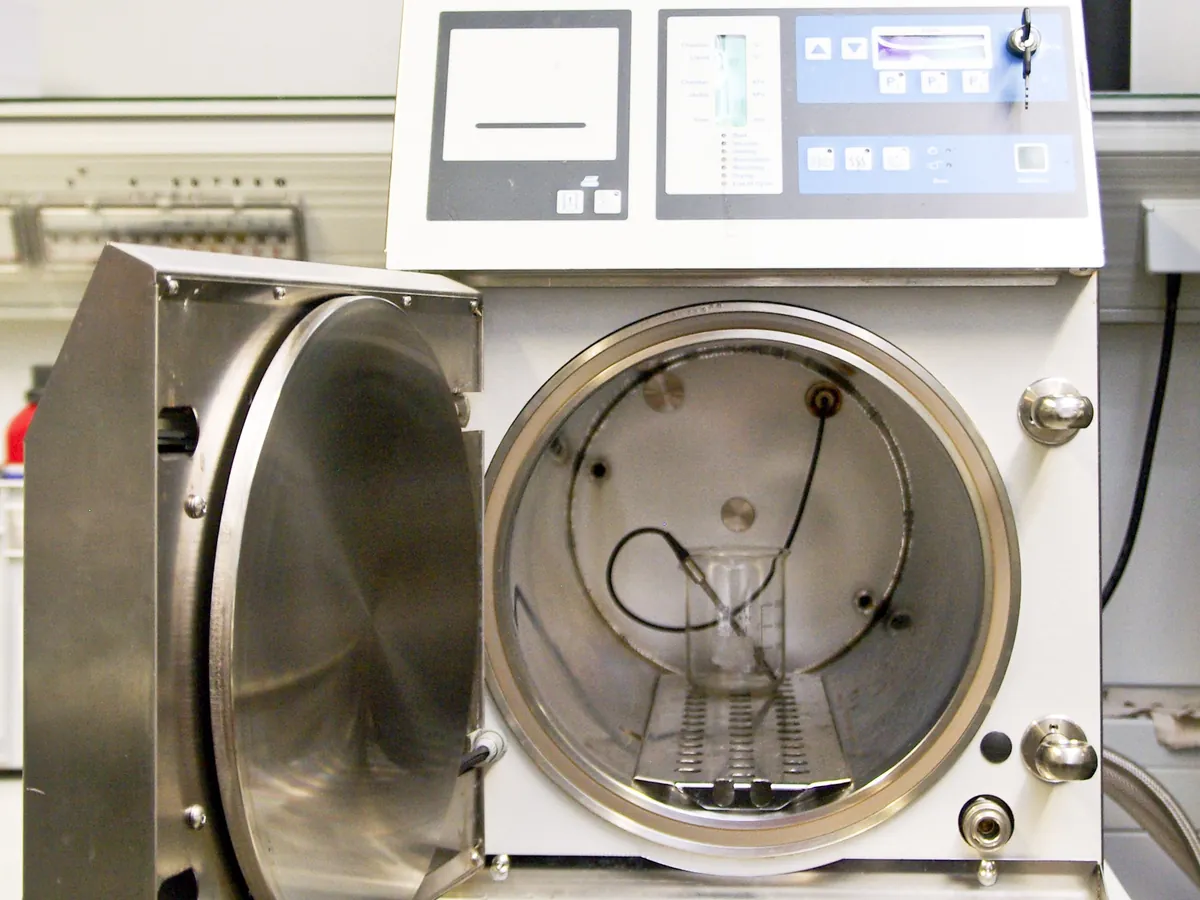
- Autoclave
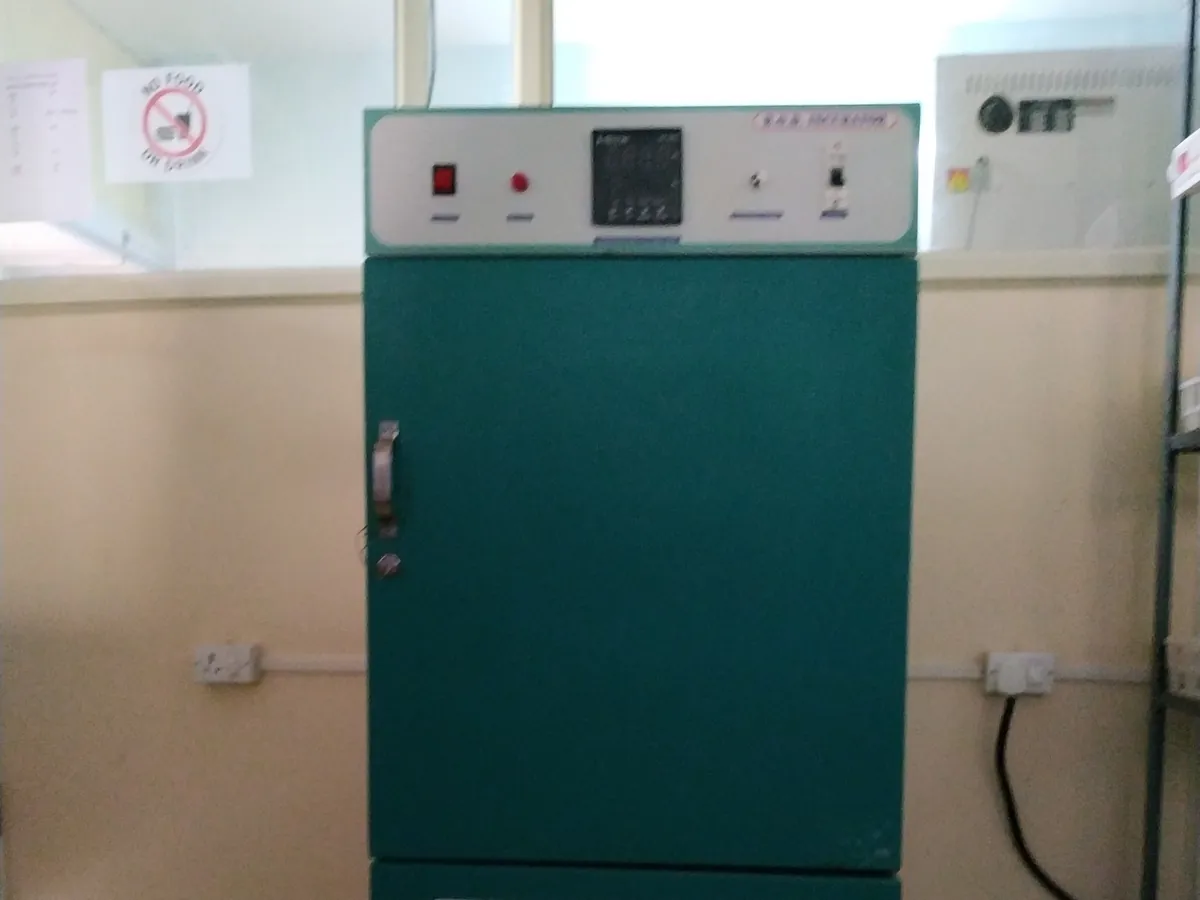
- Incubator
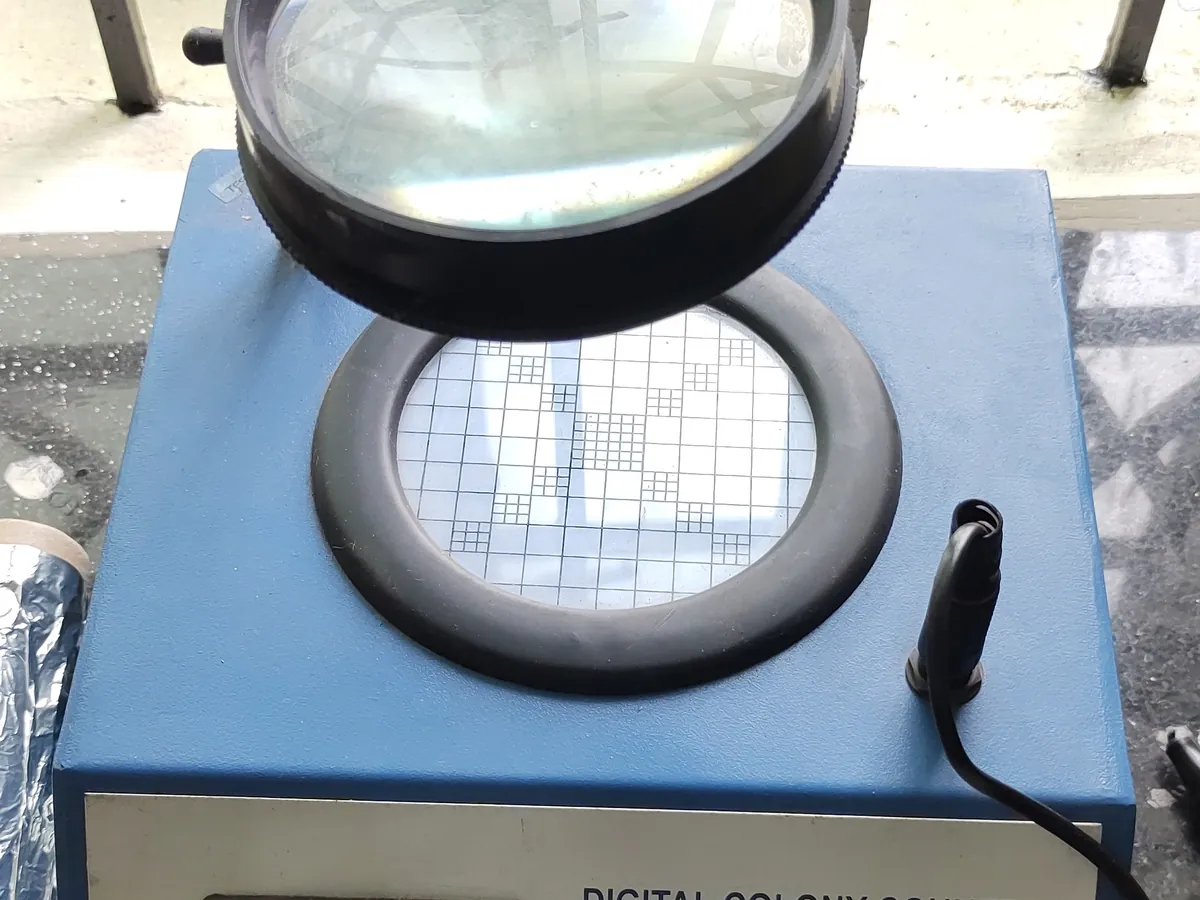
- Colony counter
- Analytical balance
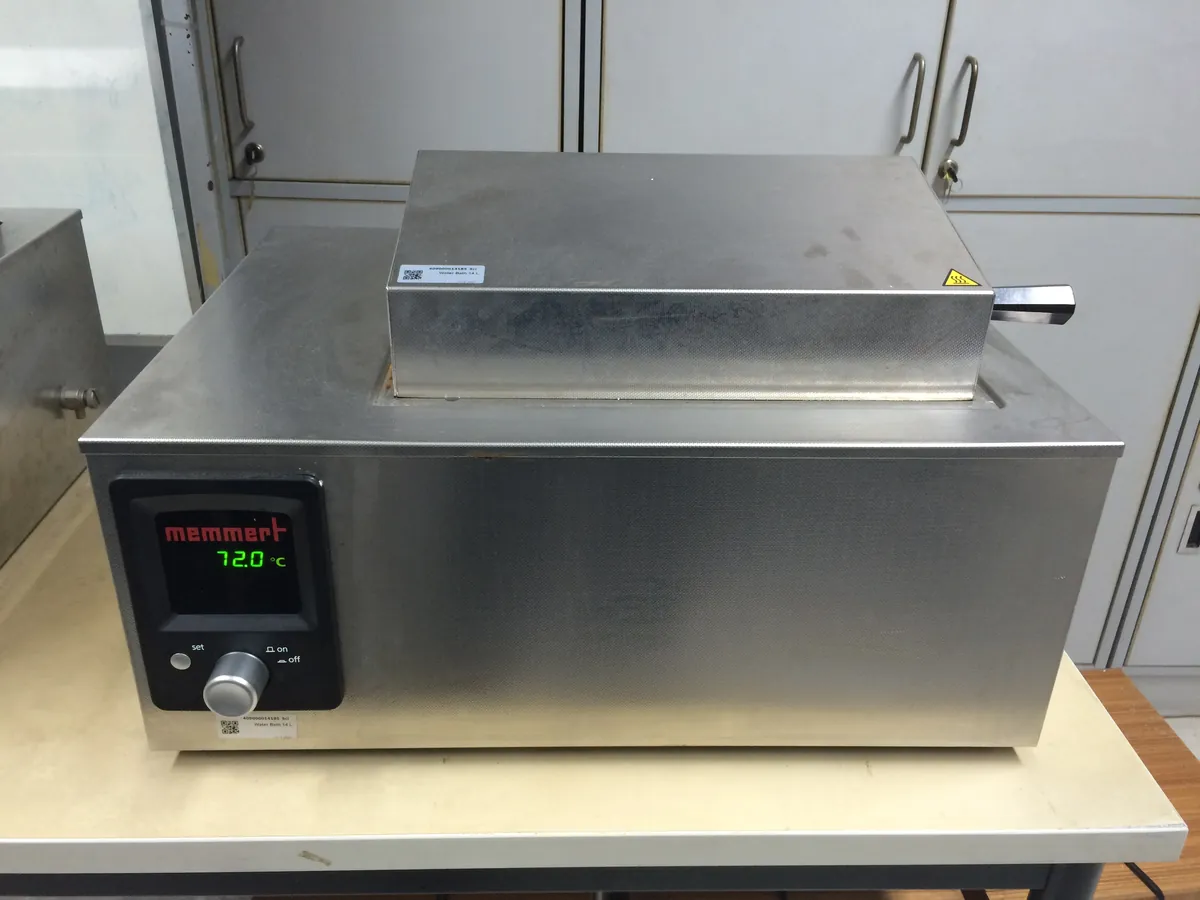
- Water bath
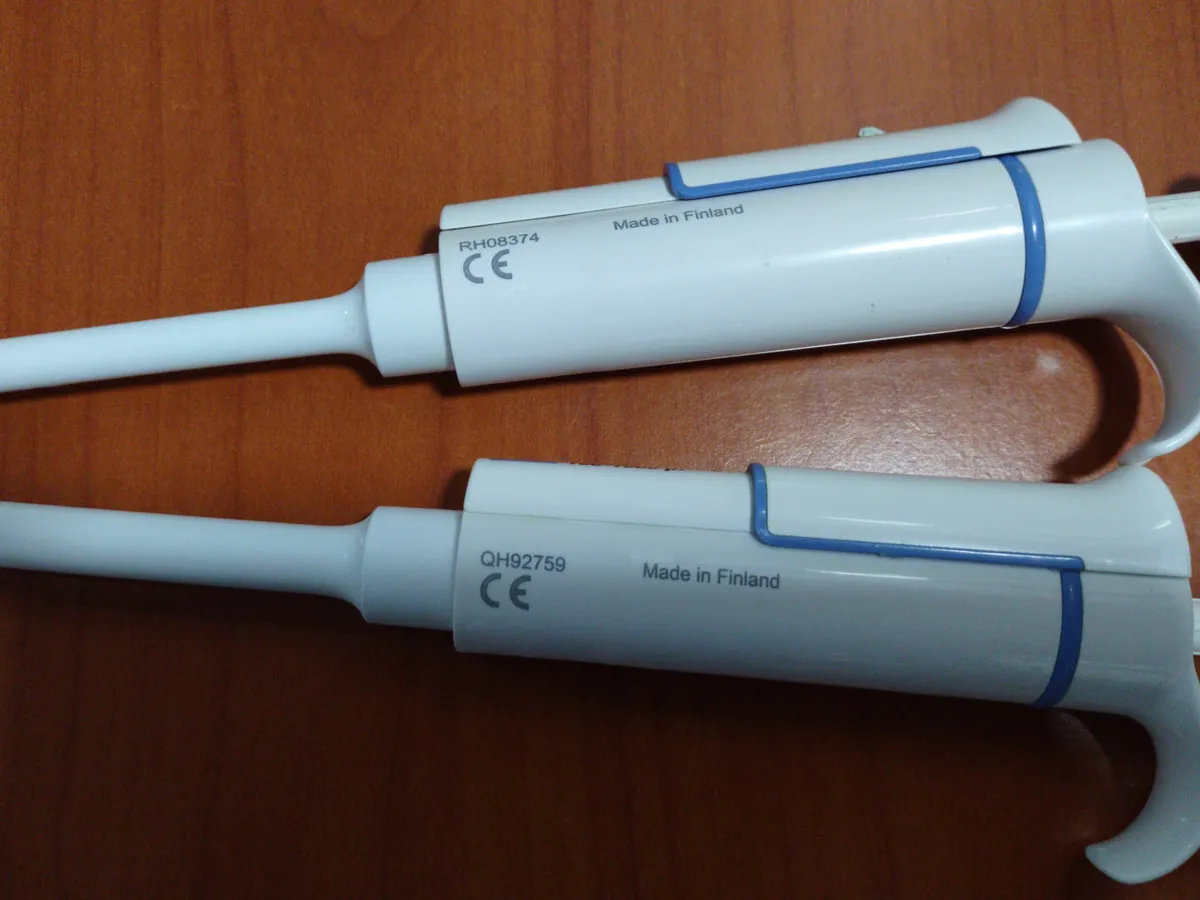
- Micropipette
Reference: Typical method based on ISO 4832 (coliforms) and ISO 16649-2 (β-glucuronidase-positive E. coli), with ISO 7218 and ISO 6887. Always follow the current editions and your validated SOP.
Why this method works
Bile salts and crystal violet in Violet Red Bile Lactose (VRBL) agar suppress most Gram-positive bacteria. Coliforms ferment lactose, producing acid that turns the neutral red indicator so that their colonies are purplish-red, usually with a reddish zone of precipitated bile. In Tryptone Bile X-glucuronide (TBX) agar, most E. coli strains have the enzyme β-glucuronidase, which splits a chromogenic substrate (BCIG) and gives blue-green colonies; incubation at 44 °C suppresses many other organisms. Counting these characteristic colonies at suitable dilutions gives the number of coliforms and E. coli per gram. High counts suggest poor hygiene, inadequate processing or post-process contamination.
Instruments used

Reagents & standards
| Reagent | Grade / specification |
|---|---|
| Violet Red Bile Lactose (VRBL) agar | Selective medium for coliforms; heated to dissolve (do not autoclave unless the manufacturer says so) and held at 44–47 °C |
| Tryptone Bile X-glucuronide (TBX) agar | Chromogenic medium for β-glucuronidase-positive E. coli; sterilised and held at 44–47 °C |
| Diluent | Buffered peptone water or peptone salt solution as per ISO 6887 |
| Brilliant Green Lactose Bile (BGLB) broth with Durham tubes | For confirming atypical VRBL colonies as coliforms by gas production, where the SOP requires it |
| Control strains for media performance | Positive and negative reference strains as listed in ISO 11133 for VRBL and TBX |
Preparing the sample
- 01
Initial suspension
Homogenise 10 g of sample in 90 mL diluent (10^-1).
- 02
Dilute
Make further decimal dilutions (10^-2, 10^-3) as expected counts require.
- 03
Plate
Pipette 1 mL of each dilution into duplicate dishes for VRBL and for TBX.
- 04
Pour and overlay
Pour VRBL, set, add a VRBL overlay; pour TBX and let it set.
- 05
Incubate
VRBL at 30 °C or 37 °C for 24 h; TBX at 44 °C for 18–24 h.
- 06
Count
Count characteristic colonies and calculate cfu/g.
Procedure
- 1Prepare the 10^-1 initial suspension and further decimal dilutions as for the total plate count (ISO 6887), working in a laminar air flow cabinet.
- 2Coliforms: pipette 1 mL of each chosen dilution into two sterile Petri dishes. Pour about 15 mL of VRBL agar at 44–47 °C, mix and allow to set.
- 3Add an overlay of about 4 mL of VRBL agar once set. The overlay creates semi-anaerobic conditions and stops surface spreading.
- 4Invert and incubate the VRBL plates at 30 °C or 37 °C (as agreed with the customer or specified) for 24 ± 2 h.
- 5E. coli: pipette 1 mL of each chosen dilution into two further dishes. Pour about 15 mL of TBX agar at 44–47 °C, mix and allow to set.
- 6Invert and incubate the TBX plates at 44 °C for 18–24 h. Do not exceed 45 °C, as this may inhibit some E. coli.
- 7Coliforms: count purplish-red colonies of 0.5 mm or more in diameter, usually surrounded by a reddish zone of precipitated bile, on plates with not more than 150 characteristic colonies.
- 8If atypical colonies are present, subculture a set number (for example five) into BGLB broth and incubate at the same temperature for 24 h; gas production confirms them as coliforms. Adjust the count by the proportion confirmed.
- 9E. coli: count blue to blue-green colonies on plates with not more than 150 blue colonies and not more than 300 colonies in total.
Standard preparation
- 1Media performance: test each batch of VRBL and TBX for productivity and selectivity with ISO 11133 reference strains before use.
- 2Positive control: plate a known E. coli reference strain with each run on TBX and VRBL to confirm typical colony appearance.
- 3Negative control: plate a non-target strain (for example a β-glucuronidase-negative organism on TBX) to confirm selectivity and colour reaction.
Notes for analysts
- Coliforms are not a single taxonomic group; the definition depends on the method (medium and temperature), so always state the method with the result.
- A small proportion of E. coli strains are β-glucuronidase negative and will not show blue colonies on TBX, so the count can slightly underestimate E. coli. The result is a hygiene indicator count only.
- Stressed cells from frozen, dried or heat-treated foods may need a resuscitation step defined in the relevant ISO part; follow your SOP.
- The worked example values are illustrative.
Method parameters (typical)
| Test portion and initial dilution | 10 g in 90 mL diluent (1:10) |
|---|---|
| Inoculum | 1 mL per Petri dish (pour plate) |
| Coliforms medium | VRBL agar with VRBL overlay |
| Coliforms incubation | 30 °C or 37 °C, 24 ± 2 h |
| Coliforms colony appearance | Purplish-red, ≥ 0.5 mm, usually with a red bile precipitate zone |
| E. coli medium | TBX agar (chromogenic, BCIG substrate) |
| E. coli incubation | 44 °C, 18–24 h |
| E. coli colony appearance | Blue to blue-green |
| Countable range | Up to 150 characteristic colonies per plate (TBX: also ≤ 300 colonies in total) |
| Reporting | cfu/g or cfu/mL, two significant figures |
System suitability & sequence
| Parameter | Limit |
|---|---|
| Medium sterility controls | Uninoculated VRBL and TBX plates show no growth |
| Diluent sterility control | No growth from 1 mL diluent |
| Positive control | E. coli reference strain gives purplish-red colonies on VRBL and blue colonies on TBX |
| Negative control | Non-target strain is inhibited or gives a non-characteristic colour |
| Incubator temperature | 44 °C incubator verified within its tolerance (for example ± 1 °C or tighter as per SOP) |
Typical sequence
- 1Media and diluent sterility controls (VRBL and TBX)
- 2Positive control strain (VRBL and TBX)
- 3Negative control strain (TBX)
- 4Sample 10^-1, duplicate VRBL and TBX plates
- 5Sample 10^-2, duplicate VRBL and TBX plates
- 6Further dilutions for heavily contaminated foods
- 7LAF settle plate during plating
Calculation with a worked example
Where
- N
- Count of coliforms or E. coli, cfu per g or mL
- ΣC
- Sum of characteristic (and, if done, confirmed) colonies on the retained plates
- V
- Volume plated per dish, mL (1 mL)
- n
- Number of plates retained at that dilution
- d
- Dilution of the retained plates (e.g. 10^-1); dilution factor = 1 ÷ d
Given
- Food
- Raw-milk soft cheese
- VRBL plates at 10^-1
- 46 and 38 characteristic colonies (all typical; no confirmation needed)
- VRBL plates at 10^-2
- No characteristic colonies
- TBX plates at 10^-1
- 12 and 16 blue colonies
- TBX plates at 10^-2
- No blue colonies
- Volume plated
- 1 mL per plate
Working
- 1Only the 10^-1 plates have countable characteristic colonies, so a single-dilution calculation applies.
- 2Coliforms: ΣC = 46 + 38 = 84; N = 84 ÷ (1 × 2 × 0.1) = 84 ÷ 0.2 = 420 cfu/g
- 3Check with the calculator form: mean = 42 colonies; 42 ÷ 1 mL × 10 = 420 cfu/g
- 4E. coli: ΣC = 12 + 16 = 28; N = 28 ÷ (1 × 2 × 0.1) = 28 ÷ 0.2 = 140 cfu/g
Coliforms = 4.2 × 10^2 cfu/g; E. coli = 1.4 × 10^2 cfu/g.
Try it with your numbersWhat result passes
- Compare results with the product specification or the applicable process hygiene criteria (for example FSSAI microbiological standards or EU Regulation (EC) No 2073/2005). Limits differ by product and sampling plan (n, c, m, M).
- If no characteristic colonies are seen on the 10^-1 plates, report less than 10 cfu/g.
- When two successive dilutions both give countable plates, use the weighted mean formula N = ΣC ÷ (V × (n1 + 0.1 n2) × d), as for the total plate count.
- An E. coli count above the criterion is a hygiene failure that triggers review of raw materials, process and post-process handling, as defined in the food safety plan.
Validation parameters (ICH Q2(R2))
| Parameter | Typical requirement |
|---|---|
| Method status | ISO 4832 and ISO 16649-2 are reference methods; laboratories verify them in-house |
| Confirmation rate | Track the proportion of atypical VRBL colonies confirmed in BGLB as part of method verification |
| Proficiency testing | Regular participation for coliforms and E. coli enumeration |
| Alternative methods | Rapid kits or ready-made films validated per the ISO 16140 series |
Run this method in LimsPulse: specifications and STPs under version control, results calculated and checked against limits, and a signed Certificate of Analysis.