Chromatography
Thin-Layer Chromatography (TLC)
Separates compounds as a solvent climbs up a thin layer of adsorbent on a glass, aluminium or plastic plate. Simple and cheap; used in pharma QC mainly for identification and limit tests for related substances.
- Pharmaceutical
- Herbal & natural products
- Chemicals
- Forensic
- Education
Follow your site SOP
This is a typical operating sequence for learning. Your instrument model and approved SOP take precedence.
STAGE 1
Before you start
- 1Check the plate type, size and batch match the method; record the batch number.
- 2Activate plates in an oven if the method requires (e.g. 100–105 °C for about 1 hour) and cool in a desiccator.
- 3Prepare fresh mobile phase by measuring each solvent accurately and mixing well.
- Prepare and handle mobile phases and spray reagents in a fume hood.
STAGE 2
Saturation and application
- 1Pour mobile phase into the chamber to a depth of about 0.5–1 cm, line it with filter paper, close it and allow it to saturate.
- 2Draw a light pencil line at the application height; never use ink, which will run.
- 3Apply the prescribed volumes as small spots or narrow bands, at least 1 cm apart and away from the plate edges. Dry between applications.
- The application line must be above the solvent level, or the sample will dissolve into the tank.
STAGE 3
Development and visualisation
- 1Place the plate vertically in the chamber without splashing and close the lid at once.
- 2Develop until the solvent front reaches the marked distance, then remove the plate and mark the front with pencil.
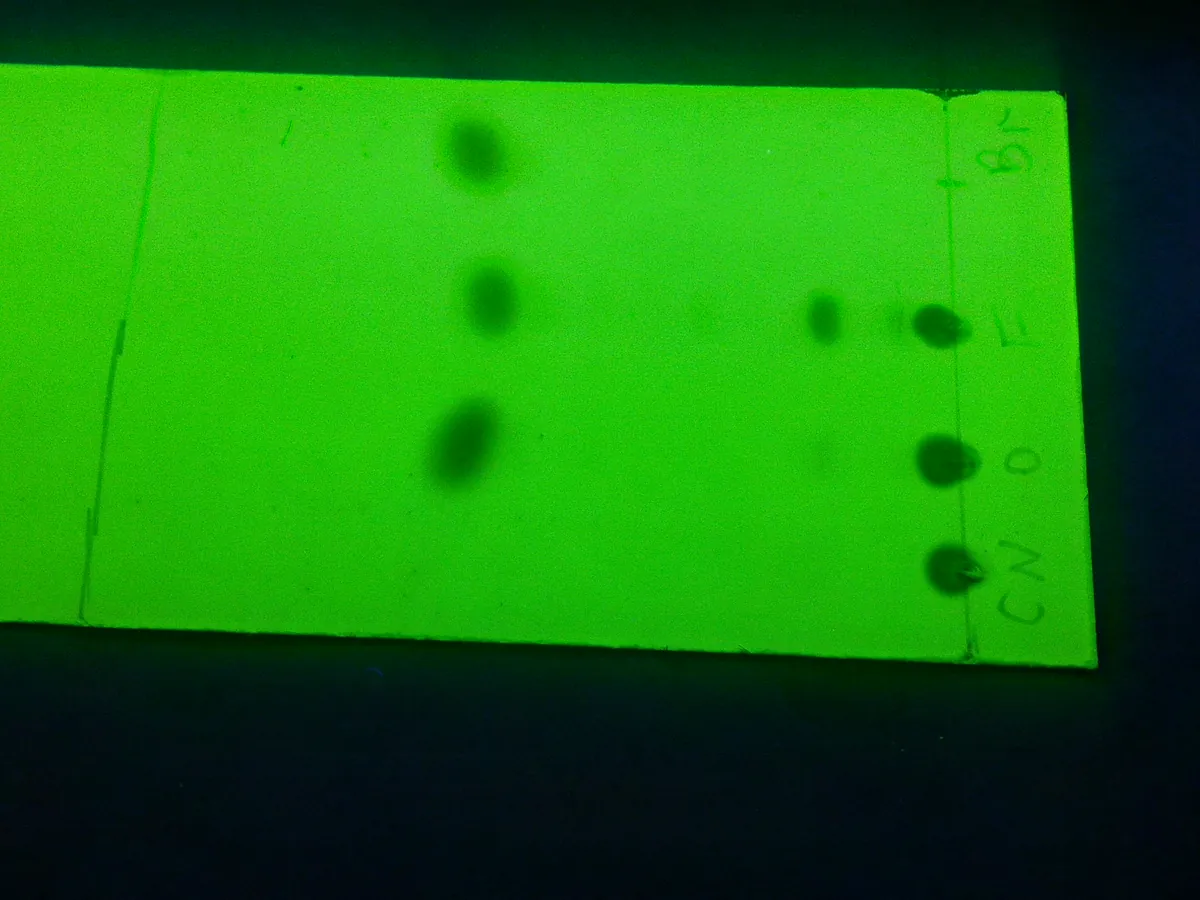
- 3Dry the plate completely, then examine under UV light and/or apply the visualisation reagent as specified.
- 4Photograph the plate promptly; some spot colours fade.
- Never look directly at the UV lamp; use the cabinet window or UV-protective glasses.
STAGE 4
Evaluation
- 1Check the method's system suitability requirement (e.g. two spots clearly separated) before reading the test.
- 2Measure distances from the origin to the spot centre and to the solvent front; calculate Rf values.
- 3Compare test spots with reference spots for position, colour and size or intensity.
- 4Record the result with the plate image attached.
In LimsPulse · Calibration Management
Keep every TLC in control: usage logs, calibration and maintenance schedules, and automatic blocking of overdue instruments.