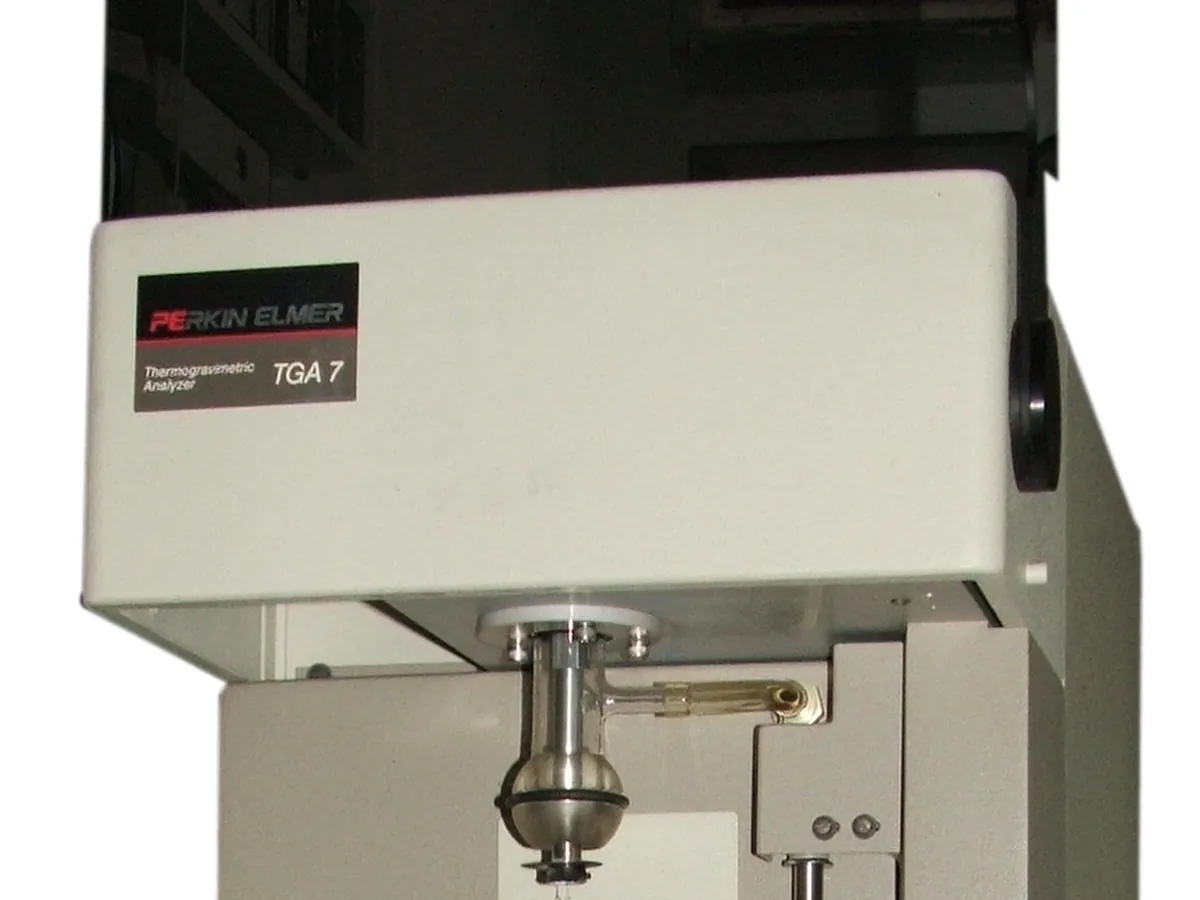
Thermogravimetric Analyser (TGA)
Weighs a sample continuously while it is heated, and records mass loss against temperature. Used to measure water and solvent content, decomposition and residue.
- Pharmaceutical
- Polymers
- Materials science
- Minerals
- Chemicals
Test your TGA knowledge
Multiple-choice questions
Pick an answer to see whether you are right and why.
Q1. What does a TGA record?
basicQ2. How is TGA temperature commonly calibrated?
basicQ3. What is the DTG curve?
intermediateQ4. Why does an empty pan appear to gain mass as the TGA heats?
intermediateQ5. Calcium oxalate monohydrate (M = 146.11 g/mol) loses its water first. What is the theoretical first mass loss?
advancedQ6. Which event will NOT show on a TGA curve?
intermediate
Viva questions
Think of your answer first, then open it to compare.
1. Why are TGA and DSC often used together?
DSC shows that an event happens and whether it absorbs or releases heat; TGA shows whether mass is lost at the same temperature. Together they separate melting from desolvation or decomposition.
2. How would you use TGA to confirm that a material is a monohydrate?
Calculate the theoretical water content from the formula (18.02 ÷ molar mass × 100) and compare it with the mass-loss step at the dehydration temperature. Agreement supports a monohydrate.
3. When would you choose air rather than nitrogen as the purge gas?
Nitrogen is used to study decomposition without oxidation. Air or oxygen is used when you want to burn off organic matter to measure residue or study oxidative stability.
Keep every TGA in control: usage logs, calibration and maintenance schedules, and automatic blocking of overdue instruments.