Thermal analysis & ovens
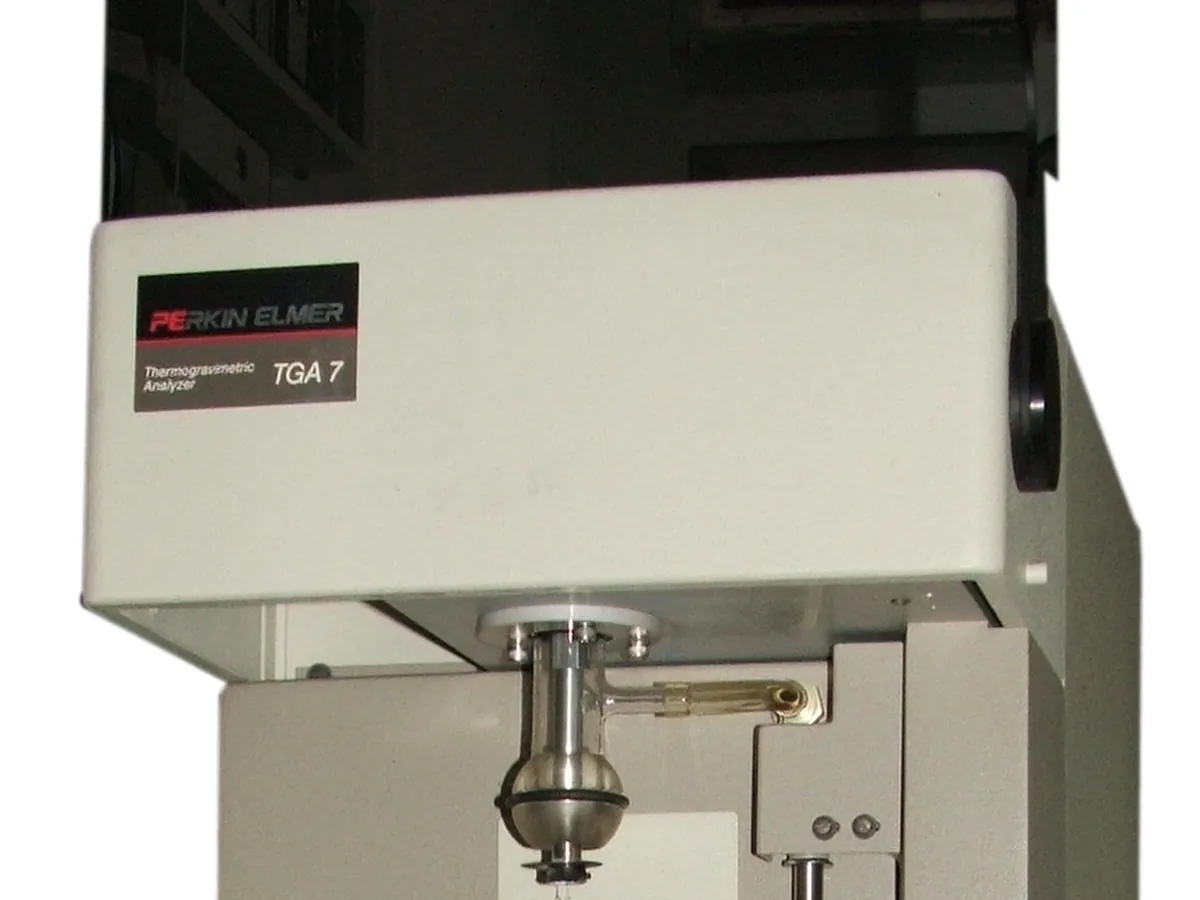
Thermogravimetric Analyser (TGA)
Weighs a sample continuously while it is heated, and records mass loss against temperature. Used to measure water and solvent content, decomposition and residue.
- Pharmaceutical
- Polymers
- Materials science
- Minerals
- Chemicals
Follow your site SOP
This is a typical operating sequence for learning. Your instrument model and approved SOP take precedence.
STAGE 1
Before you start
- 1Check calibration status and gas supply.
- 2Clean the pan by heating it empty (flaming or furnace bake-out) if required.
- 3Run a blank curve with an empty pan if buoyancy correction is used.
- Make sure the balance is level and free of vibration; TGA balances are very sensitive.
STAGE 2
Loading
- 1Tare the empty pan in the instrument.
- 2Place 5–20 mg of sample evenly in the pan using a spatula.
- 3Let the reading stabilise and record the starting mass.
- Do not let sample fall onto the hang-down wire or into the furnace.
STAGE 3
Running
- 1Select the method (for example nitrogen 40–60 mL/min, heat from 30 °C to 300 °C at 10 °C/min).
- 2Start the run and watch the first minutes for a stable signal.
- 3Evaluate mass loss for each step between the defined temperatures, and the onset temperatures.
- Samples that release corrosive or toxic gases need an approved method and exhaust.
STAGE 4
After use
- 1Allow the furnace to cool before removing the pan.
- 2Clean or discard the pan as appropriate.
- 3Complete the logbook.
In LimsPulse · Calibration Management
Keep every TGA in control: usage logs, calibration and maintenance schedules, and automatic blocking of overdue instruments.