Bioanalytical
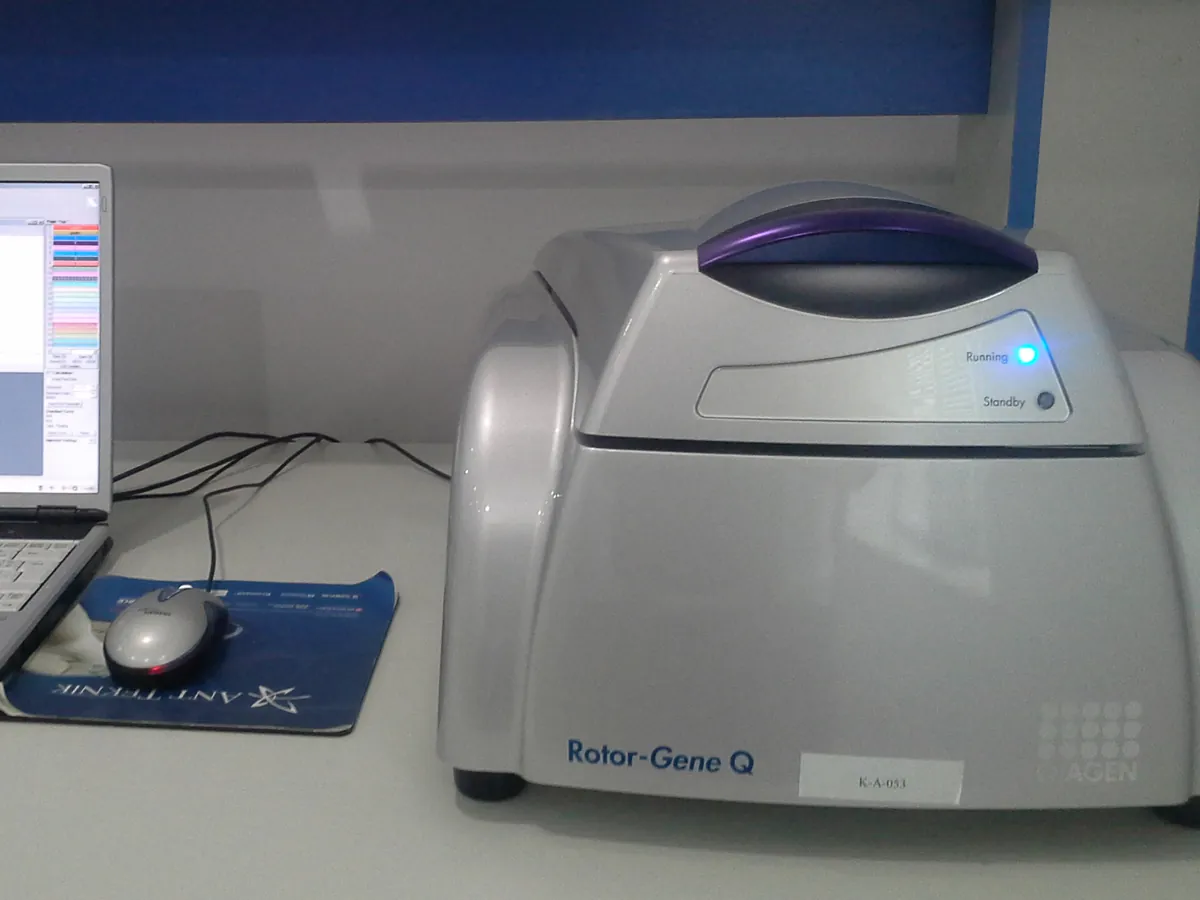
Real-time PCR (qPCR) system
A thermal cycler with a built-in fluorescence reader. It copies a chosen DNA sequence cycle by cycle and measures the fluorescence in every well after each cycle, so the starting amount of DNA can be calculated from a standard curve.
- Biotechnology
- Biopharmaceutical
- Cell and gene therapy
- Academic research
- Agricultural biotech
- Food authenticity
TROUBLESHOOTING
Common problems, causes and fixes
Amplification in no-template controls
Likely causes
- • Contaminated reagents or water
- • Amplicon contamination in the lab
- • Primer-dimers (dye assays)
What to do
- • Use fresh aliquots and clean the area
- • Separate pre- and post-PCR areas; never open used plates
- • Check melt curve; redesign primers or raise annealing temperature
Low efficiency or poor standard curve
Likely causes
- • Inhibitors in standards or samples
- • Pipetting error in the dilution series
- • Degraded standard or wrong annealing temperature
What to do
- • Dilute the sample or improve extraction clean-up
- • Use calibrated pipettes and fresh dilutions
- • Prepare new standard from a qualified stock; optimise annealing
High Cq variation between replicates
Likely causes
- • Pipetting variation at low volumes
- • Bubbles or poor sealing
- • Very low copy number (sampling statistics)
What to do
- • Use larger reaction volumes or master mixes
- • Centrifuge the plate and reseal properly
- • Accept wider limits at the LOQ as defined in validation
Edge wells give different Cq values
Likely causes
- • Block temperature non-uniformity
- • Evaporation from poorly sealed edge wells
What to do
- • Verify block uniformity and service if out of limits
- • Check seal and heated-lid pressure
Wrong dye signal or crosstalk between channels
Likely causes
- • Out-of-date or wrong dye calibration
- • Dye not selected correctly in the run file
What to do
- • Repeat the pure-dye calibration
- • Check dye and quencher settings in the plate set-up
Noisy or flat raw signal in some wells
Likely causes
- • Contaminated or fluorescent block wells
- • Ageing lamp or LED
- • Missing passive reference
What to do
- • Run a background plate and clean the block
- • Replace the light source
- • Use a master mix with the right ROX level for this instrument
In LimsPulse · Calibration Management
Keep every qPCR in control: usage logs, calibration and maintenance schedules, and automatic blocking of overdue instruments.