Bioanalytical
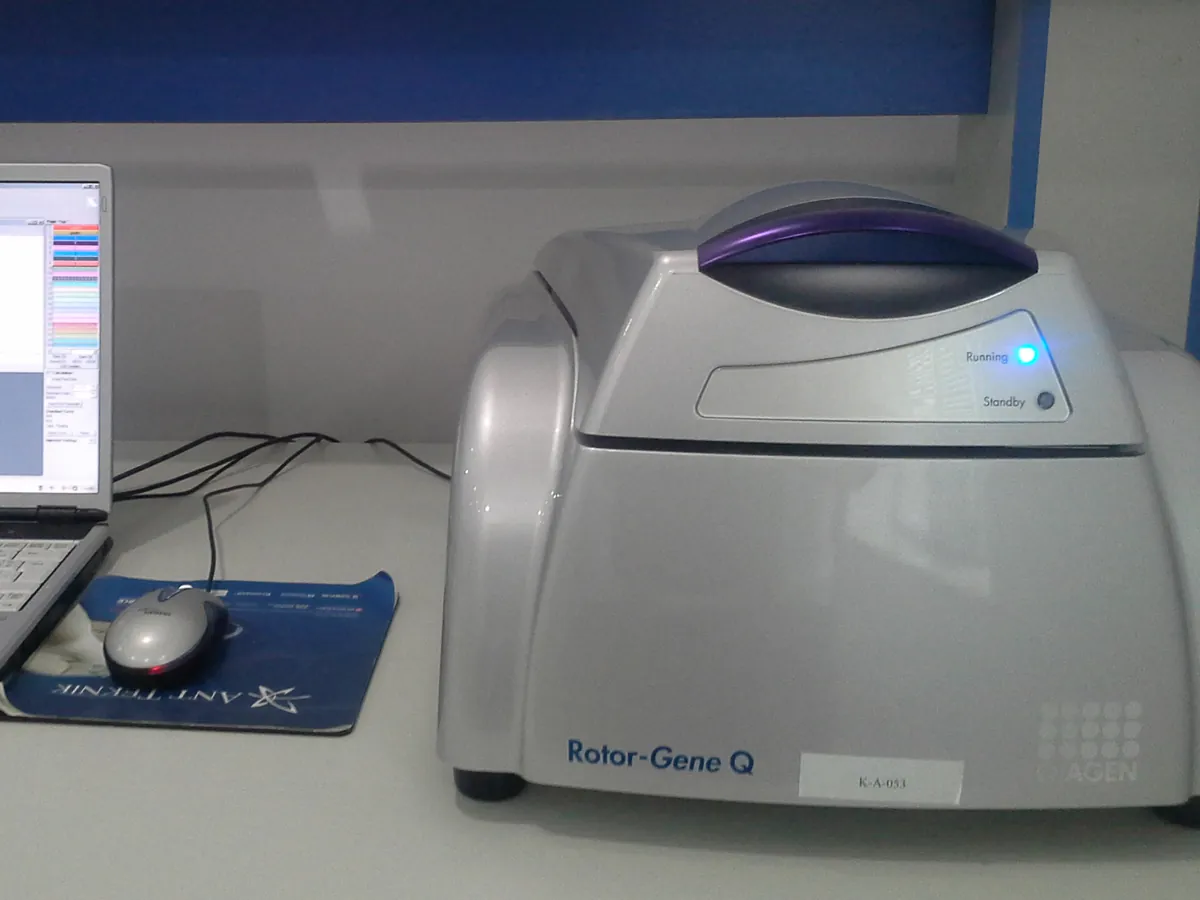
Real-time PCR (qPCR) system
A thermal cycler with a built-in fluorescence reader. It copies a chosen DNA sequence cycle by cycle and measures the fluorescence in every well after each cycle, so the starting amount of DNA can be calculated from a standard curve.
- Biotechnology
- Biopharmaceutical
- Cell and gene therapy
- Academic research
- Agricultural biotech
- Food authenticity
PREVENTIVE MAINTENANCE
Maintenance checklist
Each run
- Check the block is clean and free of liquid or debris
- Review NTC results as an ongoing contamination check
Monthly
- Run a background calibration (empty or water plate) as the manufacturer advises
- Inspect block wells for contamination using a background plate
- Clean the block with the recommended solution if contamination is seen
Every 6–12 months
- Verify block temperature accuracy and uniformity with a calibrated probe kit
- Repeat ROI/uniformity and dye calibrations
- Run a performance verification plate (for example a reference DNA dilution series)
Annual
- Preventive maintenance by the supplier (lamp/LED, fans, heated lid, optics)
- Check software audit-trail and backup settings
SAFETY
Safety precautions
Before you work on the qPCR
- The block and heated lid reach over 100 °C. Let them cool before touching.
- Some DNA-staining dyes and decontamination solutions are irritants. Read the SDS and wear gloves.
- Handle cell-derived samples as per your site biosafety rules.
- Do not look directly into the excitation light path during maintenance.
In LimsPulse · Calibration Management
Keep every qPCR in control: usage logs, calibration and maintenance schedules, and automatic blocking of overdue instruments.