Bioanalytical
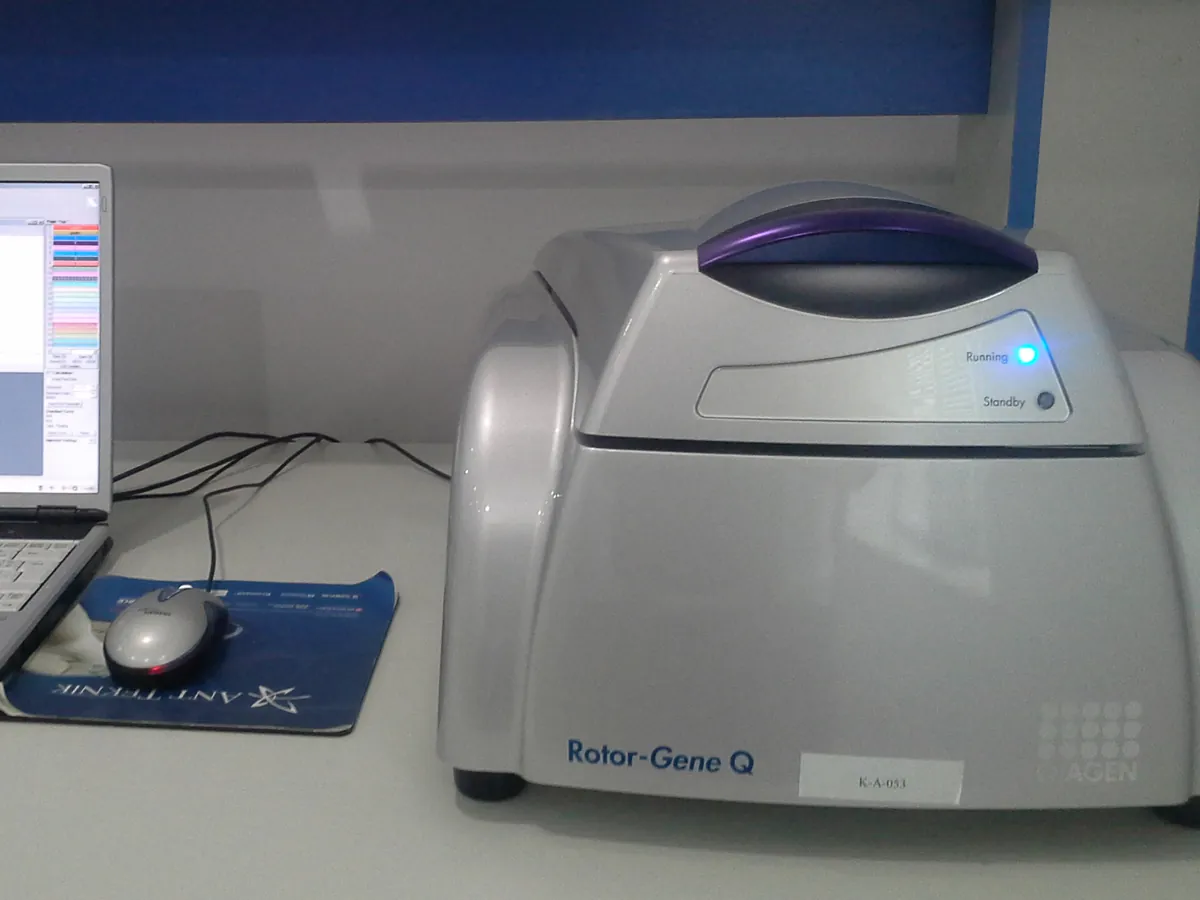
Real-time PCR (qPCR) system
A thermal cycler with a built-in fluorescence reader. It copies a chosen DNA sequence cycle by cycle and measures the fluorescence in every well after each cycle, so the starting amount of DNA can be calculated from a standard curve.
- Biotechnology
- Biopharmaceutical
- Cell and gene therapy
- Academic research
- Agricultural biotech
- Food authenticity
Follow your site SOP
This is a typical operating sequence for learning. Your instrument model and approved SOP take precedence.
STAGE 1
Before you start
- 1Check the instrument is within its calibration (block temperature and optical calibration) and maintenance due dates.
- 2Work in separate areas for reagent preparation, sample handling and amplification to avoid contamination.
- 3Thaw reagents on ice, mix gently and spin down. Keep enzymes cold.
- 4Prepare the plate layout: standards (often 5 levels, 10-fold steps), samples with spikes, NTCs and controls, all in replicate.
- Never open a sealed plate after amplification in the pre-PCR area. Amplified product is the most common source of contamination.
STAGE 2
Plate set-up and run
- 1Dispense master mix first, then samples and standards, changing tips between wells.
- 2Seal with optical film using a roller or applicator so every well is fully sealed.
- 3Centrifuge the plate briefly to remove bubbles and bring liquid to the bottom.
- 4Load the plate in the right orientation, select the dyes, passive reference and thermal profile, and start the run.
- Do not write on the optical film over the wells; ink and fingerprints block the light path.
STAGE 3
Data analysis
- 1Check amplification curves look sigmoidal and NTCs show no amplification (or Cq well beyond the lowest standard).
- 2Set baseline and threshold as defined in the method (automatic or fixed).
- 3Check standard curve slope, efficiency and r², and replicate Cq agreement.
- 4Calculate sample quantities and spike recovery; report as per the method.
STAGE 4
Shutdown
- 1Remove the plate and discard it sealed into the designated waste.
- 2Close the software, back up data and sign the instrument log.
- 3Wipe the work area with a DNA-decontaminating solution as per site procedure.
In LimsPulse · Calibration Management
Keep every qPCR in control: usage logs, calibration and maintenance schedules, and automatic blocking of overdue instruments.