Spectroscopy
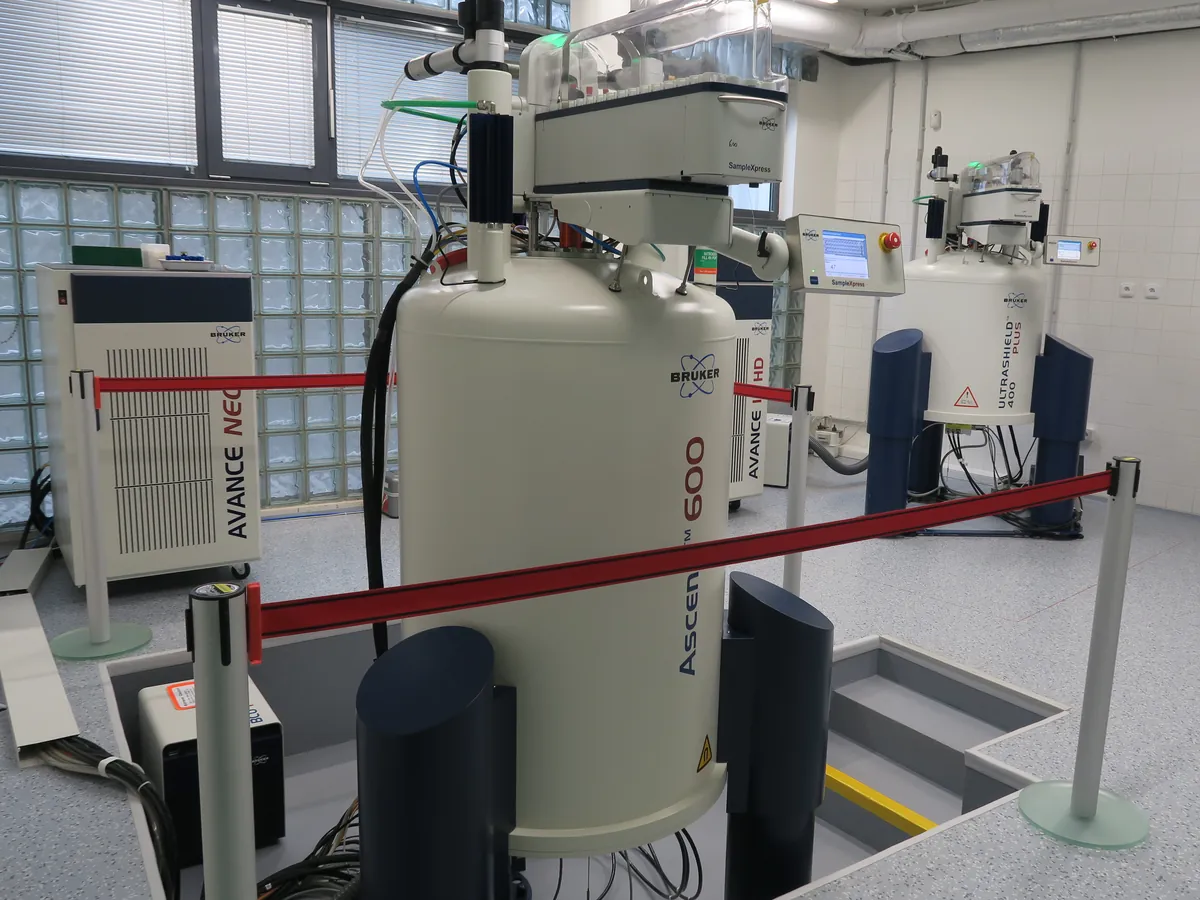
Nuclear magnetic resonance (NMR) spectrometer
Places a sample in a strong magnetic field and measures how atomic nuclei such as ¹H and ¹³C absorb radio waves. Gives detailed structural information and, with qNMR, absolute purity without a reference standard of the analyte.
- Pharmaceutical
- Biotech
- Chemicals
- Academia & research
- Food (authenticity)
- Petrochemical
TROUBLESHOOTING
Common problems, causes and fixes
Cannot lock
Likely causes
- • Wrong solvent selected
- • Too little deuterated solvent
- • Sample not at the correct depth
What to do
- • Select the correct solvent
- • Make the sample to the correct volume
- • Reset the depth with the gauge
Broad or distorted lines
Likely causes
- • Poor shimming
- • Solid particles or paramagnetic impurities in the sample
- • Low-quality or scratched tube
What to do
- • Re-shim or load a good shim file
- • Filter the sample
- • Use a good-quality tube
Poor signal-to-noise
Likely causes
- • Too little sample
- • Probe not tuned
- • Too few scans
What to do
- • Use more sample or a smaller-volume tube
- • Tune and match
- • Increase the number of scans
qNMR purity too low or variable
Likely causes
- • Relaxation delay too short
- • Weighing error with small masses
- • Overlapping signals
- • Poor baseline or phasing
What to do
- • Measure T1 and set delay ≥ 5 × T1
- • Use a microbalance and larger masses
- • Choose non-overlapping signals or another internal standard
- • Correct the phase and baseline carefully
Large water signal
Likely causes
- • Wet solvent or hygroscopic sample
What to do
- • Use fresh, dry solvent ampoules
- • Use solvent suppression if validated
In LimsPulse · Calibration Management
Keep every NMR in control: usage logs, calibration and maintenance schedules, and automatic blocking of overdue instruments.