Spectroscopy
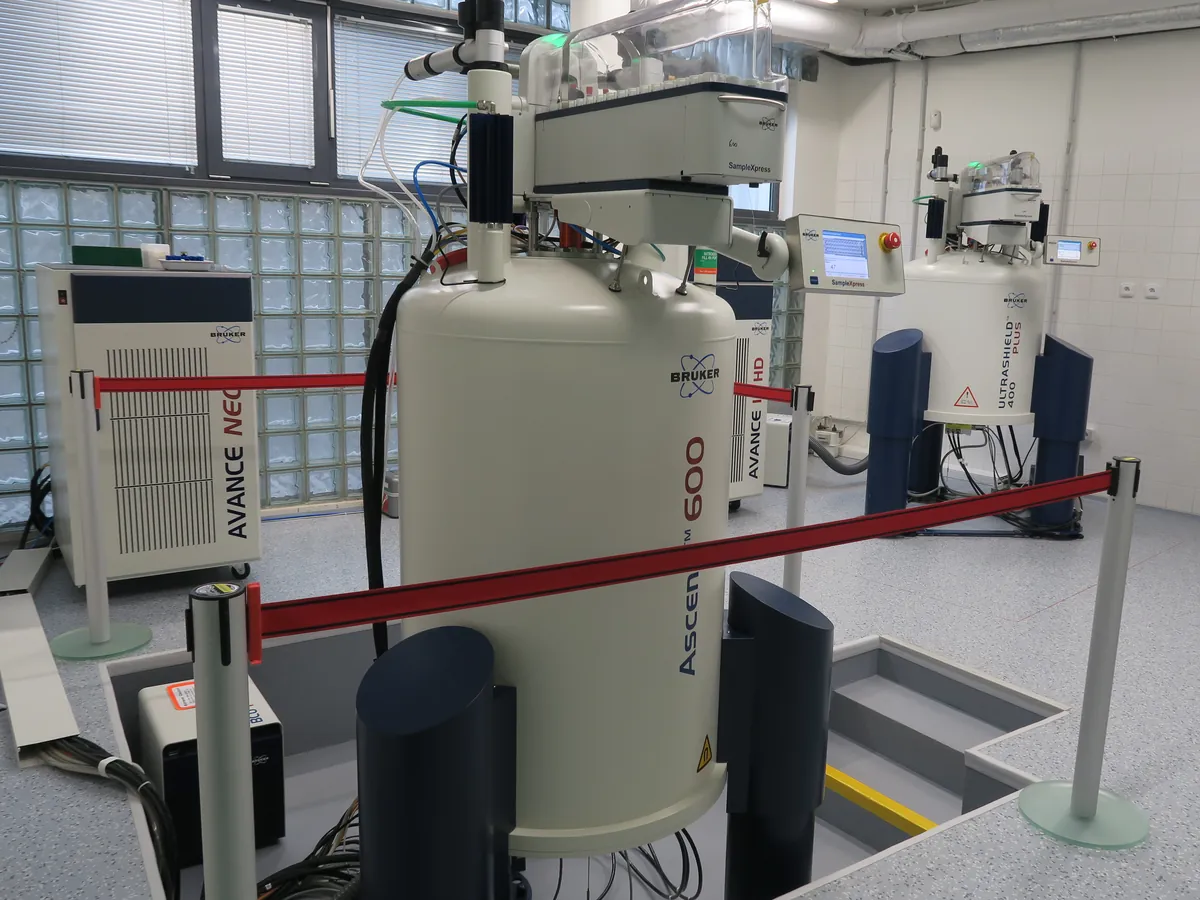
Nuclear magnetic resonance (NMR) spectrometer
Places a sample in a strong magnetic field and measures how atomic nuclei such as ¹H and ¹³C absorb radio waves. Gives detailed structural information and, with qNMR, absolute purity without a reference standard of the analyte.
- Pharmaceutical
- Biotech
- Chemicals
- Academia & research
- Food (authenticity)
- Petrochemical
PREVENTIVE MAINTENANCE
Maintenance checklist
Daily / each use
- Check lock level and shim quality on a standard if results look poor
- Check the sample changer and air supply
Weekly
- Record liquid helium and nitrogen levels
- Fill liquid nitrogen as scheduled (high-field magnets)
- Run a line-shape or sensitivity test sample
Every few months
- Liquid helium fill by trained staff or the vendor (interval depends on the magnet)
- Review performance trends (line-shape, ¹H sensitivity)
Annual
- Preventive maintenance and full performance verification by the vendor
- Calibration or verification of the temperature unit and pulse widths
SAFETY
Safety precautions
Before you work on the NMR
- The magnet is always on. Keep ferromagnetic objects (tools, gas cylinders, chairs) outside the marked 5 gauss line; they can be pulled in with great force.
- Strong fields can stop pacemakers and affect implants; such people must stay out of the restricted zone.
- Liquid helium and nitrogen are cryogenic: wear a face shield and cryo gloves, and ensure room oxygen monitors work. A quench releases large volumes of helium gas.
- Deuterated solvents such as chloroform-d are toxic; prepare samples in a fume hood.
- Handle glass NMR tubes carefully; they are thin and break easily.
In LimsPulse · Calibration Management
Keep every NMR in control: usage logs, calibration and maintenance schedules, and automatic blocking of overdue instruments.