Materials & polymer testing
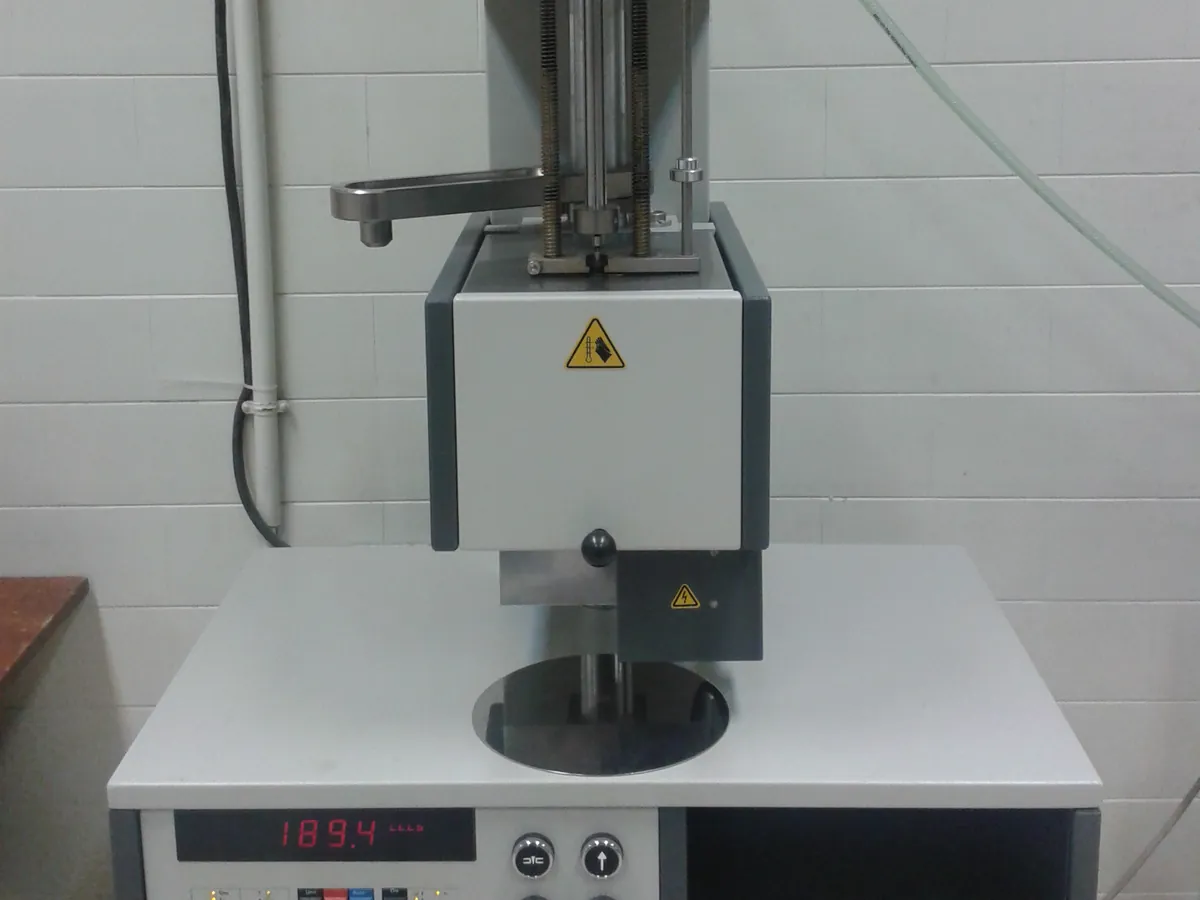
Melt flow indexer
Melts a thermoplastic in a heated barrel and pushes it through a small standard die under a fixed weight. The mass (or volume) of polymer that flows out in 10 minutes is the melt flow rate, a quick measure of how easily the polymer flows.
- Polymers & plastics
- Packaging
- Pipes & fittings
- Automotive
- Recycling
- Chemicals
TROUBLESHOOTING
Common problems, causes and fixes
MFR higher than expected
Likely causes
- • Barrel temperature too high
- • Polymer degraded by moisture or long preheat
- • Die bore worn oversize
- • Wrong, lighter, weight or wrong condition used
What to do
- • Verify temperature at the die
- • Dry the sample and keep to the preheat time
- • Check the die with the go/no-go gauge and replace if needed
- • Check the condition and weight markings
MFR lower than expected
Likely causes
- • Temperature too low
- • Partly blocked die
- • Crosslinking or additive effect
- • Piston rubbing in the barrel
What to do
- • Verify the controller and sensor
- • Clean the die with the die drill
- • Check the material history and stabiliser
- • Clean the barrel and piston; check piston straightness
Bubbles in the extrudate
Likely causes
- • Moisture in the sample
- • Air trapped during charging
- • Volatile additives
What to do
- • Dry the polymer before testing
- • Compact the charge in steps
- • Discard bubbled cut-offs and repeat
Cut-off masses drift during the run
Likely causes
- • Temperature not stable
- • Degradation during the run
- • Charging too slow or uneven
What to do
- • Allow longer stabilisation
- • Shorten the measurement time with a different interval
- • Charge quickly and consistently
Poor agreement with supplier CoA
Likely causes
- • Different procedure (A vs B) or condition
- • Sample not representative or not dried
- • Calibration differences
What to do
- • Confirm the exact standard, condition and procedure
- • Test the retained sample and a reference polymer
- • Exchange samples with the supplier lab
In LimsPulse · Calibration Management
Keep every MFI tester in control: usage logs, calibration and maintenance schedules, and automatic blocking of overdue instruments.