Materials & polymer testing
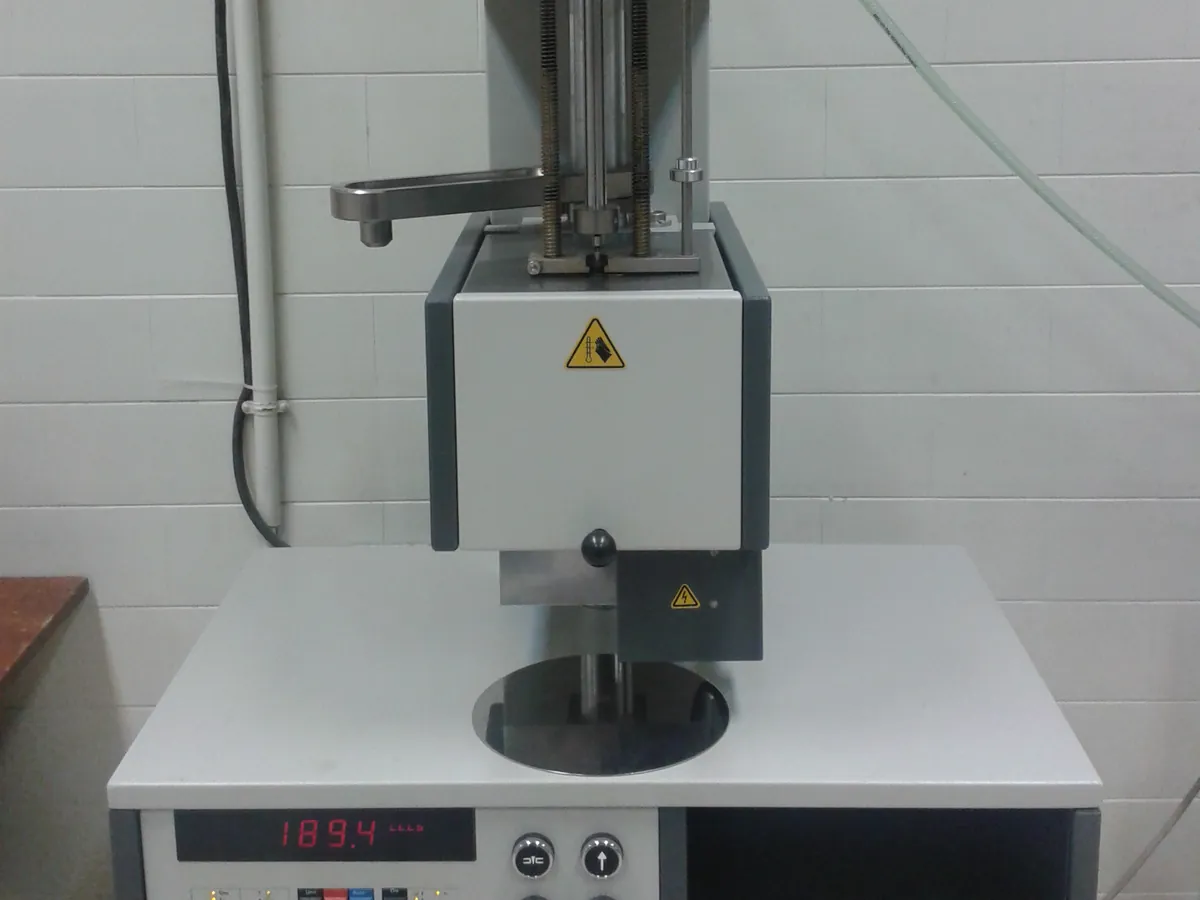
Melt flow indexer
Melts a thermoplastic in a heated barrel and pushes it through a small standard die under a fixed weight. The mass (or volume) of polymer that flows out in 10 minutes is the melt flow rate, a quick measure of how easily the polymer flows.
- Polymers & plastics
- Packaging
- Pipes & fittings
- Automotive
- Recycling
- Chemicals
PREVENTIVE MAINTENANCE
Maintenance checklist
Each test
- Clean barrel, piston and die while hot
- Inspect the die bore for residue
- Check the weight set is complete and clean
Weekly
- Run a control or reference polymer and plot the result on a control chart
- Check the cutter blade
- Check insulation and levelling of the instrument
Every 6–12 months
- Verify temperature at the die position with a calibrated thermometer
- Verify combined piston and weight masses
- Check die bore and length with gauges
- Check the displacement encoder (Procedure B)
Annual
- Preventive maintenance by the supplier
- Replace a worn die (bore over tolerance) and worn piston rings or heads
- Full calibration with certificate
SAFETY
Safety precautions
Before you work on the MFI tester
- Hot surfaces and molten polymer cause burns. Wear heat-resistant gloves and use tongs.
- Some polymers release irritating fumes (for example POM releases formaldehyde, PVC releases HCl). Use local exhaust ventilation.
- Handle heavy weights carefully to avoid dropping them on hands or feet.
- Keep the cutter blade guarded when not in use.
In LimsPulse · Calibration Management
Keep every MFI tester in control: usage logs, calibration and maintenance schedules, and automatic blocking of overdue instruments.