Liquid Chromatography–Mass Spectrometry (LC-MS / LC-MS/MS)
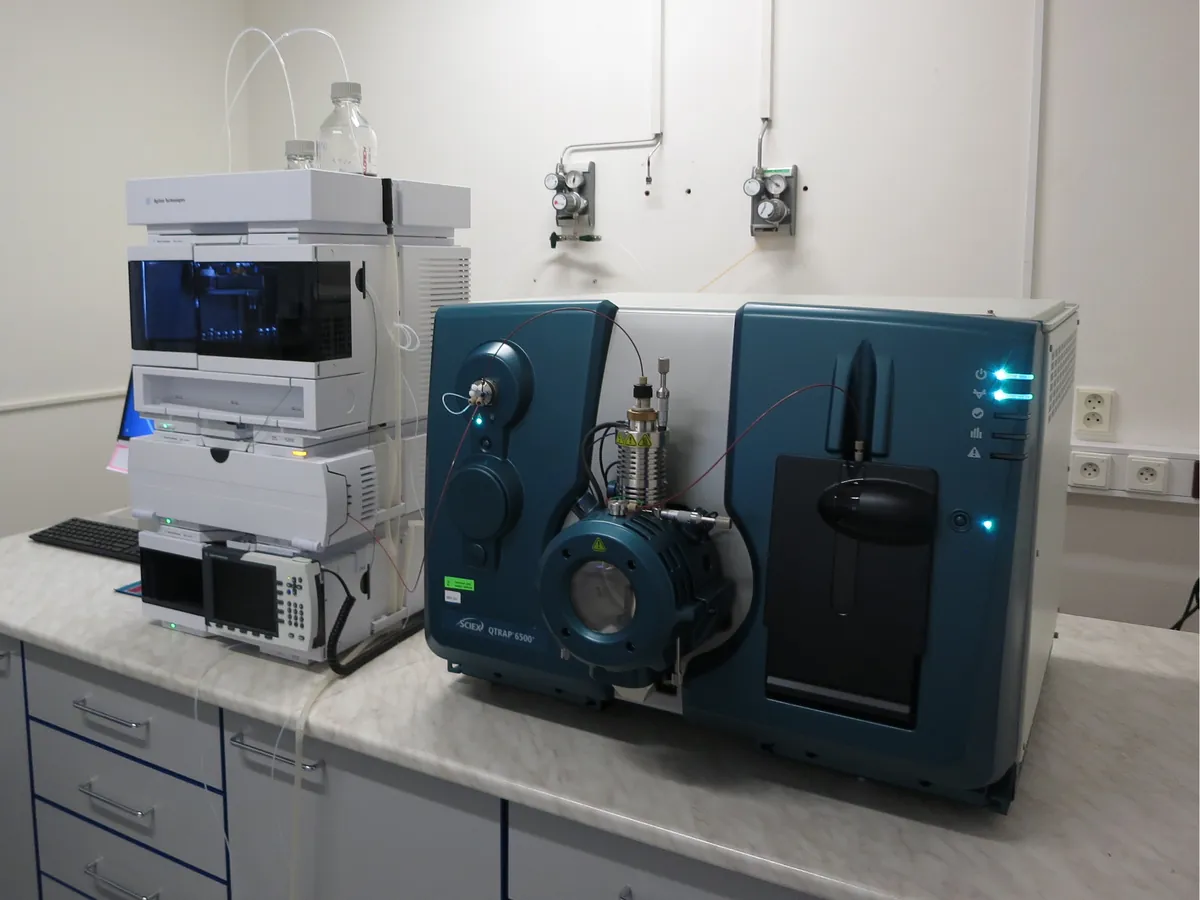
Couples an HPLC or UHPLC to a mass spectrometer, so each separated component is identified by its mass and measured with very high sensitivity. Used for impurity identification, nitrosamines and other trace impurities, and bioanalysis.
- Pharmaceutical
- Biopharmaceutical
- Clinical and bioanalytical labs
- Food safety
- Environmental
- Forensic and toxicology
Test your LC-MS knowledge
Multiple-choice questions
Pick an answer to see whether you are right and why.
Q1. What does a mass spectrometer actually measure?
basicQ2. Which buffer should NOT be used in an LC-MS mobile phase?
basicQ3. Electrospray ionisation in positive mode mostly produces which ion from a basic drug M?
intermediateQ4. Which mode of a triple quadrupole is preferred for trace quantitation of nitrosamines?
intermediateQ5. Theoretical m/z 609.2807, measured 609.2815. The mass error is about:
advancedQ6. What is the best way to correct for ion suppression in quantitative LC-MS?
intermediate
Viva questions
Think of your answer first, then open it to compare.
1. How would you use LC-MS to identify an unknown degradation product found in a stability sample?
Run the sample on an MS-compatible version of the method, obtain the accurate mass of the unknown on a high-resolution instrument, propose an elemental formula, acquire MS/MS fragments, compare with the parent drug's fragmentation and known degradation chemistry, and confirm with a synthesised or purchased reference standard.
2. Why is a divert valve used at the start of an LC-MS run?
Salts and polar matrix components elute at the solvent front. Diverting them to waste keeps the ion source clean and maintains sensitivity.
3. Compare a triple quadrupole with a Q-TOF for pharmaceutical work.
A triple quadrupole has unit resolution but excellent sensitivity in MRM, ideal for targeted trace quantitation (nitrosamines, bioanalysis). A Q-TOF gives high resolution and accurate mass for formula assignment and unknown identification, with full-spectrum data, but is usually less sensitive for targeted quantitation.
Keep every LC-MS in control: usage logs, calibration and maintenance schedules, and automatic blocking of overdue instruments.