Food & proximate analysis
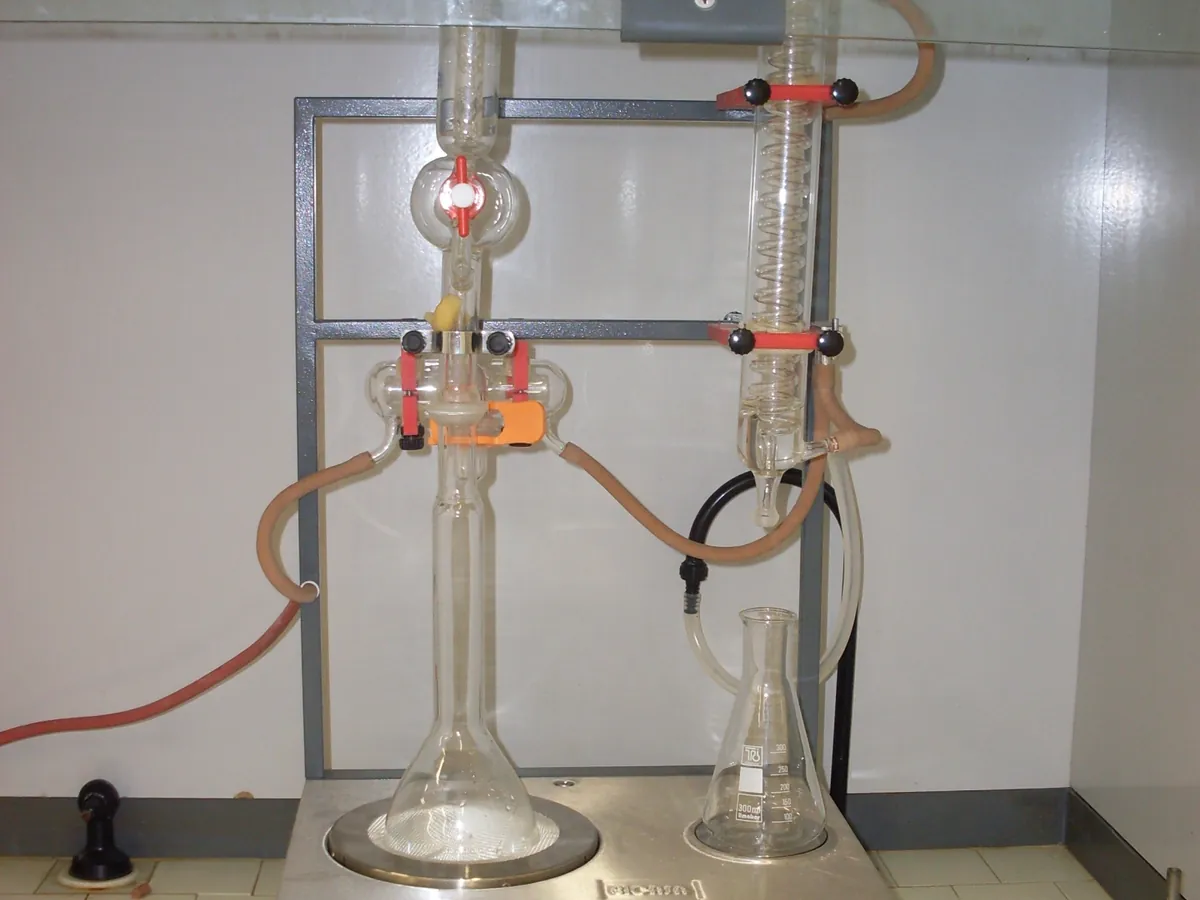
Kjeldahl digestion & distillation unit
Digests a food sample in hot sulphuric acid to turn its organic nitrogen into ammonium, then distils the ammonia and titrates it. The nitrogen found, multiplied by a conversion factor, gives crude protein.
- Food & beverage
- Dairy
- Animal feed
- Agriculture
- Environmental
- Fertiliser
TROUBLESHOOTING
Common problems, causes and fixes
Low nitrogen recovery
Likely causes
- • Incomplete digestion (too short or too cool)
- • Nitrogen loss from overheating or too much salt
- • Ammonia lost through a leak or a dry receiver tip
- • Not enough alkali added
What to do
- • Extend digestion and check block temperature
- • Keep to the acid-to-salt ratio in the method
- • Check seals and dip the condenser outlet into the boric acid
- • Check the alkali pump volume; the digest must turn strongly alkaline
High results or high blank
Likely causes
- • Contaminated reagents or catalyst
- • Ammonia in the lab air or distilled water
- • Carry-over from a previous high sample
What to do
- • Use fresh nitrogen-free reagents and record lot numbers
- • Use fresh boric acid and keep it covered
- • Run steam-only rinse distillations between samples
Digest froths over the tube
Likely causes
- • High fat, sugar or protein content
- • Heating too fast
What to do
- • Use a lower start temperature and a ramp programme
- • Add an antifoam agent or reduce sample mass
Digest stays dark or charred
Likely causes
- • Not enough acid for the sample mass
- • Digestion time too short
What to do
- • Reduce sample mass or add acid as per method
- • Continue digestion until clear plus the extra time
Digest sets solid on cooling
Likely causes
- • Too much acid evaporated
- • Cooled too long before dilution
What to do
- • Check exhaust suction is not too strong
- • Add water while still slightly warm (not hot), as the manual describes
Unstable or late titration end point
Likely causes
- • Old indicator or boric acid
- • Dirty or slow pH electrode
- • Titrant concentration wrong
What to do
- • Prepare fresh receiver solution
- • Clean and recalibrate the electrode
- • Restandardise the titrant
In LimsPulse · Calibration Management
Keep every Kjeldahl in control: usage logs, calibration and maintenance schedules, and automatic blocking of overdue instruments.