Food & proximate analysis
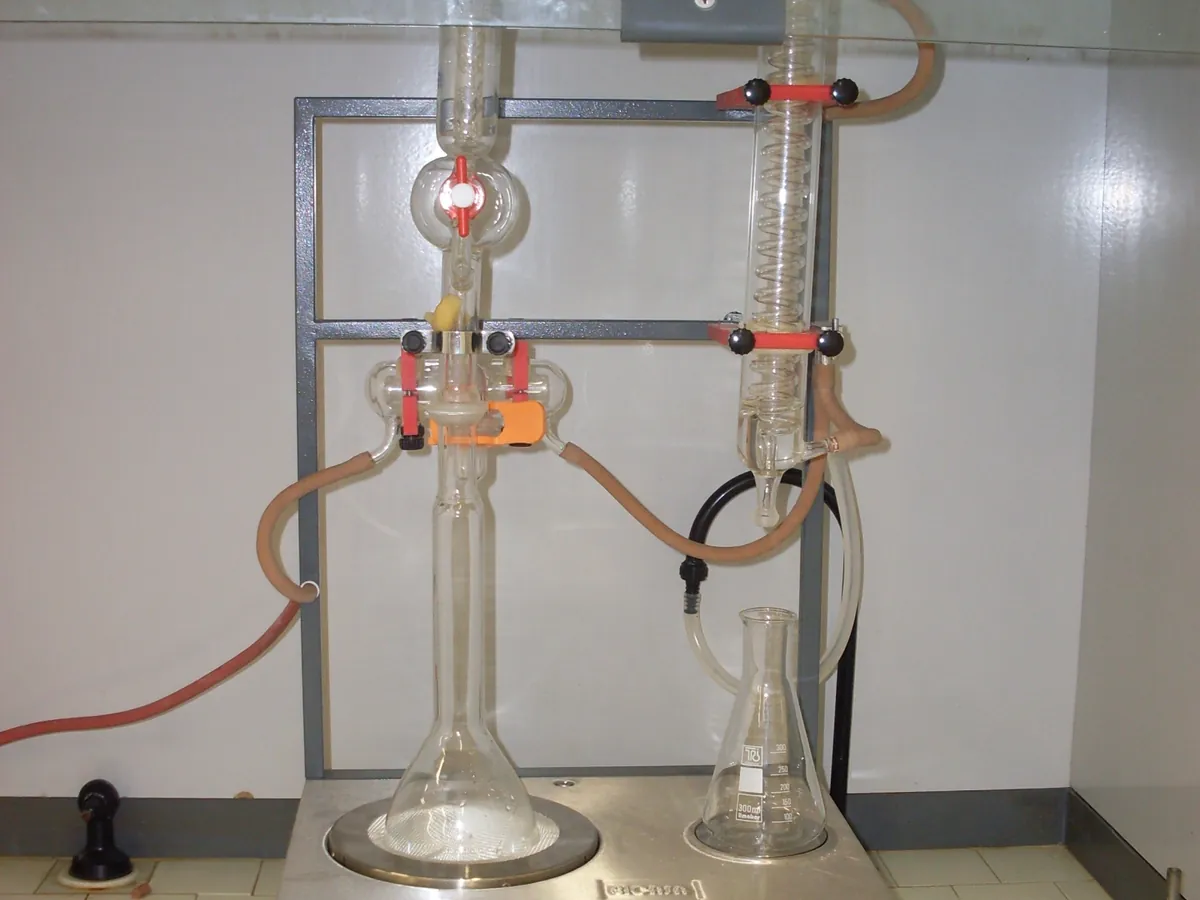
Kjeldahl digestion & distillation unit
Digests a food sample in hot sulphuric acid to turn its organic nitrogen into ammonium, then distils the ammonia and titrates it. The nitrogen found, multiplied by a conversion factor, gives crude protein.
- Food & beverage
- Dairy
- Animal feed
- Agriculture
- Environmental
- Fertiliser
Follow your site SOP
This is a typical operating sequence for learning. Your instrument model and approved SOP take precedence.
STAGE 1
Before you start
- 1Check the digestion block and distillation unit are within their calibration due date.
- 2Check scrubber solution, alkali (typically 32–40% NaOH), boric acid receiver solution and titrant levels.
- 3Standardise the titrant (for example 0.1 M HCl) and record the factor.
- 4Confirm the fume hood or scrubber is working before heating any acid.
- Concentrated sulphuric acid and 40% sodium hydroxide cause severe burns. Wear a face shield, acid-resistant gloves and a lab coat.
STAGE 2
Digestion
- 1Weigh the sample into a clean, dry tube. Use nitrogen-free paper for sticky samples and include it in the blank.
- 2Add catalyst tablets and the volume of sulphuric acid stated in the method (for example 12–15 mL).
- 3Include a reagent blank and a nitrogen recovery standard in every batch.
- 4Place the rack in the preheated block, fit the exhaust manifold and switch on the scrubber.
- 5Digest until the solution is clear and then continue for the extra time set in the method.
- 6Lift the rack and let the tubes cool to room temperature with the exhaust still running.
- Foaming samples (high fat or sugar) can froth over. Start at a lower temperature or add an antifoam.
- Never add water to a hot digest. Cool first, then dilute slowly.
STAGE 3
Distillation and titration
- 1Run a steam-only blank distillation to warm up the unit.
- 2Fit the tube, then let the unit add water and excess alkali (the digest should turn dark blue/brown with copper).
- 3Distil into boric acid with mixed indicator for the set time or distillate volume.
- 4Titrate with standard acid to the end point (green to pink/grey for bromocresol green–methyl red), or let the automatic titrator do it.
- 5Record titre, blank and sample mass, and calculate nitrogen and protein.
- Make sure the tube is seated firmly before alkali is added. Hot alkaline steam escaping from a loose tube is a serious hazard.
STAGE 4
Shutdown
- 1Run a water distillation to rinse the steam path.
- 2Empty and rinse the tubes once cool; neutralise acid waste as per site procedure.
- 3Switch off the block and leave the scrubber running until fumes have cleared.
- 4Complete the instrument log.
In LimsPulse · Calibration Management
Keep every Kjeldahl in control: usage logs, calibration and maintenance schedules, and automatic blocking of overdue instruments.