Food & proximate analysis
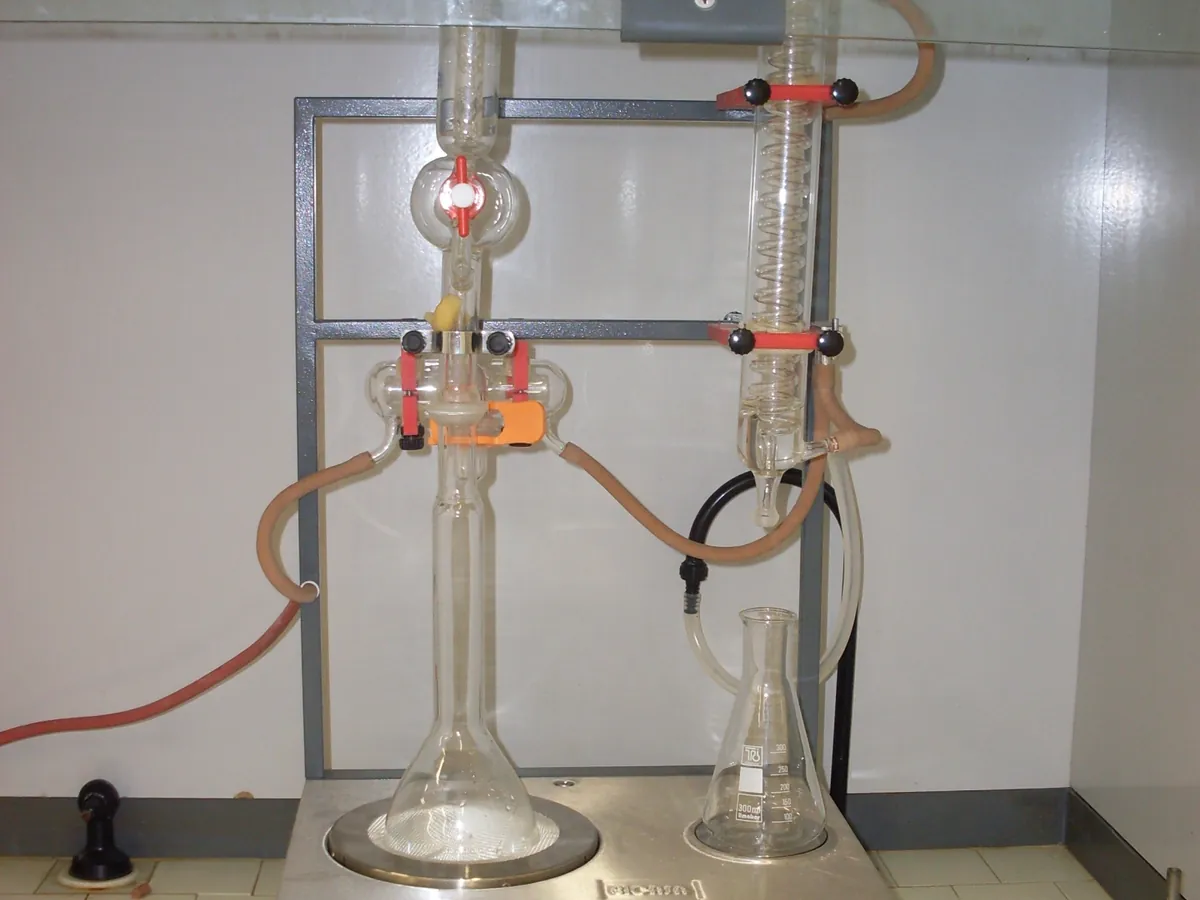
Kjeldahl digestion & distillation unit
Digests a food sample in hot sulphuric acid to turn its organic nitrogen into ammonium, then distils the ammonia and titrates it. The nitrogen found, multiplied by a conversion factor, gives crude protein.
- Food & beverage
- Dairy
- Animal feed
- Agriculture
- Environmental
- Fertiliser
PREVENTIVE MAINTENANCE
Maintenance checklist
Daily / each use
- Check scrubber solution and replace if exhausted (indicator colour change)
- Check alkali and boric acid levels
- Inspect tubes for cracks or chips
- Wipe acid spills from the block surface
Weekly
- Descale or flush the steam generator as the manual advises
- Check tubing and pump lines for leaks or crystallised alkali
- Clean the exhaust manifold seals
Monthly / quarterly
- Check digestion block temperature with a calibrated thermocouple
- Run a nitrogen recovery check with ammonium sulphate and with an organic standard
- Calibrate the pH electrode of the automatic titrator
Annual
- Preventive maintenance by the supplier (pumps, valves, steam generator, seals)
- Full calibration of block temperature and recovery
- Replace worn manifold gaskets and condenser seals
SAFETY
Safety precautions
Before you work on the Kjeldahl
- Hot concentrated sulphuric acid and its fumes are highly corrosive. Digest only under a working scrubber or fume hood.
- Sodium hydroxide at 32–40% causes severe burns and is hot after mixing. Wear a face shield.
- Never open the distillation door while steam or alkali is being dispensed.
- Let tubes cool before handling; use the rack handles and heat-resistant gloves.
- Avoid mercury and selenium catalysts; if old stocks exist, dispose of them as hazardous waste.
- Neutralise and dispose of acid and alkaline waste as per your site waste procedure.
In LimsPulse · Calibration Management
Keep every Kjeldahl in control: usage logs, calibration and maintenance schedules, and automatic blocking of overdue instruments.