Titration & electrochemistry
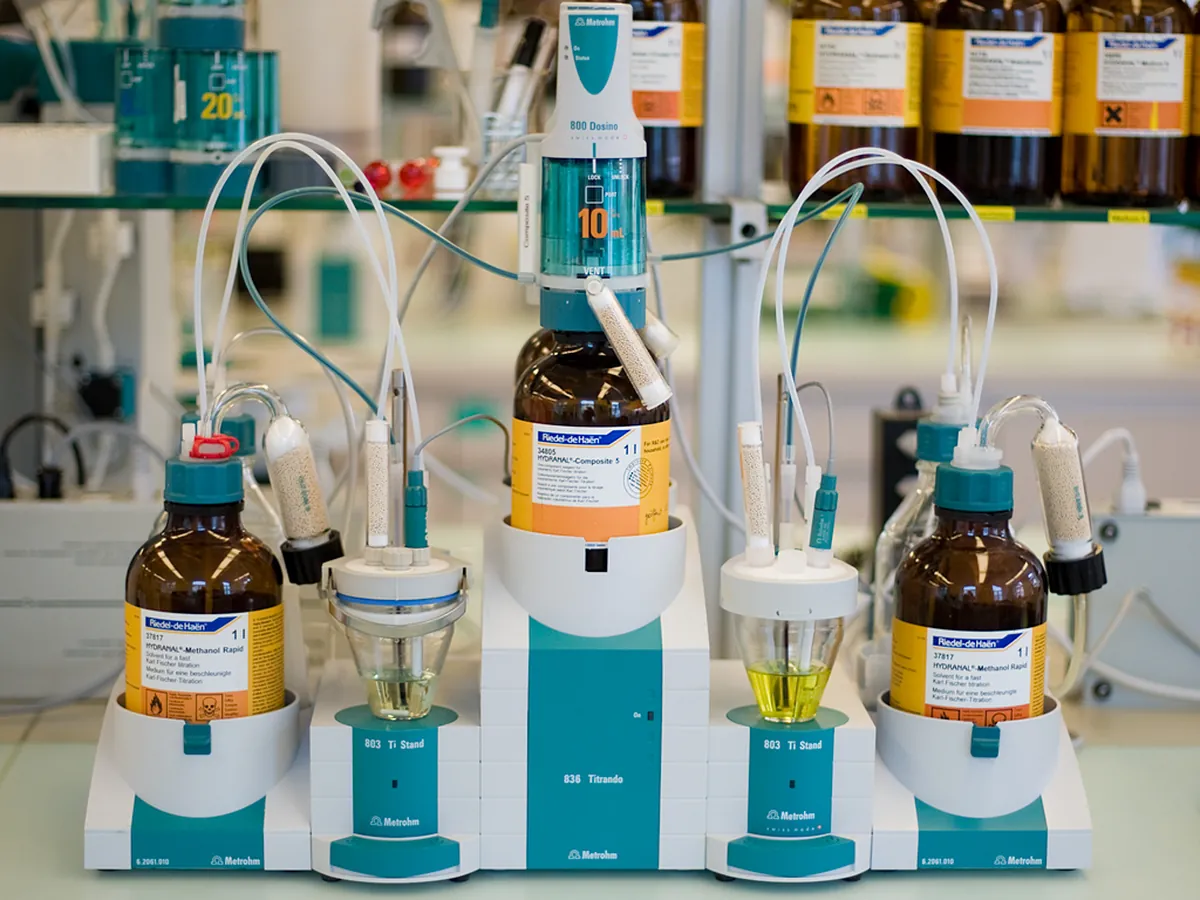
Karl Fischer Titrator (Volumetric)
Measures the water content of a sample by titrating it with an iodine-containing Karl Fischer reagent from a motorised burette. The standard method for water in APIs, excipients and many finished products.
- Pharmaceutical
- Chemicals
- Food & beverage
- Petrochemicals
- Cosmetics
TROUBLESHOOTING
Common problems, causes and fixes
High or unstable drift
Likely causes
- • Leaking septum or ground-glass joint
- • Exhausted molecular sieve
- • Exhausted solvent
- • Side reaction with the sample
What to do
- • Replace the septum and check all joints
- • Replace or regenerate the molecular sieve
- • Exchange the solvent
- • Use a reagent or solvent suitable for the sample, or a KF oven
Endpoint never reached (titration runs on)
Likely causes
- • Side reaction consuming iodine, for example with ketones or aldehydes
- • Very large water content
- • Contaminated or wet solvent
What to do
- • Use ketone-compatible reagents for such samples
- • Reduce the sample mass
- • Replace the solvent
Results too high
Likely causes
- • Moisture picked up during weighing or transfer
- • Wrong titre (too old, or determined incorrectly)
- • Drift not corrected
What to do
- • Weigh quickly and add the sample promptly
- • Redetermine the titre
- • Check drift correction is enabled
Results too low or poor repeatability
Likely causes
- • Sample not fully dissolved, so water is not released
- • Endpoint criteria too loose (stop too early)
- • Sample mass too small
What to do
- • Use a co-solvent (for example formamide), longer extraction or a KF oven
- • Review endpoint and stop-drift settings
- • Increase sample mass so more reagent is consumed
Slow titrations
Likely causes
- • Exhausted solvent
- • Dirty platinum electrode
- • pH outside the optimum range
What to do
- • Exchange the solvent
- • Clean the electrode
- • Buffer the solvent for acidic or basic samples
Air bubbles in the burette
Likely causes
- • Loose tubing connection
- • Reagent outgassing
- • Empty reagent bottle
What to do
- • Tighten connections
- • Run several prepare / rinse cycles to expel bubbles
- • Refill the reagent bottle
In LimsPulse · Calibration Management
Keep every KF titrator (volumetric) in control: usage logs, calibration and maintenance schedules, and automatic blocking of overdue instruments.