Spectroscopy
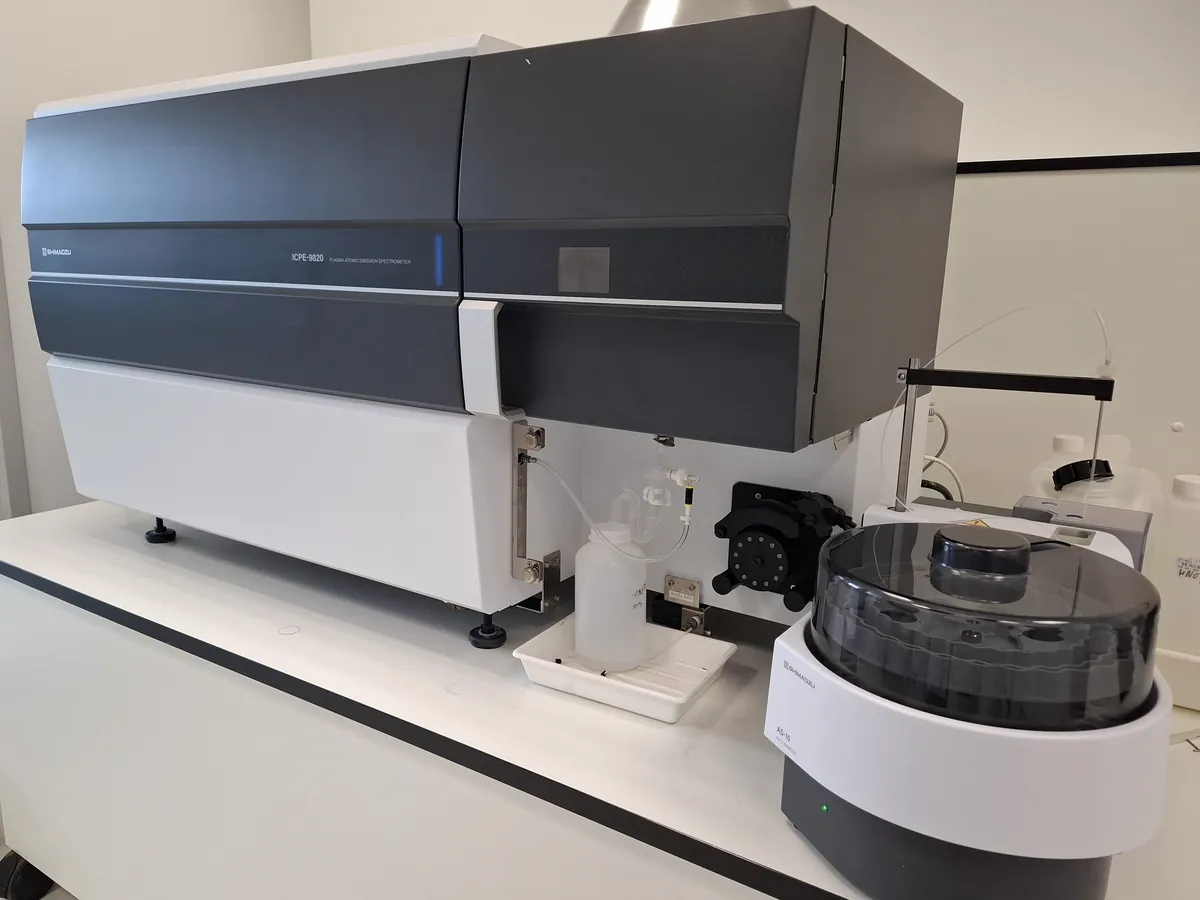
Inductively Coupled Plasma Optical Emission Spectrometer (ICP-OES)
Excites atoms in an argon plasma at about 6000–10,000 K and measures the light each element emits. Measures many elements at once from trace to percent levels.
- Pharmaceutical
- Environmental
- Food & beverage
- Petrochemical
- Mining & metallurgy
- Chemicals
TROUBLESHOOTING
Common problems, causes and fixes
Plasma will not ignite or goes out
Likely causes
- • Air leak in torch or connections
- • Low argon pressure
- • Wet or contaminated torch
- • Sample too high in solids or organics
What to do
- • Check torch fitting and O-rings
- • Check argon supply
- • Dry and clean the torch
- • Dilute the sample; use organic-solvent settings if needed
Poor precision (high %RSD)
Likely causes
- • Worn pump tubing
- • Partly blocked nebuliser
- • Air bubbles in sample line
What to do
- • Replace pump tubing
- • Clean nebuliser by back-flushing (never with a wire)
- • Check uptake tube and connections
Signal drift during the run
Likely causes
- • Salt deposits on injector
- • Temperature changes
- • Plasma not stable
What to do
- • Use internal standard correction
- • Clean the torch injector
- • Allow longer warm-up
Unexpected high result for one element
Likely causes
- • Spectral interference from a matrix element
- • Contamination or carry-over
What to do
- • Check a second line for the same element
- • Run blanks; extend rinse time
Wavelength calibration fails
Likely causes
- • Spectrometer temperature not stable
- • Wrong or old calibration solution
What to do
- • Allow the optics to reach temperature
- • Prepare fresh calibration solution and repeat
In LimsPulse · Calibration Management
Keep every ICP-OES in control: usage logs, calibration and maintenance schedules, and automatic blocking of overdue instruments.