Spectroscopy
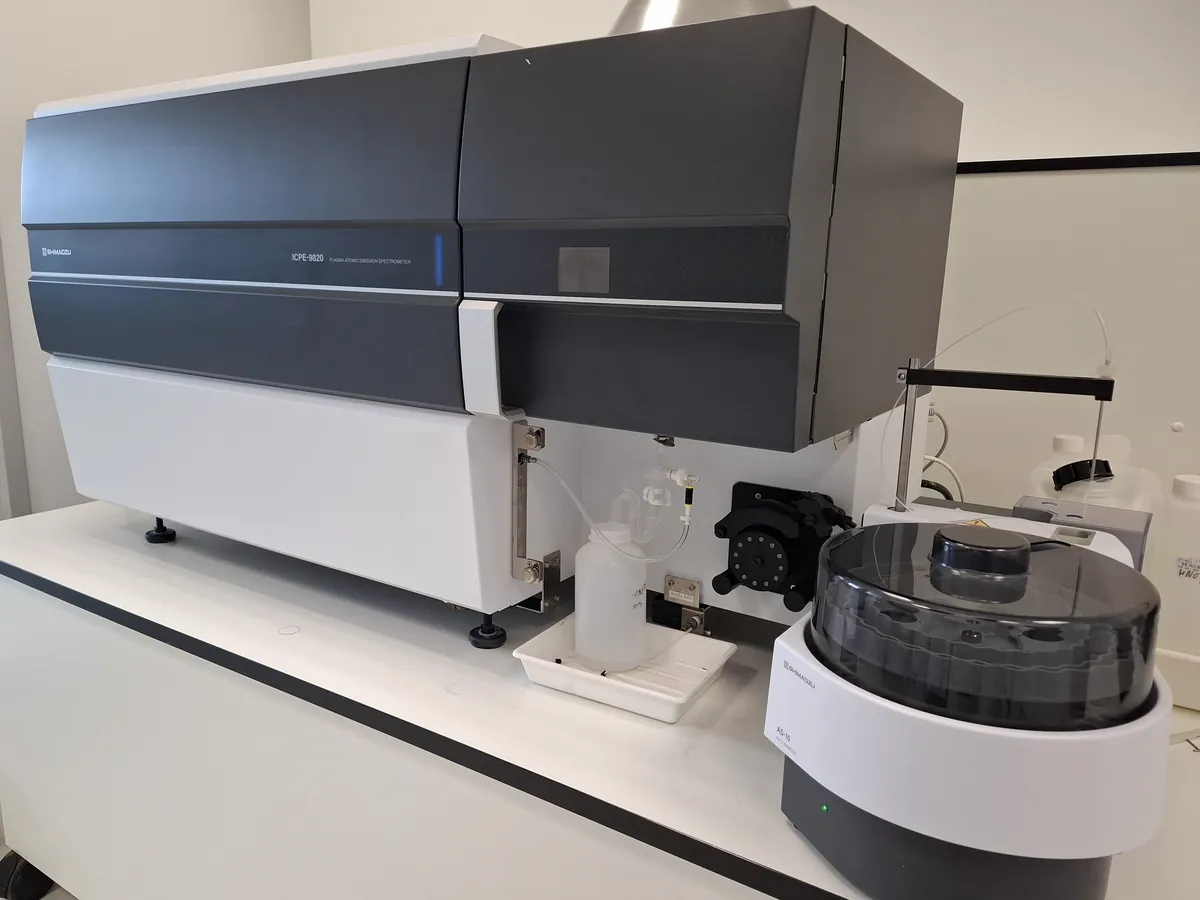
Inductively Coupled Plasma Optical Emission Spectrometer (ICP-OES)
Excites atoms in an argon plasma at about 6000–10,000 K and measures the light each element emits. Measures many elements at once from trace to percent levels.
- Pharmaceutical
- Environmental
- Food & beverage
- Petrochemical
- Mining & metallurgy
- Chemicals
Follow your site SOP
This is a typical operating sequence for learning. Your instrument model and approved SOP take precedence.
STAGE 1
Before you start
- 1Check calibration status and the argon supply (enough for the full run).
- 2Inspect pump tubing for wear and fit it to the pump with correct tension.
- 3Check the torch, nebuliser and spray chamber are clean and correctly fitted.
- 4Switch on exhaust and cooling water (chiller).
- Never ignite the plasma without the torch box closed and exhaust running.
STAGE 2
Start-up
- 1Purge the optics with argon or nitrogen if required (needed for lines below about 190 nm).
- 2Ignite the plasma and aspirate dilute acid blank; allow 15–30 minutes to stabilise.
- 3Run the instrument's wavelength calibration or daily performance check as per SOP.
- The torch box contains RF energy and UV light; do not open it while the plasma is on.
STAGE 3
Measurement
- 1Calibrate with a blank and standards prepared in the same acid matrix as the samples.
- 2Add the internal standard to all solutions or on-line via a mixing tee.
- 3Run an independent check standard, then samples, with check standards and blanks at set intervals.
- 4Review internal standard recoveries and check-standard results before reporting.
- Very high dissolved-solid samples can block the nebuliser and torch injector; dilute them.
STAGE 4
Shutdown
- 1Rinse with dilute acid and then water for several minutes.
- 2Extinguish the plasma; release pump tubing tension.
- 3Leave the purge on if the SOP requires; switch off chiller and exhaust as per instructions.
- 4Complete the instrument log.
In LimsPulse · Calibration Management
Keep every ICP-OES in control: usage logs, calibration and maintenance schedules, and automatic blocking of overdue instruments.