Spectroscopy
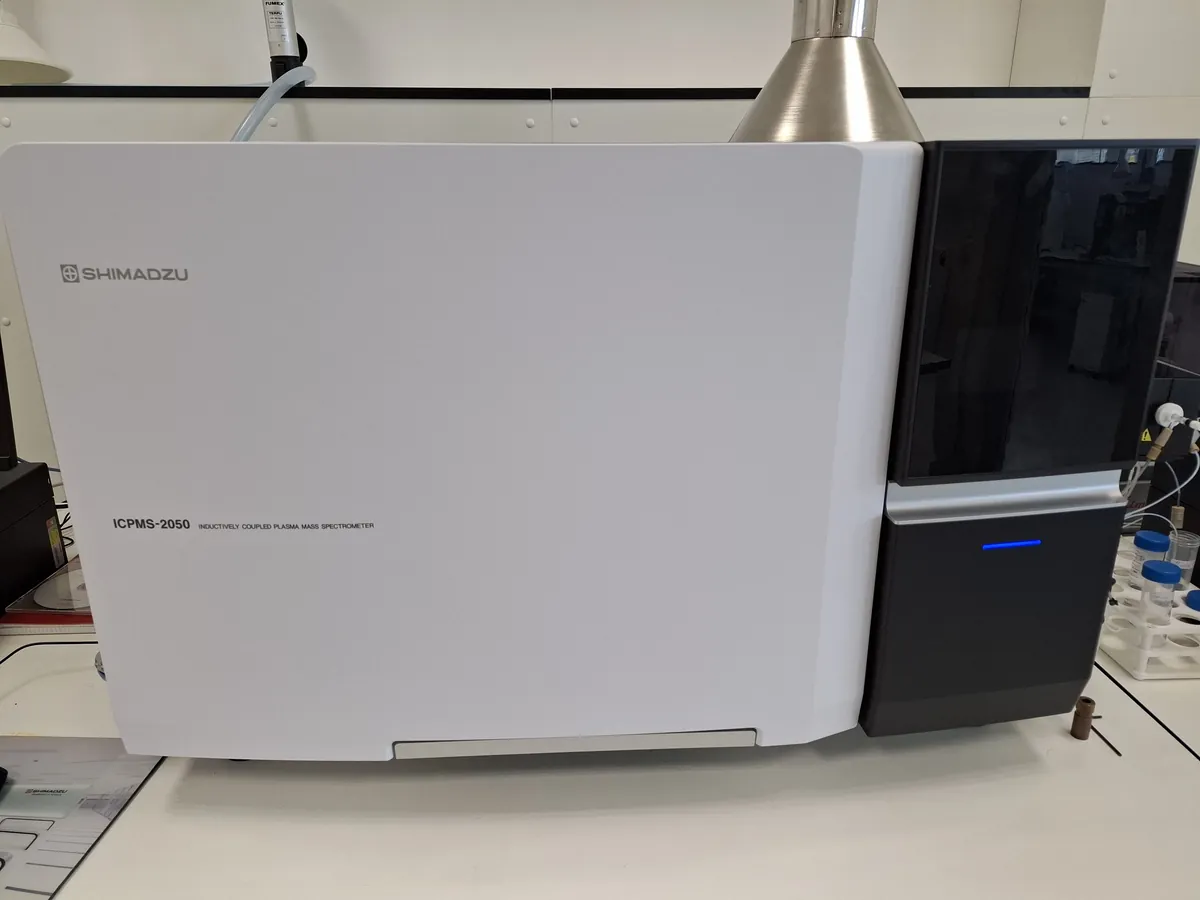
Inductively Coupled Plasma Mass Spectrometer (ICP-MS)
Ionises the sample in an argon plasma and counts the ions of each element by their mass. The most sensitive routine technique for elemental impurities, reaching ng/L levels.
- Pharmaceutical
- Biotech
- Environmental
- Food & beverage
- Semiconductor
- Clinical
PREVENTIVE MAINTENANCE
Maintenance checklist
Daily / each use
- Tune / performance check
- Inspect pump tubing
- Check vacuum readings and argon supply
- Empty drain
Weekly
- Inspect and clean sampler and skimmer cones (frequency depends on sample load)
- Clean nebuliser, spray chamber and torch
- Check rotary pump oil level
Monthly / quarterly
- Clean ion lenses if sensitivity falls
- Change rotary pump oil per manufacturer's interval
- Check chiller and exhaust
Six-monthly / annual
- Preventive maintenance by service engineer
- Mass calibration and detection limit calibration
- Detector check (voltage and cross-calibration)
SAFETY
Safety precautions
Before you work on the ICP-MS
- The plasma emits UV light and RF energy: keep covers closed while running.
- Interface and cones are hot after shutdown; allow to cool.
- Handle concentrated nitric and hydrochloric acid and any hydrofluoric acid in a fume hood with full PPE; HF needs special training and calcium gluconate gel on hand.
- Toxic element standards (As, Cd, Hg, Pb) must be handled with gloves and disposed of as hazardous waste.
- Secure argon supply; ensure good room ventilation.
In LimsPulse · Calibration Management
Keep every ICP-MS in control: usage logs, calibration and maintenance schedules, and automatic blocking of overdue instruments.