Chromatography
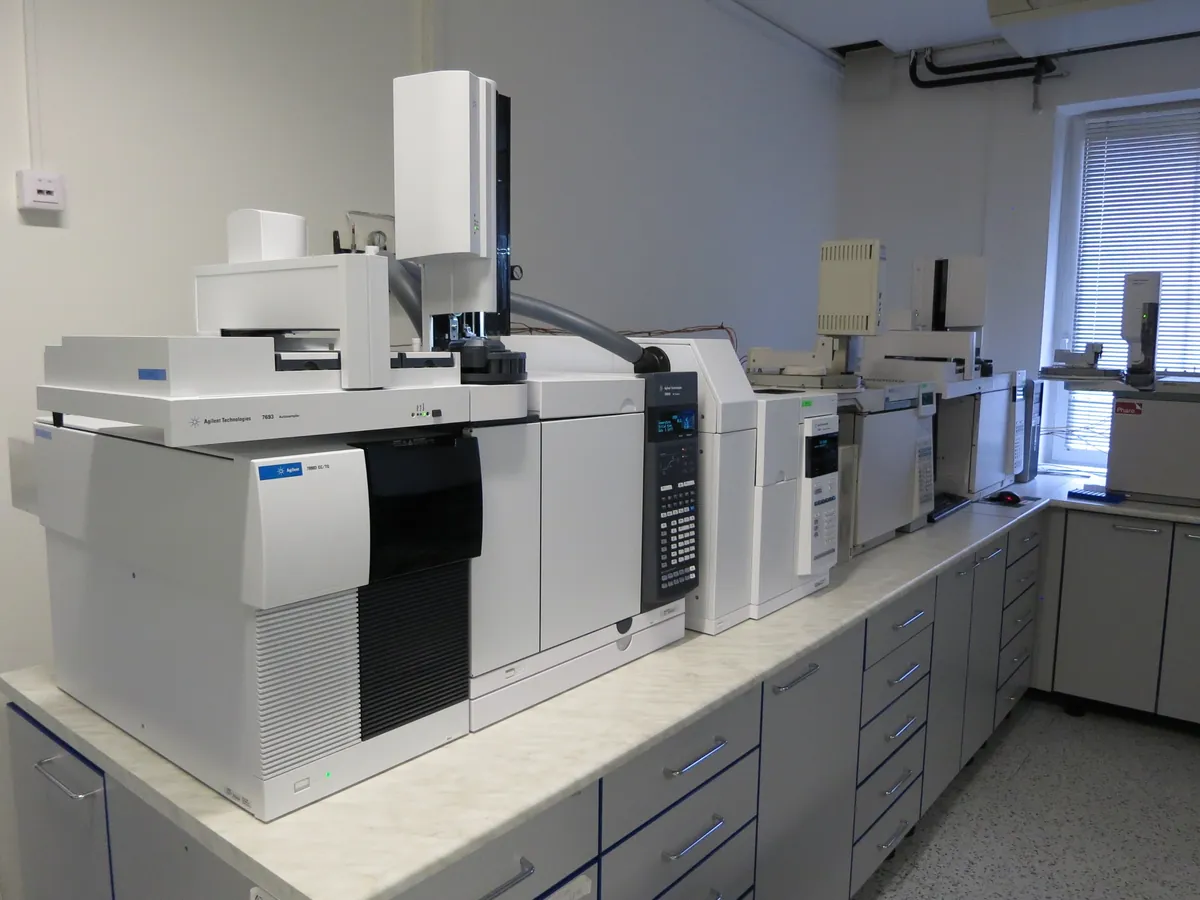
Gas Chromatograph (GC)
Separates volatile compounds in a heated capillary column using a flowing inert gas and measures each one as it leaves, usually with a flame ionisation detector. Used in pharma QC for residual solvents, volatile impurities and some assays.
- Pharmaceutical
- Petrochemical
- Food & flavour
- Environmental
- Forensic
- Chemicals
TROUBLESHOOTING
Common problems, causes and fixes
No peaks
Likely causes
- • FID flame not lit or blown out
- • Syringe blocked or empty vial
- • Column broken or not connected
- • Carrier gas cylinder empty
What to do
- • Check hydrogen and air flows and re-ignite
- • Replace the syringe and check vial volume
- • Inspect the column and its connections
- • Replace the cylinder and purge the lines
Ghost peaks or rising baseline
Likely causes
- • Septum bleed (siloxane peaks)
- • Carry-over from a previous injection
- • Contaminated carrier gas or saturated traps
- • Column bleed at high temperature
What to do
- • Use a low-bleed septum and replace it
- • Increase syringe washes and run blanks
- • Replace gas traps or cylinder
- • Condition the column; stay below its temperature limit
Peak tailing
Likely causes
- • Active sites in a dirty liner or column inlet
- • Poorly cut column end or wrong insertion depth
- • Column contamination
What to do
- • Replace the liner (deactivated)
- • Recut the column squarely and reinstall at the correct depth
- • Trim the front of the column
Retention time shifting
Likely causes
- • Leak at the inlet or septum
- • Changed column length after trimming
- • Wrong carrier gas pressure or flow
- • Oven temperature not reproducible
What to do
- • Leak-check and replace the septum
- • Update column dimensions in the method and adjust flow
- • Verify flow with a calibrated flow meter
- • Check oven calibration
Poor area precision
Likely causes
- • Septum leak or cored septum
- • Syringe plunger sticking or air bubbles
- • Liner packed with septum fragments
- • Split ratio drifting
What to do
- • Replace the septum
- • Replace or clean the syringe; adjust draw speed
- • Replace the liner
- • Check split vent flow and trap
Split or broad peaks
Likely causes
- • Solvent and stationary phase poorly matched in splitless mode
- • Initial oven temperature too high for solvent focusing
- • Column installed too high in the inlet
What to do
- • Use a solvent compatible with the phase or a retention gap
- • Start the oven 10–20 °C below the solvent boiling point
- • Reinstall at the correct insertion depth
FID noise or spikes
Likely causes
- • Dirty jet or collector
- • Incorrect hydrogen/air ratio
- • Particles from a broken column or septum
What to do
- • Clean or replace the jet
- • Reset gas flows to the manufacturer's values
- • Clean the detector and replace the septum
In LimsPulse · Calibration Management
Keep every GC in control: usage logs, calibration and maintenance schedules, and automatic blocking of overdue instruments.