Chromatography
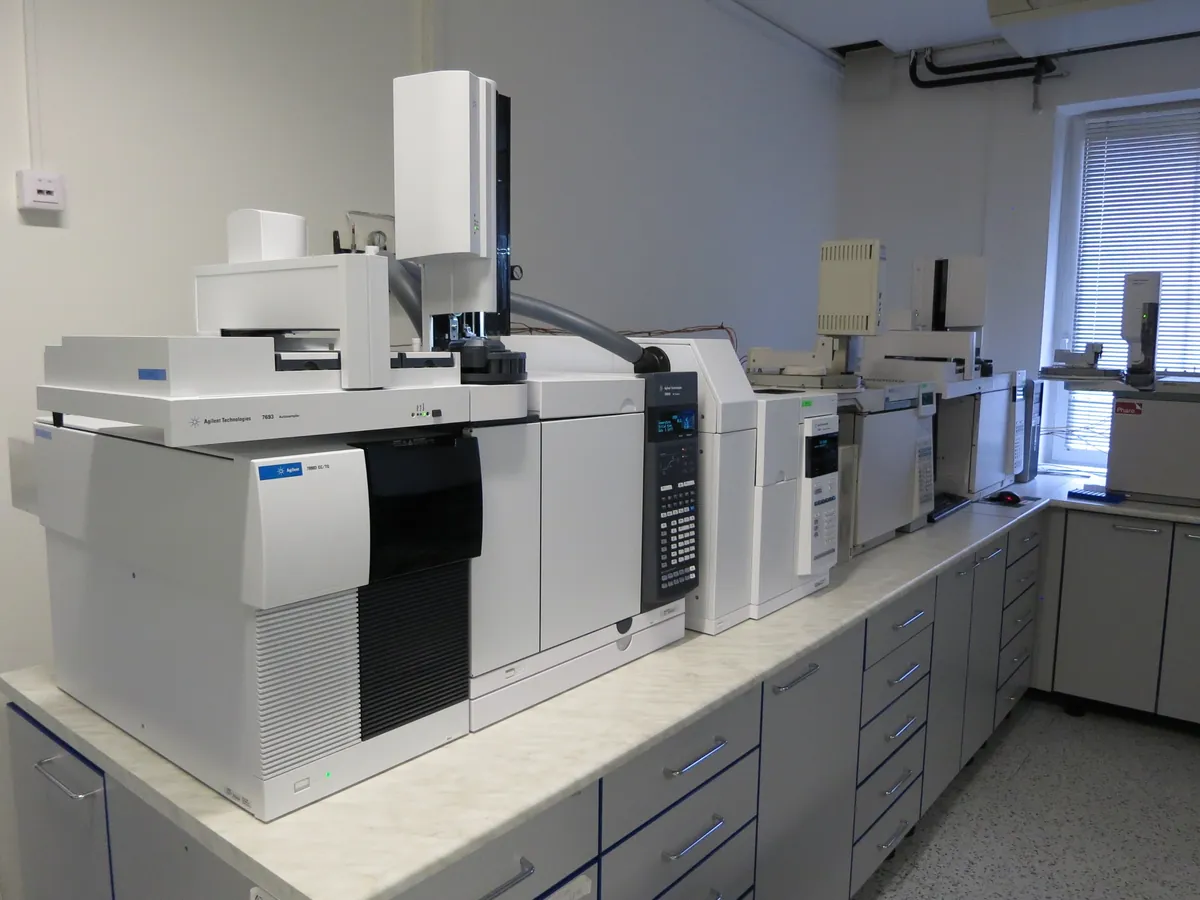
Gas Chromatograph (GC)
Separates volatile compounds in a heated capillary column using a flowing inert gas and measures each one as it leaves, usually with a flame ionisation detector. Used in pharma QC for residual solvents, volatile impurities and some assays.
- Pharmaceutical
- Petrochemical
- Food & flavour
- Environmental
- Forensic
- Chemicals
PREVENTIVE MAINTENANCE
Maintenance checklist
Daily / each use
- Check cylinder pressures and regulator settings
- Check for leaks at the inlet nut and column fittings with an electronic leak detector
- Review blank chromatogram for ghost peaks or rising baseline
- Check autosampler wash and waste vials
Every 100–200 injections (or as per SOP)
- Replace the inlet septum (more often at high inlet temperatures)
- Inspect and replace the inlet liner and O-ring if dirty, or if peaks tail
- Replace the autosampler syringe if the plunger sticks
Monthly / as needed
- Trim 10–50 cm from the inlet end of the column if peak shape degrades; update column length in the method
- Replace inlet gold seal if active compounds tail
- Clean or replace the FID jet if noise rises or the flame will not stay lit
- Check gas trap indicators and replace saturated traps
Six-monthly / annual
- Preventive maintenance by a trained engineer
- Calibration of oven temperature, carrier gas flow, injector precision and detector linearity
- Replace ferrules whenever a column is removed and refitted
SAFETY
Safety precautions
Before you work on the GC
- Hydrogen is extremely flammable and forms explosive mixtures with air. Use leak-tight fittings, hydrogen sensors where your site requires them, and never vent hydrogen into a closed oven.
- Compressed gas cylinders must be secured upright, fitted with the correct regulator and stored away from heat. Transport them only with a trolley and valve cap.
- Inlet, oven and detector surfaces reach 250–350 °C. Let them cool before changing septa, liners or columns.
- Fused-silica column ends are sharp and fragments can pierce skin; wear safety glasses when cutting columns.
- Organic solvents used to prepare samples are flammable and toxic: handle them in a fume hood.
- The FID exhaust is hot and contains a flame; keep paper and solvents away from the detector top.
In LimsPulse · Calibration Management
Keep every GC in control: usage logs, calibration and maintenance schedules, and automatic blocking of overdue instruments.