Chromatography
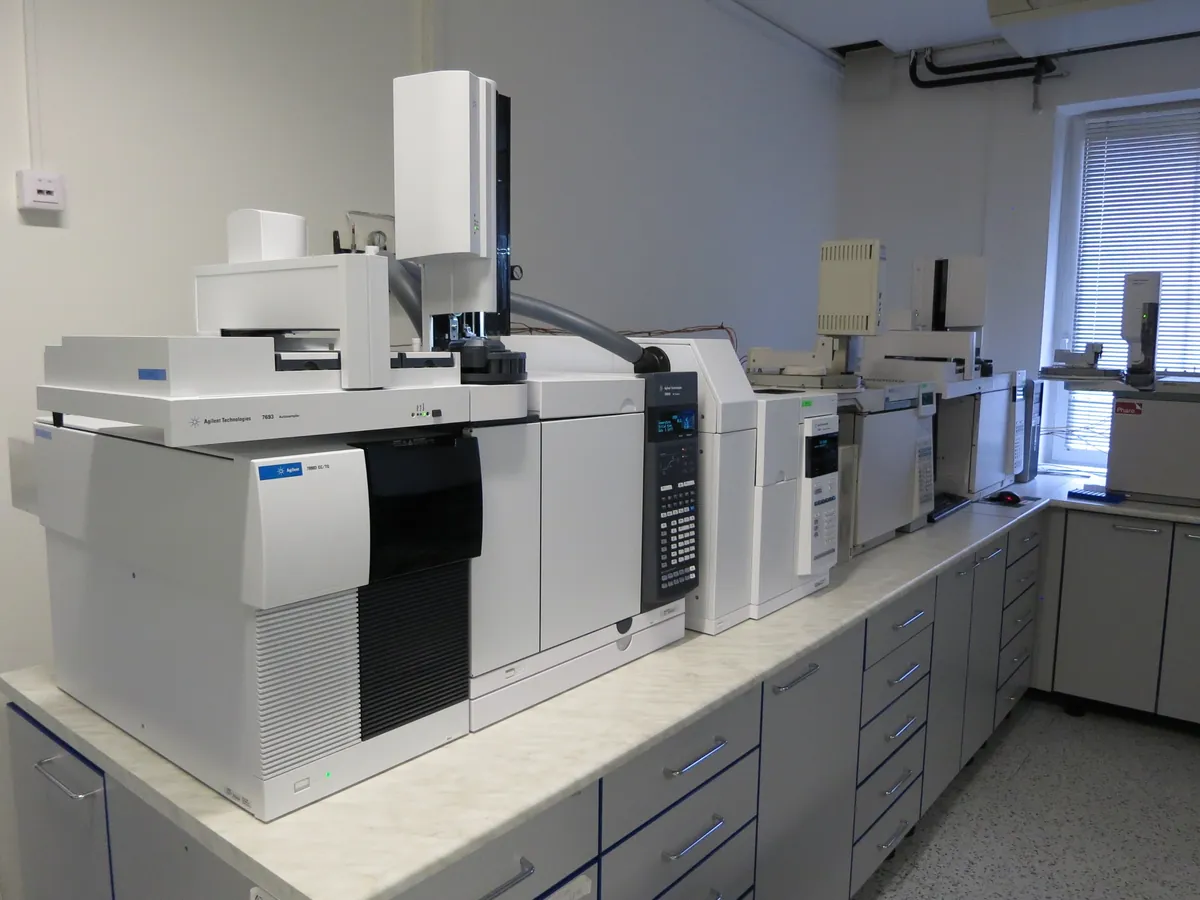
Gas Chromatograph (GC)
Separates volatile compounds in a heated capillary column using a flowing inert gas and measures each one as it leaves, usually with a flame ionisation detector. Used in pharma QC for residual solvents, volatile impurities and some assays.
- Pharmaceutical
- Petrochemical
- Food & flavour
- Environmental
- Forensic
- Chemicals
Follow your site SOP
This is a typical operating sequence for learning. Your instrument model and approved SOP take precedence.
STAGE 1
Before you start
- 1Check the instrument is within its calibration due date and has no 'out of order' label.
- 2Check cylinder pressures for carrier, hydrogen and air; replace a cylinder before it falls below about 10–15 bar so contaminants are not drawn into the system.
- 3Check the gas traps' indicators and the septum and liner usage counts against your replacement schedule.
- 4Install the column specified in the method with new ferrules, cut squarely, at the correct insertion depth for the inlet and detector. Record it in the column log.
- 5Leak-check the new fittings with an electronic leak detector.
- Gas cylinders must be chained or strapped upright and moved only with a cylinder trolley and the valve cap fitted.
- Never use liquid leak-detection soap on capillary fittings; it can be drawn into the column.
STAGE 2
Start-up
- 1Turn on carrier gas first and let it purge the column for 10–15 minutes before heating the oven, so oxygen does not damage the hot stationary phase.
- 2Set the inlet temperature, split ratio, column flow or pressure and oven programme from the method.
- 3Heat the detector; for an FID, set hydrogen, air and make-up flows and ignite the flame. Confirm ignition from the signal jump or by holding a cold mirror or spanner over the exhaust to see condensation.
- 4Condition a new column as the supplier directs, then run one or two blank programmes until the baseline is stable.
- Hydrogen is extremely flammable. Turn hydrogen on only when the column is fitted to the detector, and keep the oven door closed so a leak cannot build up in the oven.
- Do not exceed the column's maximum temperature limit printed on its tag.
STAGE 3
Running samples
- 1Create the sequence: blank, system suitability injections, standards and samples, with bracketing standards as the method requires.
- 2Run the blank and confirm no interfering peaks at the analyte retention times (septum bleed and carry-over show up here).
- 3Check system suitability (resolution, %RSD, tailing, S/N) meets the method limits before processing any sample result.
- 4Process chromatograms with the approved integration method; document any manual integration with a reason.
- If system suitability fails, stop and investigate. Results from a failed run cannot be reported.
STAGE 4
Shutdown
- 1Cool the oven, inlet and detector to standby temperatures.
- 2Turn off hydrogen and air to the FID (the flame goes out).
- 3Keep a low carrier gas flow through the column at all times, or cool fully before switching the carrier off, to protect the stationary phase.
- 4Close cylinder valves if the instrument will be idle for a long period, as per site procedure, and complete the usage log.
- Never switch off carrier gas while the column is hot: oxygen diffusing in will strip the stationary phase.
In LimsPulse · Calibration Management
Keep every GC in control: usage logs, calibration and maintenance schedules, and automatic blocking of overdue instruments.