Thermal analysis & ovens
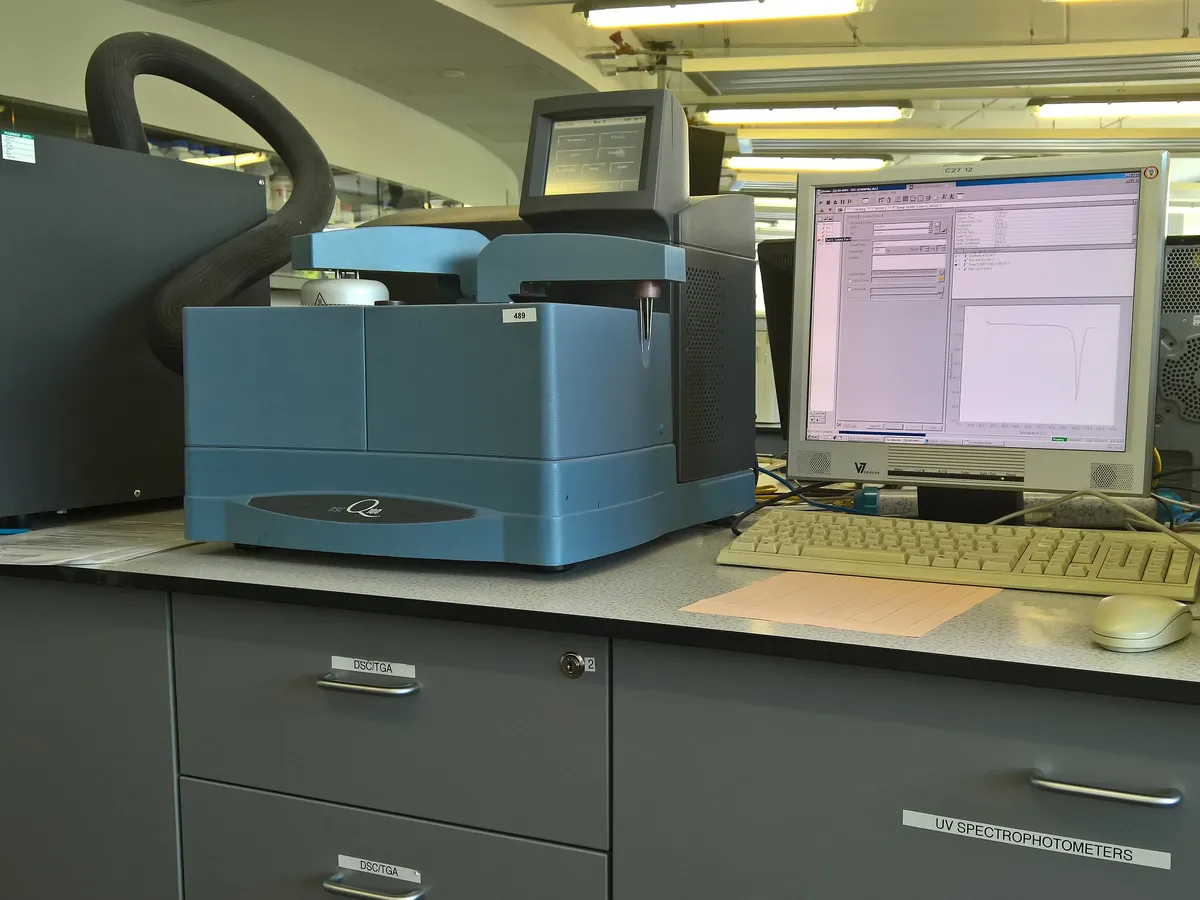
Differential Scanning Calorimeter (DSC)
Measures the heat flowing into or out of a small sample compared with an empty reference pan while both are heated or cooled. It shows melting, crystallisation, glass transitions and polymorphic changes.
- Pharmaceutical
- Polymers and plastics
- Food
- Materials research
- Chemicals
Follow your site SOP
This is a typical operating sequence for learning. Your instrument model and approved SOP take precedence.
STAGE 1
Before you start
- 1Check the calibration status and that the last indium check passed.
- 2Switch on the purge gas and cooling accessory and let the cell stabilise.
- 3Run an empty-pan baseline if required by your method.
- Check the purge gas cylinder pressure; a gas failure changes the baseline and can damage the cell at high temperature.
STAGE 2
Sample preparation
- 1Weigh 2–5 mg of sample accurately into a tared pan using a microbalance.
- 2Spread the sample thinly over the pan bottom for good thermal contact.
- 3Crimp the lid (pierced lid if volatiles must escape) and reweigh.
- 4Prepare an empty reference pan of the same type.
- Do not touch pans with bare fingers; use tweezers.
- Never overfill pans; spilled sample contaminates the sensor.
STAGE 3
Running
- 1Load the sample and reference pans in the correct positions.
- 2Enter the sample name and mass, and select the method (for example equilibrate at 25 °C, heat at 10 °C/min to 250 °C).
- 3Start the run and check the signal looks normal.
- 4Evaluate the onset, peak temperature and enthalpy using the approved evaluation settings.
- Do not heat a sample above its decomposition temperature in a sealed pan; it may burst and contaminate the cell. Check with TGA first.
STAGE 4
After use
- 1Let the cell cool before removing pans.
- 2Dispose of used pans; never reuse them.
- 3Leave the purge gas on as recommended, and complete the logbook.
In LimsPulse · Calibration Management
Keep every DSC in control: usage logs, calibration and maintenance schedules, and automatic blocking of overdue instruments.