Atmospheric Distillation Apparatus
Distils 100 mL of a fuel from a flask at a controlled rate and records the vapour temperature as each volume is collected. The resulting curve (IBP, T10, T50, T90, FBP) describes how the fuel evaporates.
- Petroleum refining
- Fuel terminals and retail quality control
- Aviation fuel quality
- Solvent manufacture
- Independent testing laboratories
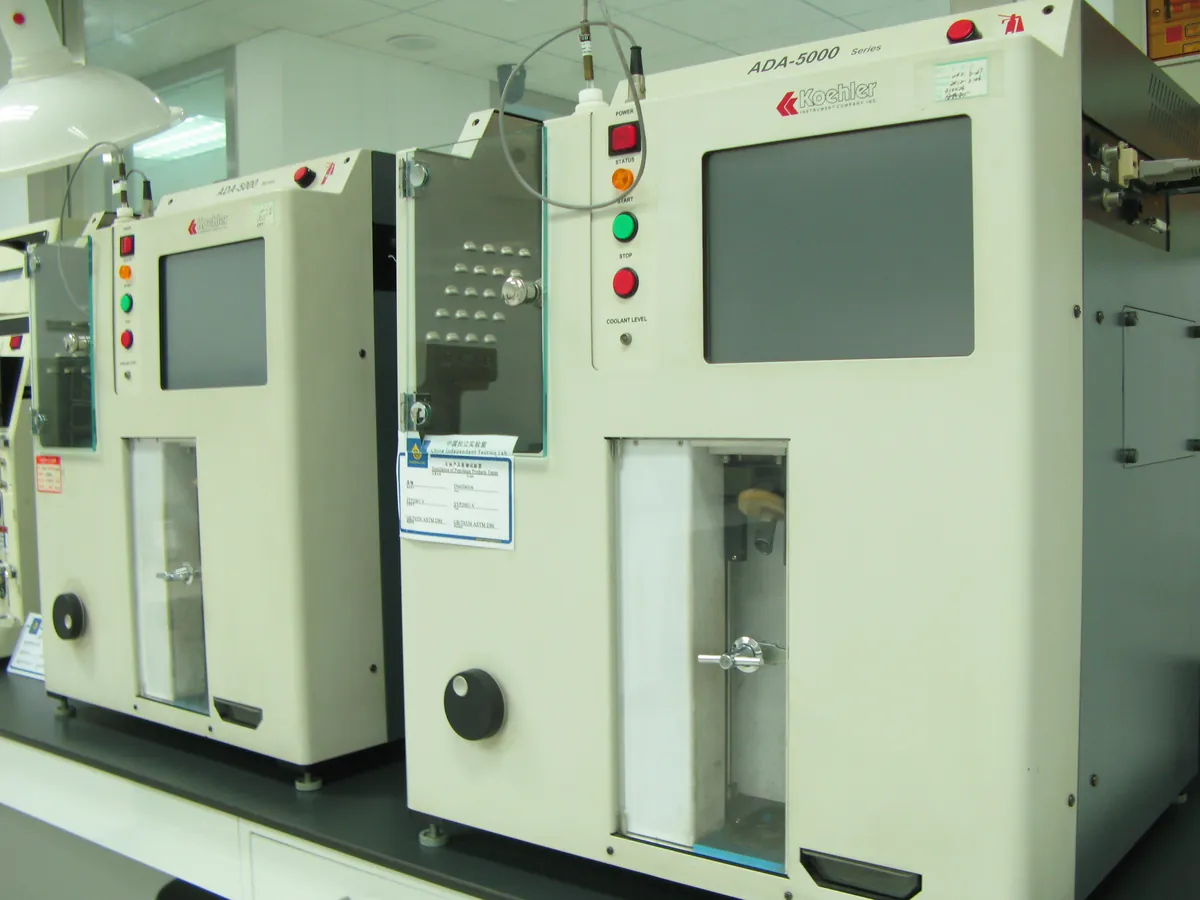
Distillation unit calibration procedures
Instrument qualification (DQ · IQ · OQ · PQ)
- 01
DQ — Design qualification
Specifies methods (ASTM D86, ISO 3405, IS 1448 Part 18), sample groups, temperature range, condenser cooling range, automatic level tracking, barometric and lag corrections, fire suppression and data integrity requirements.
- 02
IQ — Installation qualification
Confirms installation in a ventilated location, power and cooling connections, fire suppression gas connected, accessories (flasks, boards, cylinders) present, and documents and software versions recorded.
- 03
OQ — Operational qualification
Verifies temperature sensor accuracy at several points, condenser and receiver temperature control, volume reading accuracy, heater control, barometer accuracy and fire detection response.
- 04
PQ — Performance qualification
Distils reference materials or check samples (for example toluene or a certified fuel) and shows results within method tolerance, then monitors a check sample on a control chart.
Keep every Distillation unit in control: usage logs, calibration and maintenance schedules, and automatic blocking of overdue instruments.