Petroleum testing
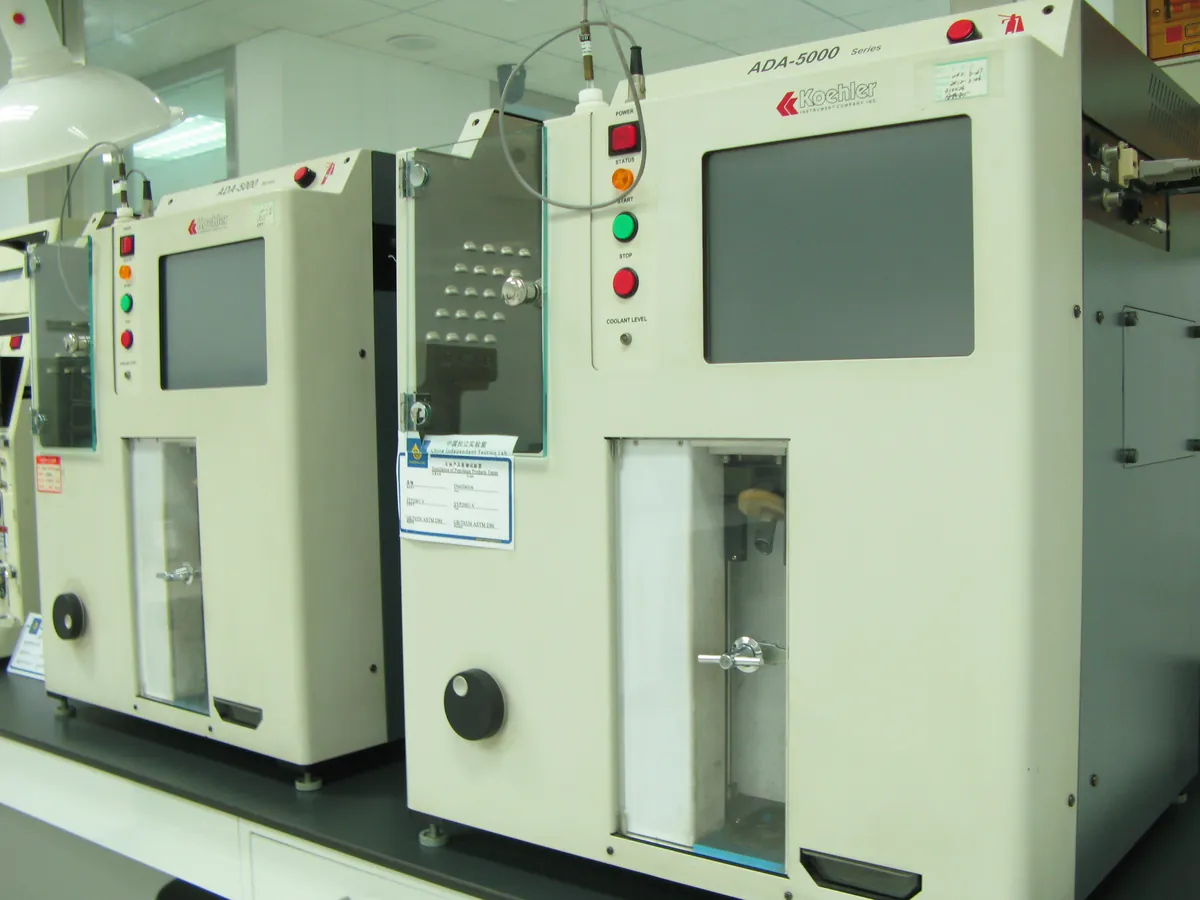
Atmospheric Distillation Apparatus
Distils 100 mL of a fuel from a flask at a controlled rate and records the vapour temperature as each volume is collected. The resulting curve (IBP, T10, T50, T90, FBP) describes how the fuel evaporates.
- Petroleum refining
- Fuel terminals and retail quality control
- Aviation fuel quality
- Solvent manufacture
- Independent testing laboratories
PREVENTIVE MAINTENANCE
Maintenance checklist
Each test
- Clean and dry the flask; discard chipped or cracked flasks
- Swab the condenser tube with a lint-free cloth
- Wipe spills from the heater area
Weekly
- Check condenser bath level and temperature
- Clean the receiver level follower optics
- Check stoppers and seals
Monthly / per SOP
- Run a check sample and plot on a control chart
- Check the barometer against a reference
- Test the fire detection system as the manual describes
Annual
- Calibrate temperature sensor(s) at several points
- Verify the receiver volume reading
- Service the heater, cooling system and fire suppression by the supplier
SAFETY
Safety precautions
Before you work on the Distillation unit
- You are boiling a flammable fuel next to a heater. Never leave a run unattended and keep the fire suppression system armed and in date.
- Operate in a well-ventilated area or a hood; vapour can escape at leaking joints or from the receiver.
- Inspect every flask for cracks and chips; a broken flask spills hot fuel onto the heater.
- Keep a CO₂ or dry powder extinguisher nearby; never use water on a fuel fire.
- Allow the flask, residue and heater to cool before handling; use heat-resistant gloves.
- Petrol contains benzene and other harmful vapours; avoid breathing vapour and skin contact. Read the SDS.
- Store samples and waste in closed containers in a flammables cabinet, away from ignition sources.
In LimsPulse · Calibration Management
Keep every Distillation unit in control: usage logs, calibration and maintenance schedules, and automatic blocking of overdue instruments.