Petroleum testing
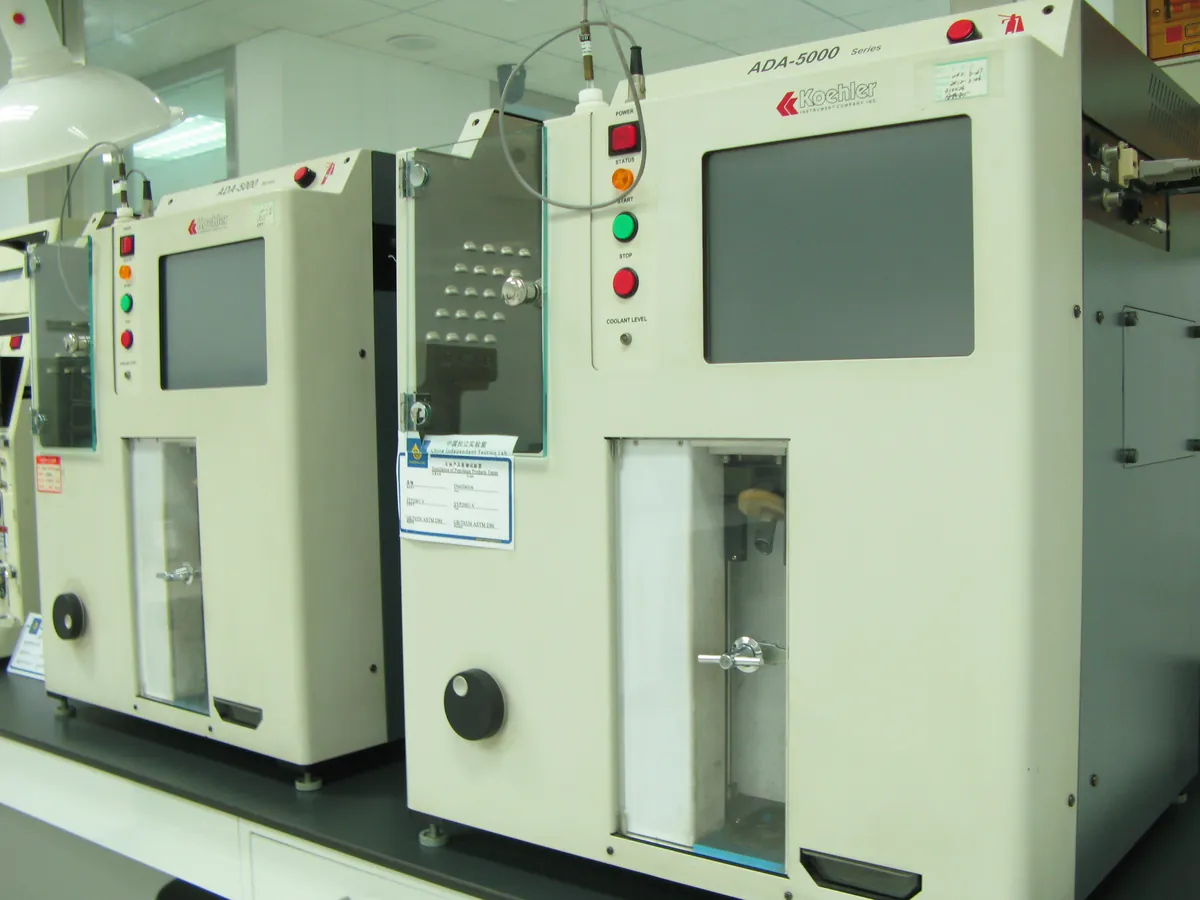
Atmospheric Distillation Apparatus
Distils 100 mL of a fuel from a flask at a controlled rate and records the vapour temperature as each volume is collected. The resulting curve (IBP, T10, T50, T90, FBP) describes how the fuel evaporates.
- Petroleum refining
- Fuel terminals and retail quality control
- Aviation fuel quality
- Solvent manufacture
- Independent testing laboratories
TROUBLESHOOTING
Common problems, causes and fixes
High loss
Likely causes
- • Leaking stopper or condenser joint
- • Condenser too warm for a volatile sample
- • Sample warm when measured
- • Light ends lost before testing
What to do
- • Re-seat stopper and joints
- • Set condenser to group temperature
- • Cool sample and cylinder before measuring
- • Re-sample into a cooled, well-filled container
IBP too high or too late
Likely causes
- • Heating too slow at the start
- • Wrong flask support board
- • Sensor too low in the neck
What to do
- • Adjust initial heating to meet the timing
- • Use the board for the sample group
- • Reposition the sensor at the side-arm level
Distillation rate unsteady
Likely causes
- • Heater control poorly tuned
- • Bumping
- • Level follower losing the meniscus
What to do
- • Adjust heater settings
- • Add boiling chips
- • Clean follower optics and receiver
Results differ from manual method
Likely causes
- • Lag correction not applied or wrong sensor type
- • Different barometric correction
What to do
- • Check the lag correction setting
- • Use the same correction method and pressure units
Check sample out of control
Likely causes
- • Temperature sensor drift
- • Barometer error
- • Receiver reading error
What to do
- • Calibrate sensor
- • Verify barometer
- • Verify receiver level reading and repeat
In LimsPulse · Calibration Management
Keep every Distillation unit in control: usage logs, calibration and maintenance schedules, and automatic blocking of overdue instruments.