Dissolution Test Apparatus
Measures how fast and how completely the drug is released from a tablet or capsule into a liquid medium held at body temperature. A key quality and release test for oral solid dosage forms.
- Pharmaceutical
- Generic drug development
- Nutraceuticals and dietary supplements
- Veterinary medicines
- Contract research and testing labs
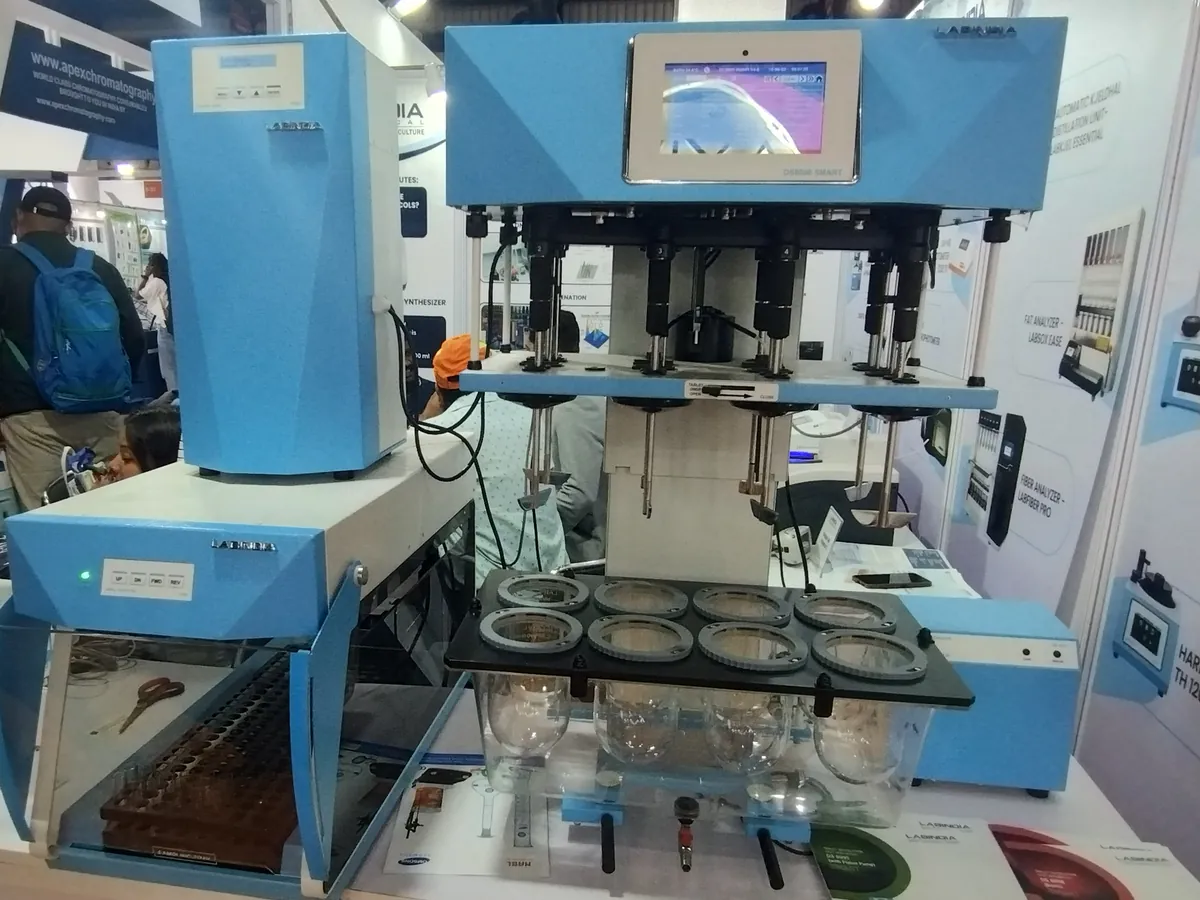
How Dissolution tester works
The dosage unit is placed in a known volume of medium at 37 °C that is stirred at a fixed, gentle speed. Drug dissolves from the unit into the medium. Under sink conditions, the amount in solution at each time depends on the formulation rather than on the drug's solubility limit, so the test discriminates between good and poor batches.
The path of a sample
- 01
Medium
Prepare and deaerate the specified medium and fill each vessel with the stated volume.
- 02
Equilibrate
Bring the medium to 37 ± 0.5 °C with the paddles or baskets in place.
- 03
Introduce unit
Drop one tablet into each vessel (paddle) or load it into the basket, and start rotation.
- 04
Sample
At each time point withdraw an aliquot from the sampling zone and filter it immediately.
- 05
Analyse
Measure drug concentration by UV-Vis or HPLC against a reference standard.
- 06
Calculate
Express the result as % of label claim dissolved and compare with Q and the stage criteria.
Main parts and what they do
Water bath or heated jacket
Holds the vessels and keeps the medium at 37 ± 0.5 °C. Some designs heat each vessel directly instead of using a bath.
Heater / circulator
Heats and circulates the bath water so temperature is even around all vessels.
Vessels
Cylindrical vessels with a hemispherical bottom, nominally 1 L (other sizes exist), made of glass or inert transparent plastic.
Vessel plate and centring rings
Hold each vessel firmly and centre it under its shaft.
Drive head and shafts
Motor and drive that rotate all shafts at the set speed with minimal wobble.
Paddles (apparatus 2)
Shaft with a coated or stainless-steel blade set at a fixed height above the vessel bottom.
Baskets (apparatus 1)
Cylindrical mesh baskets that clip onto basket shafts; mesh size as stated in the method.
Vessel covers
Reduce evaporation and keep dust out, with holes for shafts, thermometers and sampling.
Temperature probes
Measure the medium temperature in each vessel, either built in or as a hand-held calibrated probe.
Sampling system
Manual syringes and cannulas with filters, or an auto-sampler with fixed sampling probes and in-line filters.
Sinkers
Small wire coils or cages that keep floating capsules or tablets at the bottom of the vessel, used only when the method allows.
Terms every analyst should know
Apparatus 1 (basket)
The unit sits in a cylindrical mesh basket (commonly 40 mesh) that rotates in the medium. Often used for capsules and units that float.
Apparatus 2 (paddle)
A paddle stirs the medium and the unit sinks to the bottom of the vessel. The most widely used set-up for tablets. Sinkers may be used for floating units.
Sink conditions
The medium volume is large enough (commonly at least three times the volume needed to saturate it with the dose) that the dissolving drug does not slow its own dissolution.
Q value
The amount dissolved, as % of label claim, specified in the monograph at a stated time. For many immediate-release tablets Q is 75–80% at 30–45 minutes.
Staged acceptance (S1, S2, S3)
Six units are tested first; if they do not meet the criteria, further units are tested in up to two more stages before the batch is rejected.
Deaeration
Dissolved air can form bubbles on the unit, basket or paddle and change the result, so media are deaerated unless the method shows it is not needed.
Sampling zone
Midway between the top of the paddle or basket and the medium surface, and at least 1 cm from the vessel wall, as described in the pharmacopoeia.
Keep every Dissolution tester in control: usage logs, calibration and maintenance schedules, and automatic blocking of overdue instruments.