Titration & electrochemistry
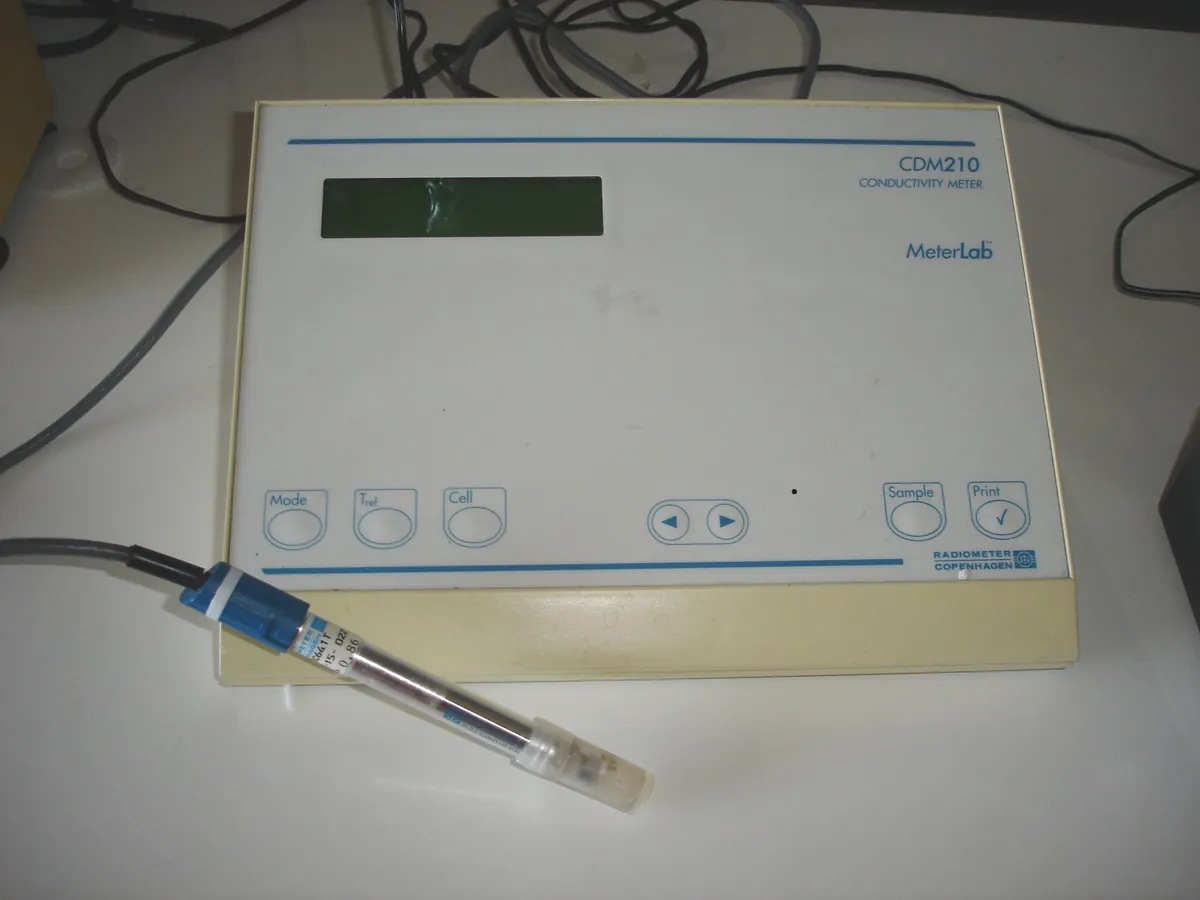
Conductivity meter
Measures how well a solution conducts electricity, which tells you how many ions it contains. In pharma QC it is the main test for the ionic purity of purified water and water for injection.
- Pharmaceutical
- Biotech
- Power generation
- Semiconductor
- Water treatment
- Food & beverage
TROUBLESHOOTING
Common problems, causes and fixes
Reading higher than expected in purified water
Likely causes
- • Carbon dioxide absorbed from air
- • Contaminated sampling container
- • Cell not rinsed
- • Real water system problem
What to do
- • Measure immediately, minimise air contact; continue to Stage 2/3 if needed
- • Use a clean, dedicated container
- • Rinse the cell repeatedly with sample
- • Check the water system and online trend
Unstable or noisy reading
Likely causes
- • Air bubbles on the electrodes
- • Cell not fully immersed
- • Electrical interference from a stirrer or pump
What to do
- • Tap the cell to dislodge bubbles
- • Increase immersion depth
- • Move away from interference or earth the set-up
Cell constant drifts from its nominal value
Likely causes
- • Coating or deposits on the electrodes
- • Damaged electrode surface
- • Old or contaminated standard
What to do
- • Clean the cell as recommended
- • Replace the cell if damaged
- • Use a fresh standard in date
Standard check fails
Likely causes
- • Wrong cell constant entered in the meter
- • Temperature compensation set incorrectly for the standard
- • Standard contaminated by air or by a dirty cell
What to do
- • Re-enter or re-determine the cell constant
- • Use the certificate value at the measured temperature, or the correct compensation
- • Pour a fresh portion of standard; rinse cell with standard first
Temperature reading wrong
Likely causes
- • Faulty temperature sensor
- • Cell not fully immersed so sensor is in air
What to do
- • Check against a reference thermometer and replace if needed
- • Immerse the cell fully
In LimsPulse · Calibration Management
Keep every Conductivity meter in control: usage logs, calibration and maintenance schedules, and automatic blocking of overdue instruments.