Titration & electrochemistry
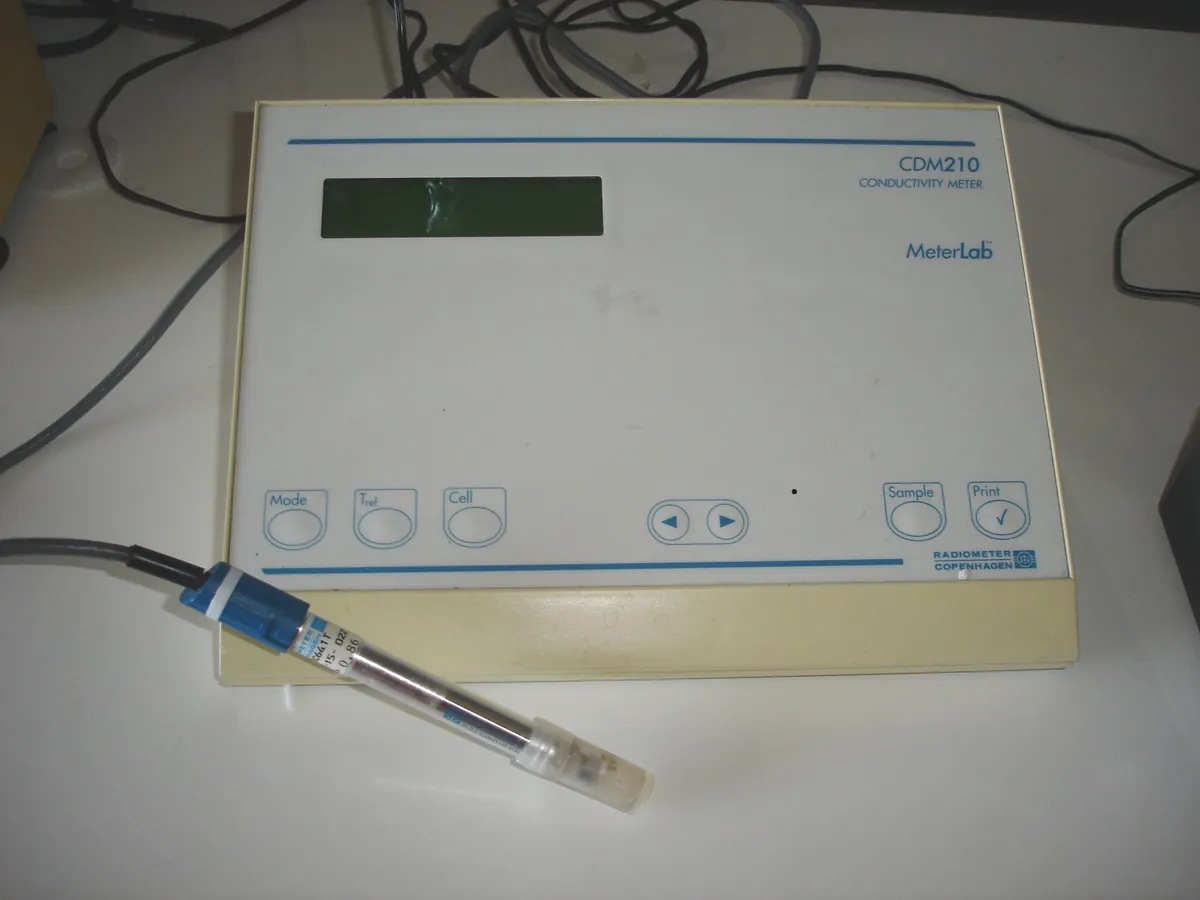
Conductivity meter
Measures how well a solution conducts electricity, which tells you how many ions it contains. In pharma QC it is the main test for the ionic purity of purified water and water for injection.
- Pharmaceutical
- Biotech
- Power generation
- Semiconductor
- Water treatment
- Food & beverage
PREVENTIVE MAINTENANCE
Maintenance checklist
Daily / each use
- Rinse the cell before and after use
- Check readings are stable and the temperature sensor responds
- Check online sensor values against the previous trend
Weekly / monthly
- Verify with a conductivity standard as defined in your SOP
- Inspect electrodes for deposits, coating or damage
- Clean the cell with a mild detergent or dilute acid if the manufacturer allows
Six-monthly / annual
- Determine the cell constant with a certified standard
- Calibrate the temperature sensor against a reference thermometer
- Verify meter electronics with certified precision resistors if required (USP <645> meter accuracy)
SAFETY
Safety precautions
Before you work on the Conductivity meter
- Conductivity measurement itself is low risk; follow normal lab PPE (lab coat, safety glasses).
- Use care when cleaning cells with acids or detergents; follow their safety data sheets.
- Online sensors are in pressurised hot water loops (WFI is often above 70 °C): only trained personnel should remove them.
In LimsPulse · Calibration Management
Keep every Conductivity meter in control: usage logs, calibration and maintenance schedules, and automatic blocking of overdue instruments.