Environmental monitoring
COD Digestion Reactor
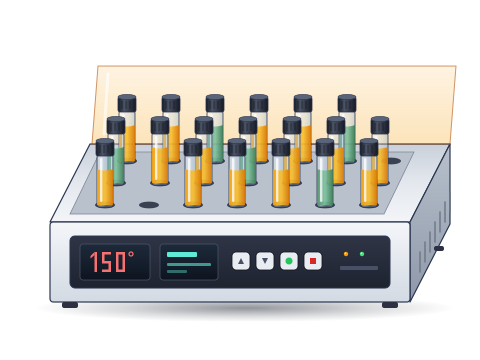
A dry heating block that holds sealed glass tubes at 150 °C for two hours so that potassium dichromate can oxidise the organic matter in water and wastewater samples. It is the heart of the closed reflux COD test.
- Environmental testing laboratories
- Municipal water and wastewater utilities
- Chemical and pharmaceutical effluent treatment
- Food and beverage processing
- Textile, pulp and paper, and distilleries
PREVENTIVE MAINTENANCE
Maintenance checklist
Daily / each use
- Check the block reaches 150 °C
- Wipe up any spills on the block surface after it has cooled
- Inspect tube wells for debris or glass fragments
Monthly
- Block temperature check with a calibrated thermometer in several wells
- Check timer accuracy against a stopwatch
- Inspect power cord and safety cover
Six-monthly / annual
- Full temperature uniformity check across all wells
- Calibration of the built-in sensor by a qualified service provider
- Electrical safety check
SAFETY
Safety precautions
Before you work on the COD digester
- Digestion reagents contain potassium dichromate (carcinogenic hexavalent chromium), mercuric sulphate (toxic) and concentrated sulphuric acid (corrosive).
- Wear a lab coat, acid-resistant gloves and a face shield when filling and mixing tubes.
- Keep the safety shield closed during digestion and let tubes cool before handling.
- Collect spent digests as hazardous waste containing chromium, mercury and silver; never pour down the drain.
- Keep a spill kit with an acid neutraliser nearby.
In LimsPulse · Calibration Management
Keep every COD digester in control: usage logs, calibration and maintenance schedules, and automatic blocking of overdue instruments.