Petroleum testing
Cloud and Pour Point Apparatus
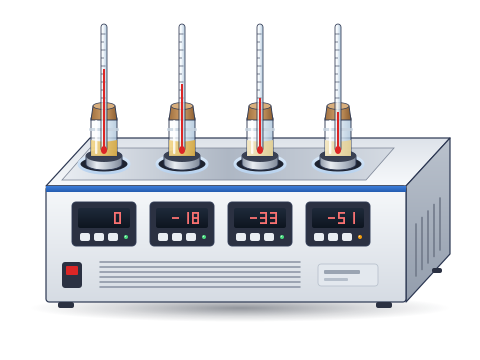
Cools a fuel or oil in a standard glass test jar through a series of cold baths and examines it at set intervals. The cloud point is where wax crystals first appear; the pour point is the lowest temperature at which the sample still flows.
- Petroleum refining
- Lubricant blending
- Fuel distribution in cold climates
- Crude oil production and pipelines
- Independent testing laboratories
PREVENTIVE MAINTENANCE
Maintenance checklist
Daily
- Check bath temperatures and coolant levels
- Wipe condensation and frost from lids and jackets
Weekly
- Check corks, discs and gaskets; replace if soaked or worn
- Clean optical windows on automatic units
Monthly / per SOP
- Run a check sample with known cloud and pour points
- Defrost baths if ice builds up
Annual
- Calibrate or verify thermometers (ice point and reference comparison)
- Service refrigeration unit
- Verify automatic detection against the manual method
SAFETY
Safety precautions
Before you work on the Cloud & pour point tester
- Cold baths and jackets at −30 °C to −70 °C can cause cold burns; wear insulated gloves and safety glasses.
- Alcohol or other low-temperature coolants are flammable; keep ignition sources away and keep baths covered.
- Fuels and solvents are flammable; pre-heat pour point samples in a controlled bath or oven, never over an open flame.
- If mercury thermometers are used, have a mercury spill kit available; prefer digital probes where the method permits.
- Ensure refrigeration units are well ventilated and electrically safe around spilled coolant.
In LimsPulse · Calibration Management
Keep every Cloud & pour point tester in control: usage logs, calibration and maintenance schedules, and automatic blocking of overdue instruments.