Bioanalytical
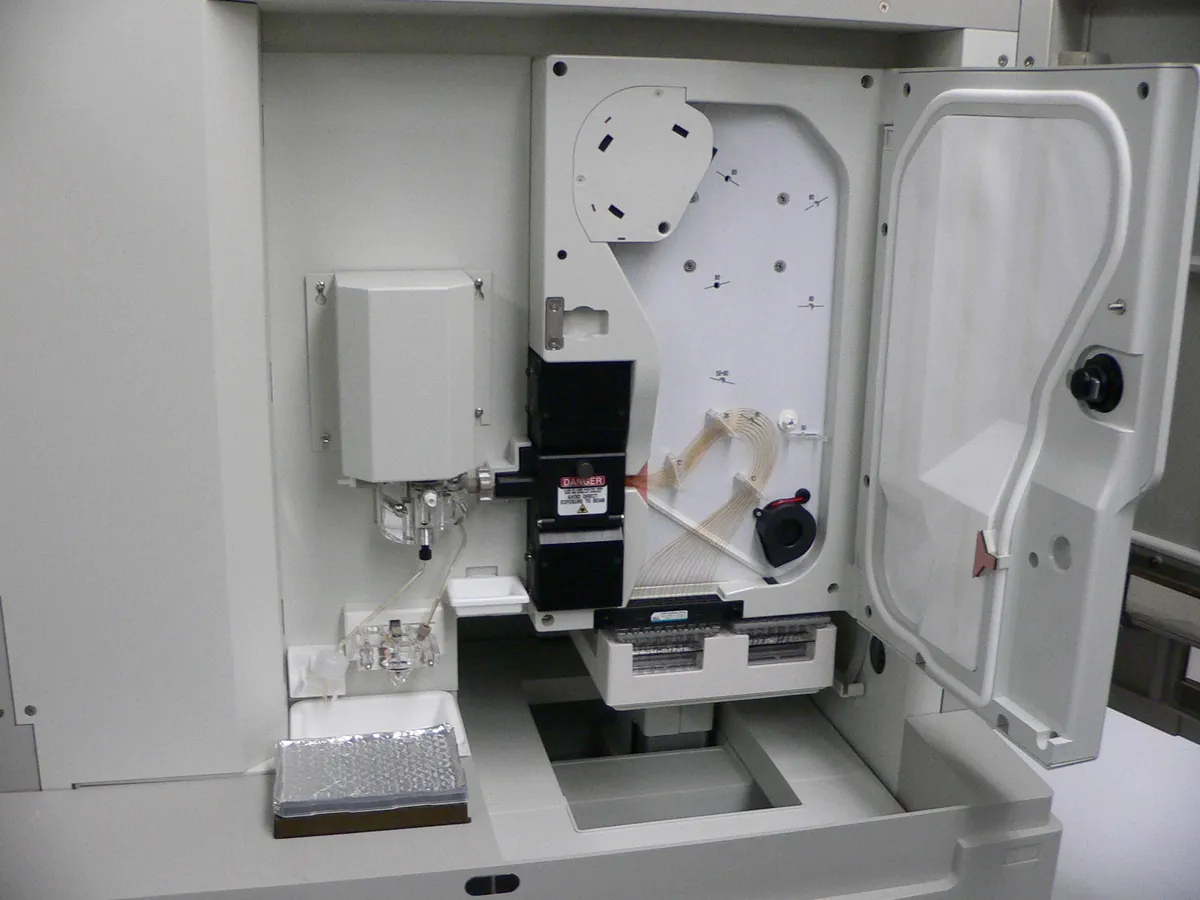
Capillary electrophoresis system
Separates charged molecules in a thin fused-silica capillary under a high voltage (typically up to 30 kV). Used in biologics QC for size purity (CE-SDS), charge variants (cIEF, CZE) and glycan analysis.
- Biotechnology
- Biopharmaceutical
- Pharmaceutical
- Genomics
- Forensic science
- Academic research
TROUBLESHOOTING
Common problems, causes and fixes
Current drops to zero or is unstable
Likely causes
- • Air bubble or blockage in the capillary
- • Empty or wrong buffer vial
- • Broken capillary
What to do
- • Rinse the capillary at high pressure; degas buffers
- • Check vial positions and fill volumes
- • Replace the capillary
Migration times drift
Likely causes
- • Buffer depletion
- • Temperature not controlled
- • Capillary surface change
What to do
- • Replace buffer vials more often
- • Verify cartridge temperature
- • Recondition or replace the capillary
Broad or distorted peaks
Likely causes
- • Joule heating from high current
- • Sample salt too high
- • Sample overloaded
What to do
- • Lower voltage or buffer strength; check cooling
- • Desalt or dilute samples
- • Reduce injection time
Poor area precision
Likely causes
- • Sample viscosity or temperature differences
- • Evaporation from vials
- • Electrokinetic injection bias
What to do
- • Control sample temperature; use an internal standard
- • Use caps and a cooled tray
- • Prefer pressure injection where possible
No peaks
Likely causes
- • Detector lamp off or failed
- • Wrong polarity
- • Capillary window misaligned
What to do
- • Check lamp hours and energy
- • Check method polarity
- • Realign the cartridge window
In LimsPulse · Calibration Management
Keep every CE in control: usage logs, calibration and maintenance schedules, and automatic blocking of overdue instruments.