Bioanalytical
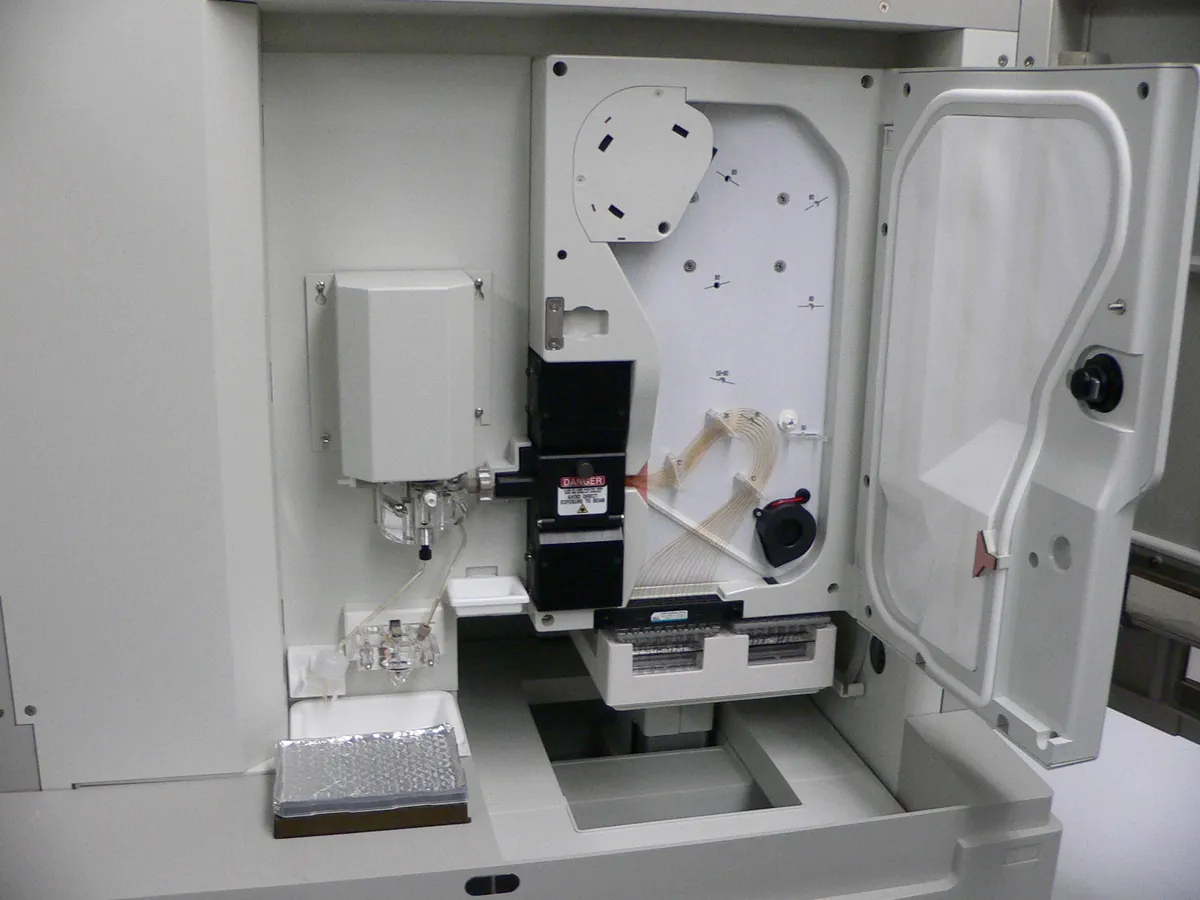
Capillary electrophoresis system
Separates charged molecules in a thin fused-silica capillary under a high voltage (typically up to 30 kV). Used in biologics QC for size purity (CE-SDS), charge variants (cIEF, CZE) and glycan analysis.
- Biotechnology
- Biopharmaceutical
- Pharmaceutical
- Genomics
- Forensic science
- Academic research
PREVENTIVE MAINTENANCE
Maintenance checklist
Each sequence
- Check electrodes and interface block for salt deposits; clean if needed
- Record capillary injection count
Weekly
- Clean electrodes and the interface block
- Check cooling liquid level (if liquid-cooled)
Every 6–12 months
- Verify capillary temperature, high voltage and current with calibrated tools
- Verify detector wavelength accuracy and noise
- Check injection precision with a test mix
As needed
- Replace capillary when performance falls
- Replace detector lamp
- Preventive maintenance by the supplier
SAFETY
Safety precautions
Before you work on the CE
- CE systems use up to about 30 kV. Never defeat safety interlocks.
- SDS, reducing and alkylating agents (such as iodoacetamide) are irritant or toxic. Wear gloves and eye protection.
- UV lamps can harm eyes; keep covers closed.
- Sodium hydroxide and acids used for capillary conditioning are corrosive.
In LimsPulse · Calibration Management
Keep every CE in control: usage logs, calibration and maintenance schedules, and automatic blocking of overdue instruments.