Particle & solid-state
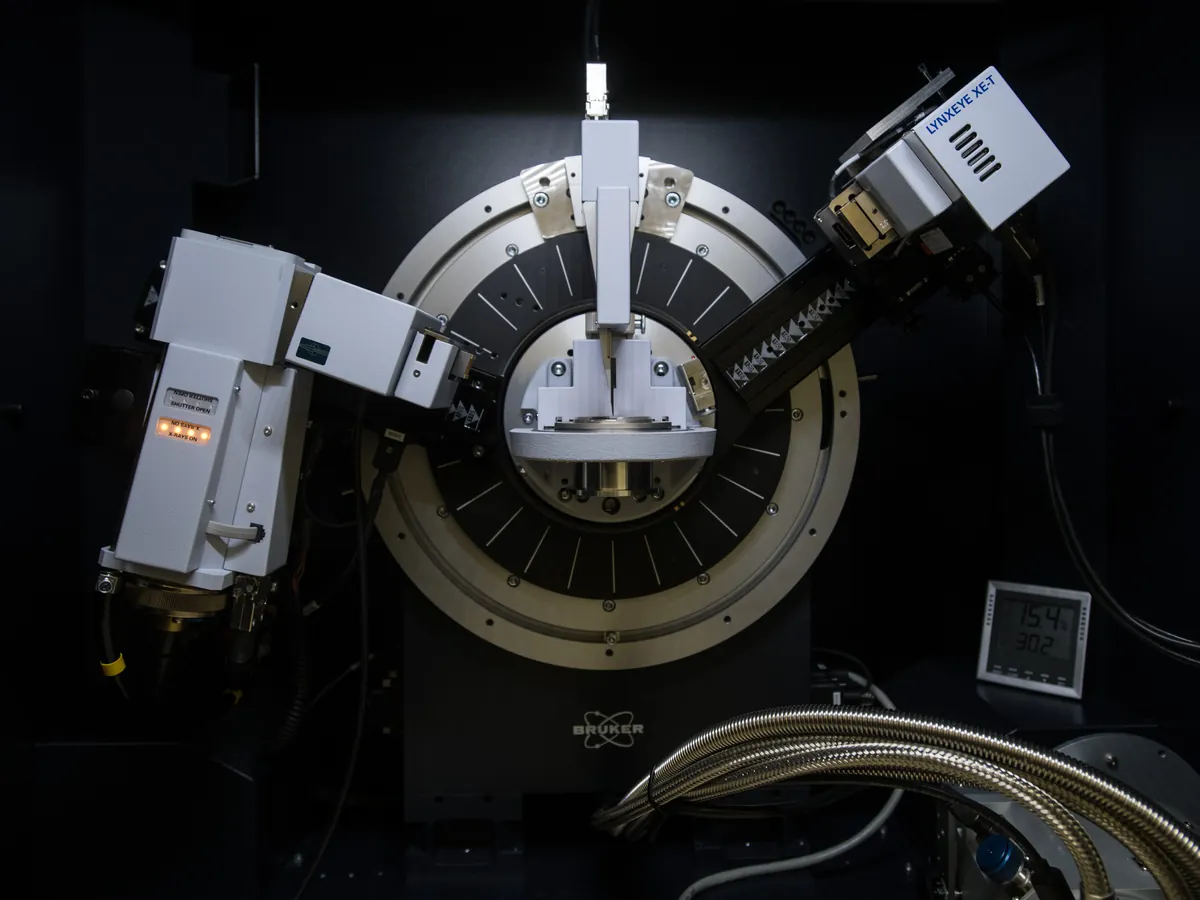
X-ray powder diffractometer (XRPD)
Directs X-rays at a powder and records the angles at which they are diffracted by the crystal lattice. The pattern is a fingerprint of the crystal form, used to identify polymorphs, salts and hydrates and to detect amorphous content.
- Pharmaceutical
- Minerals & mining
- Cement & construction
- Materials science
- Chemicals
- Forensics
TROUBLESHOOTING
Common problems, causes and fixes
All peaks shifted by the same amount
Likely causes
- • Sample surface above or below the reference plane (displacement)
- • Goniometer zero error
What to do
- • Re-prepare the sample level with the holder rim
- • Run the silicon standard; realign if it fails
Relative intensities differ from the reference
Likely causes
- • Preferred orientation
- • Large crystallites (grainy pattern)
- • Different sample thickness
What to do
- • Use back-loading or side-loading and spin the sample
- • Gently reduce particle size
- • Use the same holder and preparation as the reference
Unexpected extra peaks
Likely causes
- • Another polymorph or hydrate present
- • Contamination
- • Peaks from the holder or Kβ radiation
What to do
- • Compare with known forms and investigate
- • Run a blank holder
- • Check the filter or monochromator
Broad hump, few sharp peaks
Likely causes
- • Amorphous or poorly crystalline material
- • Very small crystallite size
What to do
- • Confirm with DSC or other techniques
- • Investigate the process step that caused amorphisation
Low intensity overall
Likely causes
- • Ageing X-ray tube
- • Wrong slits or generator settings
- • Too little sample
What to do
- • Check tube hours and intensity trend
- • Load the correct method
- • Fill the holder properly
In LimsPulse · Calibration Management
Keep every XRPD in control: usage logs, calibration and maintenance schedules, and automatic blocking of overdue instruments.