Particle & solid-state
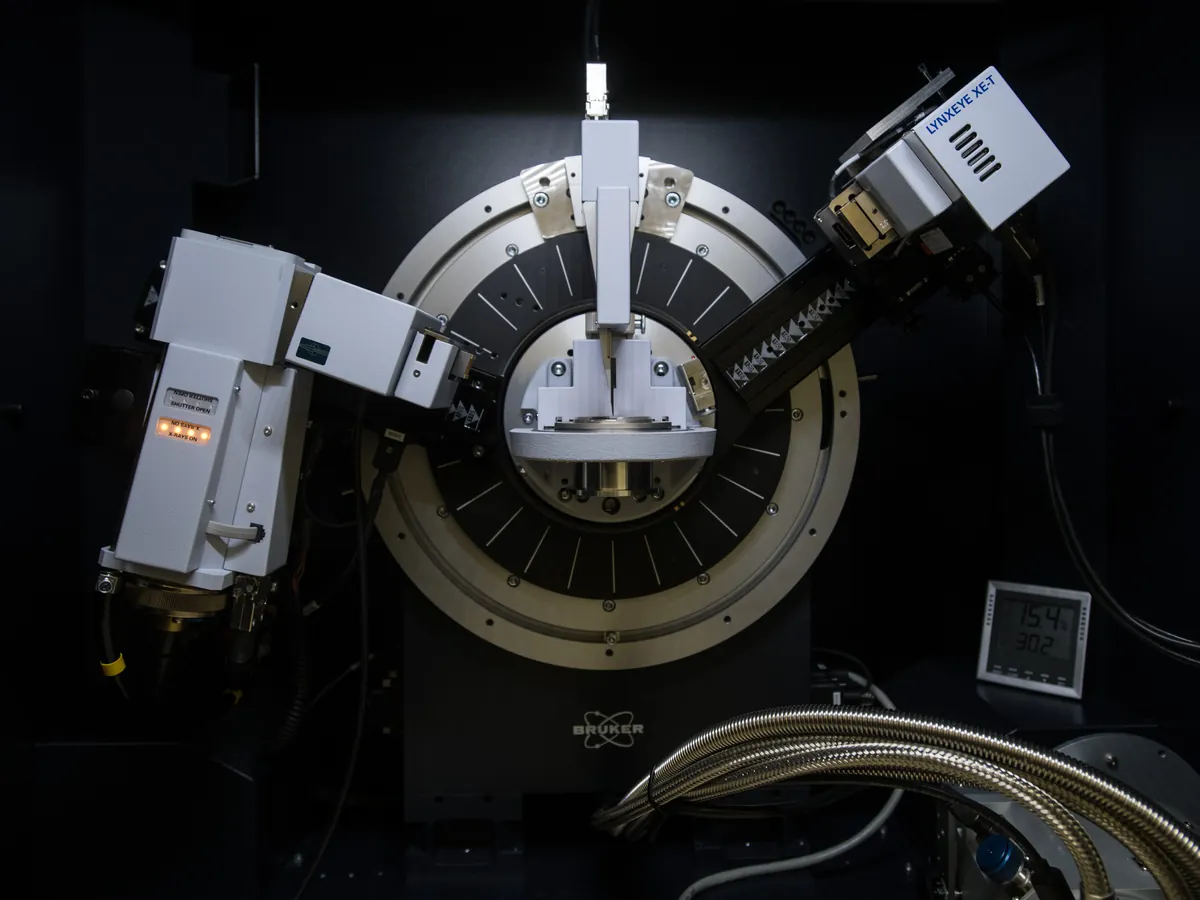
X-ray powder diffractometer (XRPD)
Directs X-rays at a powder and records the angles at which they are diffracted by the crystal lattice. The pattern is a fingerprint of the crystal form, used to identify polymorphs, salts and hydrates and to detect amorphous content.
- Pharmaceutical
- Minerals & mining
- Cement & construction
- Materials science
- Chemicals
- Forensics
PREVENTIVE MAINTENANCE
Maintenance checklist
Daily / each use
- Check chiller and generator status
- Clean sample holders
- Check warning lamps and interlocks
Monthly / quarterly
- Run the silicon (or corundum) standard and trend peak position and intensity
- Check chiller water level and filters
- Radiation leak survey as per local regulations
Annual
- Preventive maintenance and goniometer alignment by the vendor
- X-ray tube condition check (replace when intensity falls)
- Formal angle calibration and radiation safety survey
SAFETY
Safety precautions
Before you work on the XRPD
- XRPD produces ionising radiation. Only trained, authorised users may operate it, and the site must follow local radiation regulations and licensing.
- Never bypass interlocks or open the enclosure while the shutter is open.
- Wear a personal dosimeter where required and follow periodic leak surveys.
- The generator uses high voltage; only service engineers may open panels.
- Handle potent APIs in a containment holder or ventilated enclosure; some holders can be sealed with a film.
In LimsPulse · Calibration Management
Keep every XRPD in control: usage logs, calibration and maintenance schedules, and automatic blocking of overdue instruments.