Vacuum Oven
A sealed, heated chamber connected to a vacuum pump. Lowering the pressure lets samples dry at a lower temperature, which suits heat-sensitive materials and LOD tests done 'in vacuum'.
- Pharmaceutical
- Electronics
- Chemicals
- Food
- Research labs
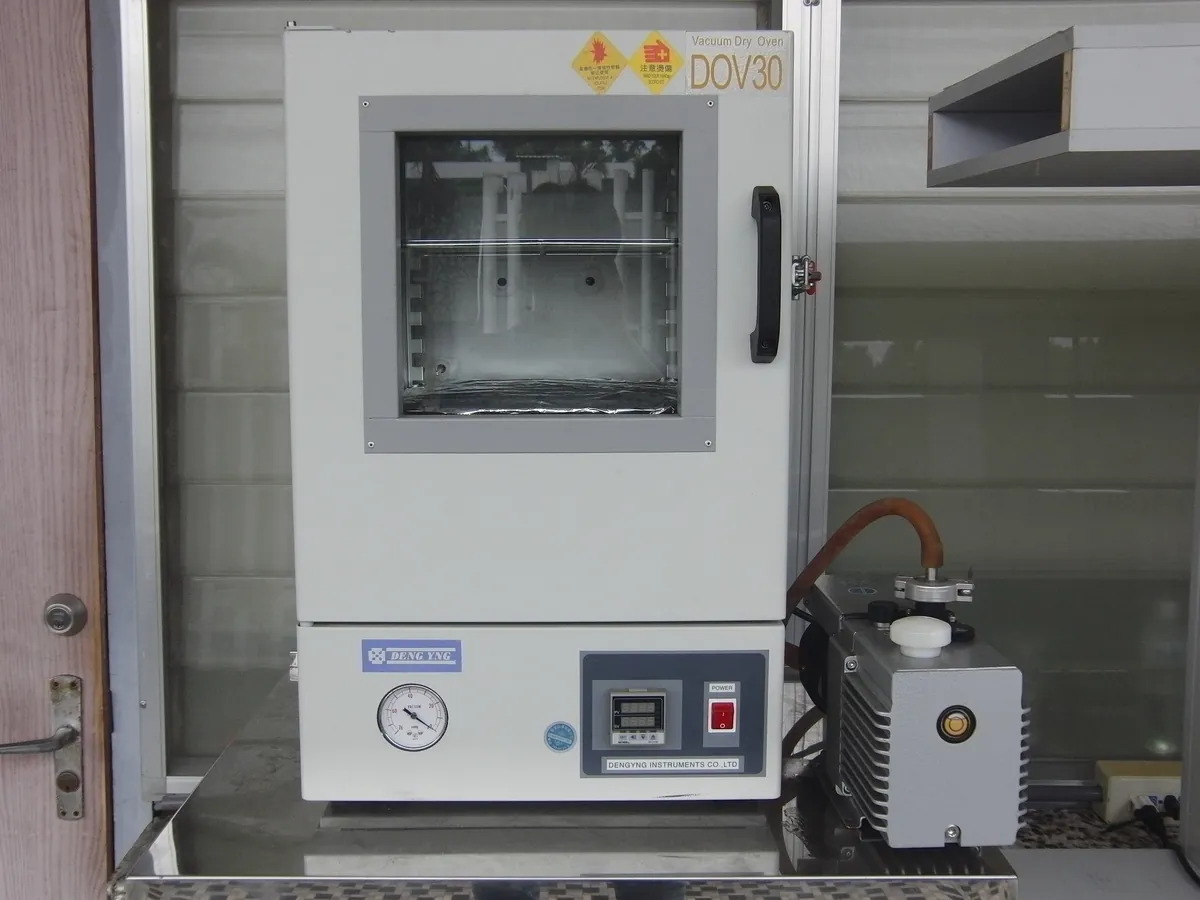
How Vacuum oven works
The boiling point of a liquid falls as pressure falls. By heating the sample and lowering the pressure, water and solvents evaporate quickly at a moderate temperature and are drawn away by the pump.
The path of a sample
- 01
Heat
The shelves are brought to the set temperature.
- 02
Load
Samples in tared weighing bottles are placed on the shelves.
- 03
Evacuate
The pump lowers the pressure to the value in the method.
- 04
Dry
Samples are held for the stated time.
- 05
Release
The vacuum is released slowly with dry air or nitrogen.
- 06
Weigh
Bottles are closed, cooled in a desiccator and weighed.
Main parts and what they do
Chamber
Thick-walled steel chamber that withstands vacuum.
Heated shelves
Transfer heat to the sample containers by contact.
Door with seal and window
Gasket seal holds vacuum; the window lets you see the samples.
Vacuum gauge
Shows chamber pressure (analogue or digital).
Vacuum and vent valves
Connect the chamber to the pump and let air or nitrogen back in slowly.
Vacuum pump
Oil-sealed or dry pump that lowers the pressure.
Temperature controller and sensor
Hold the shelf or chamber temperature at the set point.
Terms every analyst should know
Boiling point and pressure
Lower pressure means a lower boiling point, so water evaporates faster at the same temperature.
Absolute pressure
Pressure measured from a perfect vacuum, often in mbar or kPa. Methods usually state the pressure to reach, for example 'not exceeding a set value'.
Conduction heating
With little air present, samples receive heat mainly through contact with the shelves.
Cold trap
A cooled trap between the oven and pump that condenses vapours and protects the pump.
Keep every Vacuum oven in control: usage logs, calibration and maintenance schedules, and automatic blocking of overdue instruments.