Spectroscopy
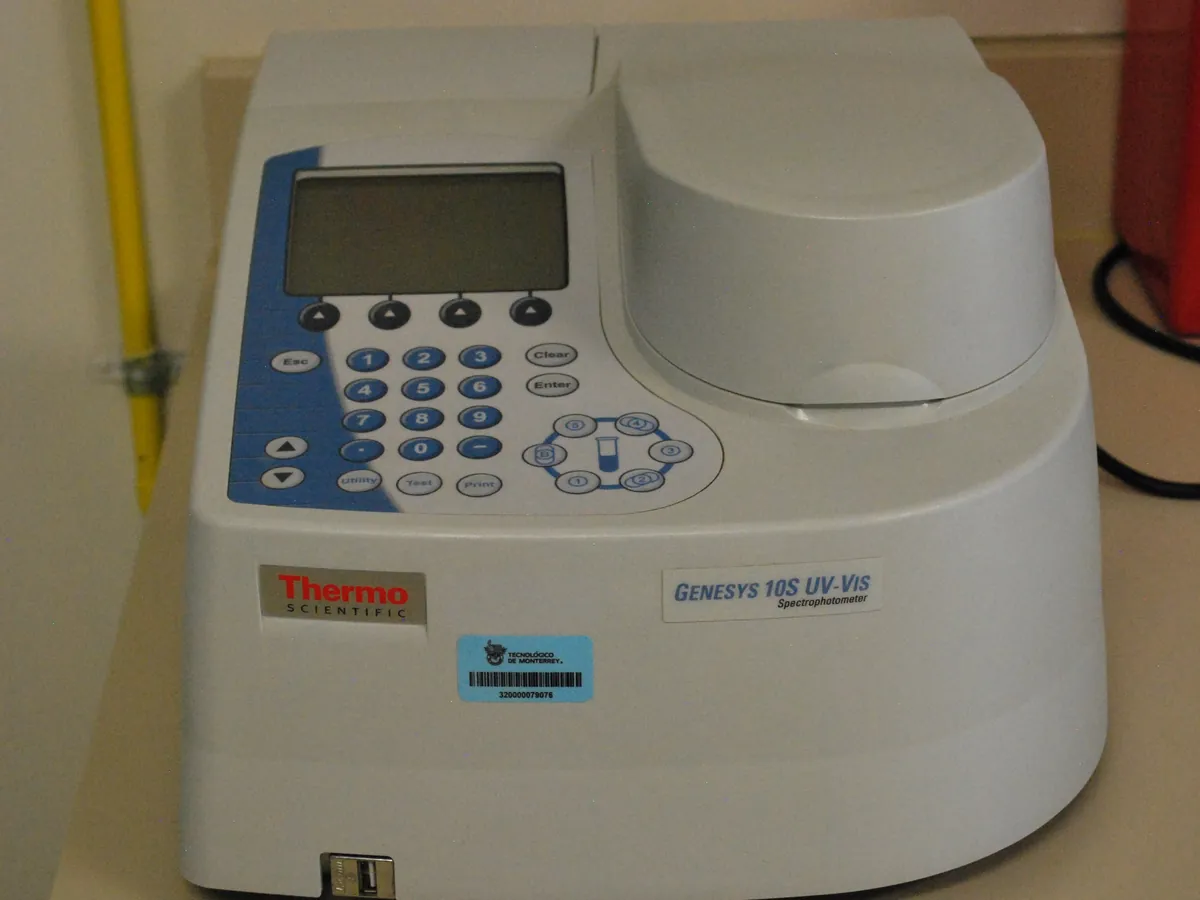
UV-Visible Spectrophotometer
Measures how much ultraviolet or visible light a solution absorbs at each wavelength. Used in pharma QC for identification, assay, dissolution and many quick quantitative tests.
- Pharmaceutical
- Biotech
- Food & beverage
- Environmental
- Chemicals
- Academic research
Follow your site SOP
This is a typical operating sequence for learning. Your instrument model and approved SOP take precedence.
STAGE 1
Before you start
- 1Check the instrument is within its calibration due date and the logbook has no open issues.
- 2Select matched quartz cuvettes for UV work and check they are clean, unscratched and free of fingerprints.
- 3Prepare the blank using the same solvent (and the same lot) as the sample and standard.
- Handle cuvettes only by the frosted or ribbed sides; fingerprints on the optical faces absorb light.
STAGE 2
Start-up
- 1Switch on the instrument and let it complete its self-test (initialisation).
- 2Allow the lamps to warm up as the manufacturer recommends (commonly 15–30 minutes) so the baseline is stable.
- 3Set the wavelength, scan range, spectral bandwidth and measurement mode from the method.
- 4Run a baseline correction or auto-zero with the blank in both cell positions.
- Do not open the lamp housing while the lamps are on; the deuterium lamp emits intense UV.
STAGE 3
Measuring samples
- 1Rinse the sample cuvette two or three times with the solution to be measured, then fill it to about three-quarters full.
- 2Wipe the outside with lint-free tissue and check for air bubbles.
- 3Place the cuvette in the holder with the same orientation each time and read the absorbance or record the spectrum.
- 4Check the blank again periodically during long runs to confirm the baseline has not drifted.
- 5Keep readings within the linear range of the method; dilute samples that read above it.
- Absorbance readings above about 2 are unreliable because so little light reaches the detector; stray light makes them read low.
- Volatile solvents can evaporate from an uncapped cuvette and change the concentration; cap the cell or measure promptly.
STAGE 4
Shutdown
- 1Rinse cuvettes with solvent and then water (or a suitable volatile solvent) and let them dry upside down or store them in their case.
- 2Clean any spills in the sample compartment.
- 3Switch off the lamps and the instrument as per the SOP, and complete the usage log.
In LimsPulse · Calibration Management
Keep every UV-Vis in control: usage logs, calibration and maintenance schedules, and automatic blocking of overdue instruments.