Materials & polymer testing
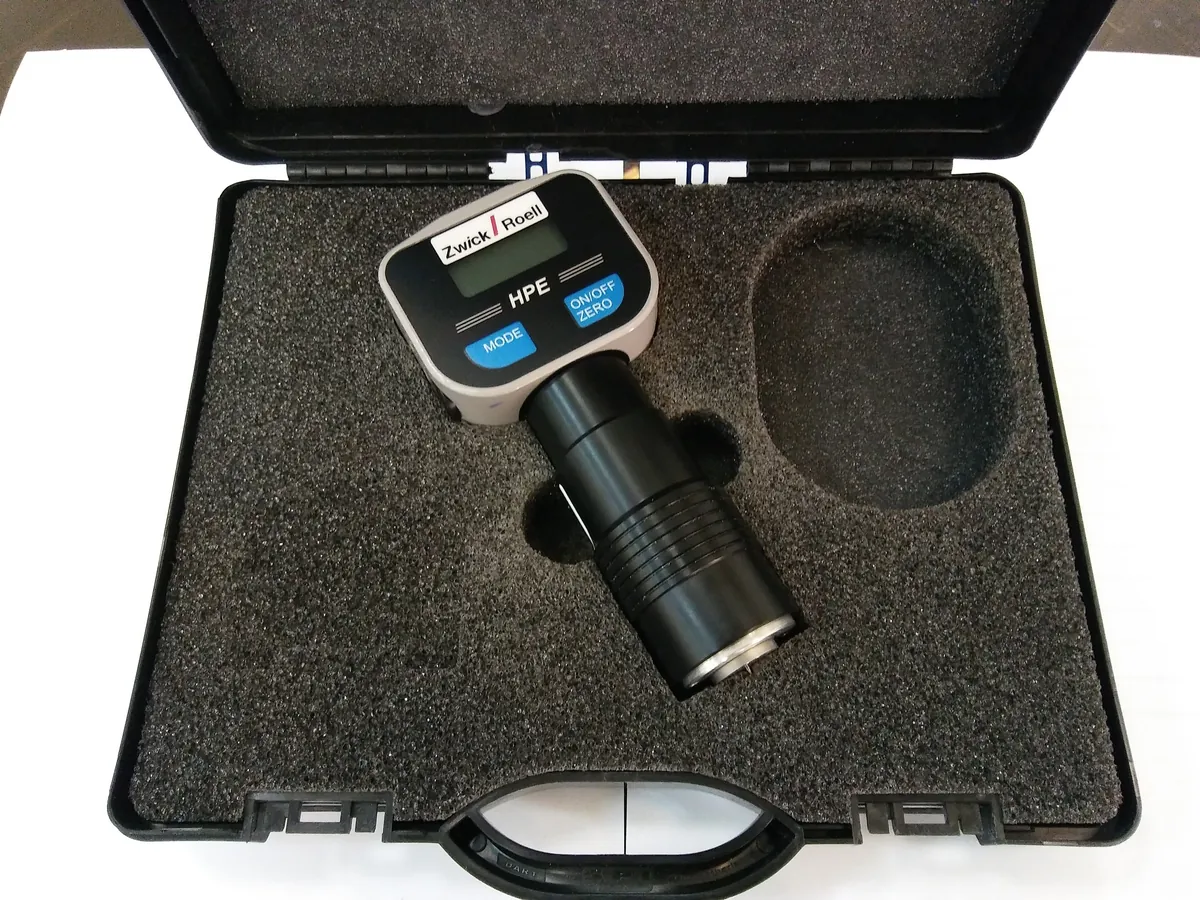
Shore durometer
Presses a spring-loaded indentor into rubber or plastic and reads how far it goes in on a 0–100 scale. Shore A is used for soft rubbers and elastomers; Shore D for hard rubbers and rigid plastics.
- Rubber & elastomers
- Polymers & plastics
- Automotive
- Footwear
- Packaging
- Medical devices
TROUBLESHOOTING
Common problems, causes and fixes
Reading not 0 with indentor free
Likely causes
- • Dial out of adjustment
- • Dirt behind the indentor
- • Damaged spring
What to do
- • Re-zero if the design allows
- • Clean the indentor bore
- • Send for repair and recalibration
Readings lower than expected
Likely causes
- • Specimen too thin or curved
- • Durometer tilted
- • Indentor tip worn
- • Reading taken late (creep)
What to do
- • Use a thicker or plied specimen as allowed
- • Use an operating stand
- • Check indentor extension and shape
- • Keep to the stated dwell time
Large scatter between readings
Likely causes
- • Hand-held application
- • Uneven or porous specimen
- • Readings too close together or near edges
What to do
- • Use the stand and a fixed mass
- • Prepare flat, smooth specimens
- • Space readings and keep away from edges
Reference block reads out of range
Likely causes
- • Block aged or out of validity
- • Spring force drifted
- • Temperature not controlled
What to do
- • Replace the block
- • Recalibrate the durometer
- • Condition at 23 °C
In LimsPulse · Calibration Management
Keep every Durometer in control: usage logs, calibration and maintenance schedules, and automatic blocking of overdue instruments.