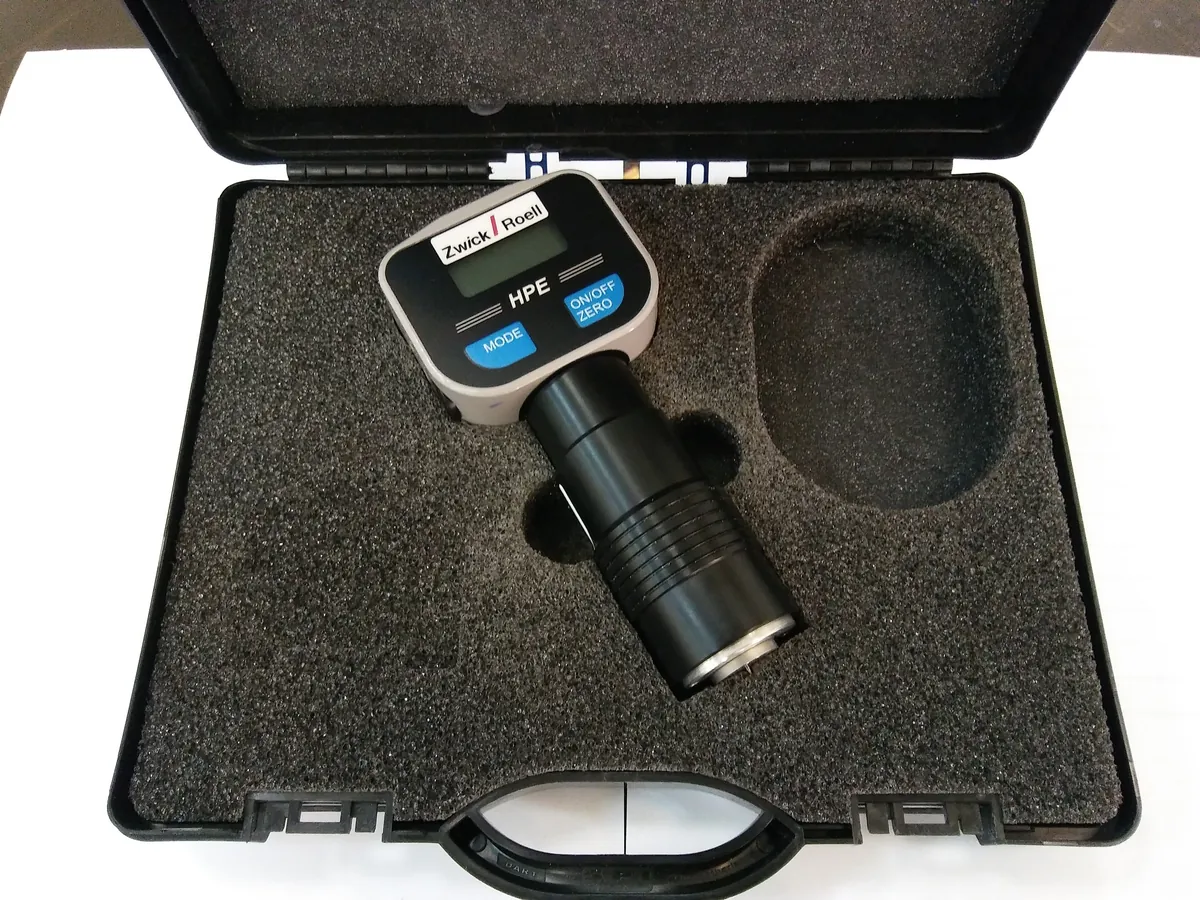
Shore durometer
Presses a spring-loaded indentor into rubber or plastic and reads how far it goes in on a 0–100 scale. Shore A is used for soft rubbers and elastomers; Shore D for hard rubbers and rigid plastics.
- Rubber & elastomers
- Polymers & plastics
- Automotive
- Footwear
- Packaging
- Medical devices
Test your Durometer knowledge
Multiple-choice questions
Pick an answer to see whether you are right and why.
Q1. Which Shore scale is used for soft rubbers such as O-rings?
basicQ2. What does a durometer reading of 100 mean?
basicQ3. Why must the dwell time be stated with a Shore hardness result?
basicQ4. What is the nominal spring force of a Shore A durometer at a reading of 60?
intermediateQ5. A specimen thinner than the minimum thickness is tested. What usually happens?
intermediateQ6. Shore A readings on a material are above 90. What should you do?
intermediateQ7. Why is an operating stand preferred to hand-held use?
advanced
Viva questions
Think of your answer first, then open it to compare.
1. How do you check a durometer before use each day?
Check it reads 0 with the indentor free and about 100 on flat glass, inspect the indentor tip, and measure a reference rubber block to confirm the reading is within its tolerance.
2. Can you convert Shore A to Shore D or to IRHD?
Not exactly. The scales use different indentors, forces and principles. Approximate charts exist but results should be measured on the scale the specification requires.
3. What do you check when calibrating a durometer?
Indentor extension (about 2.5 mm), indentor shape and tip dimensions, and spring force at several scale points against the formula in the standard, then a final check on reference blocks.
Keep every Durometer in control: usage logs, calibration and maintenance schedules, and automatic blocking of overdue instruments.