Materials & polymer testing
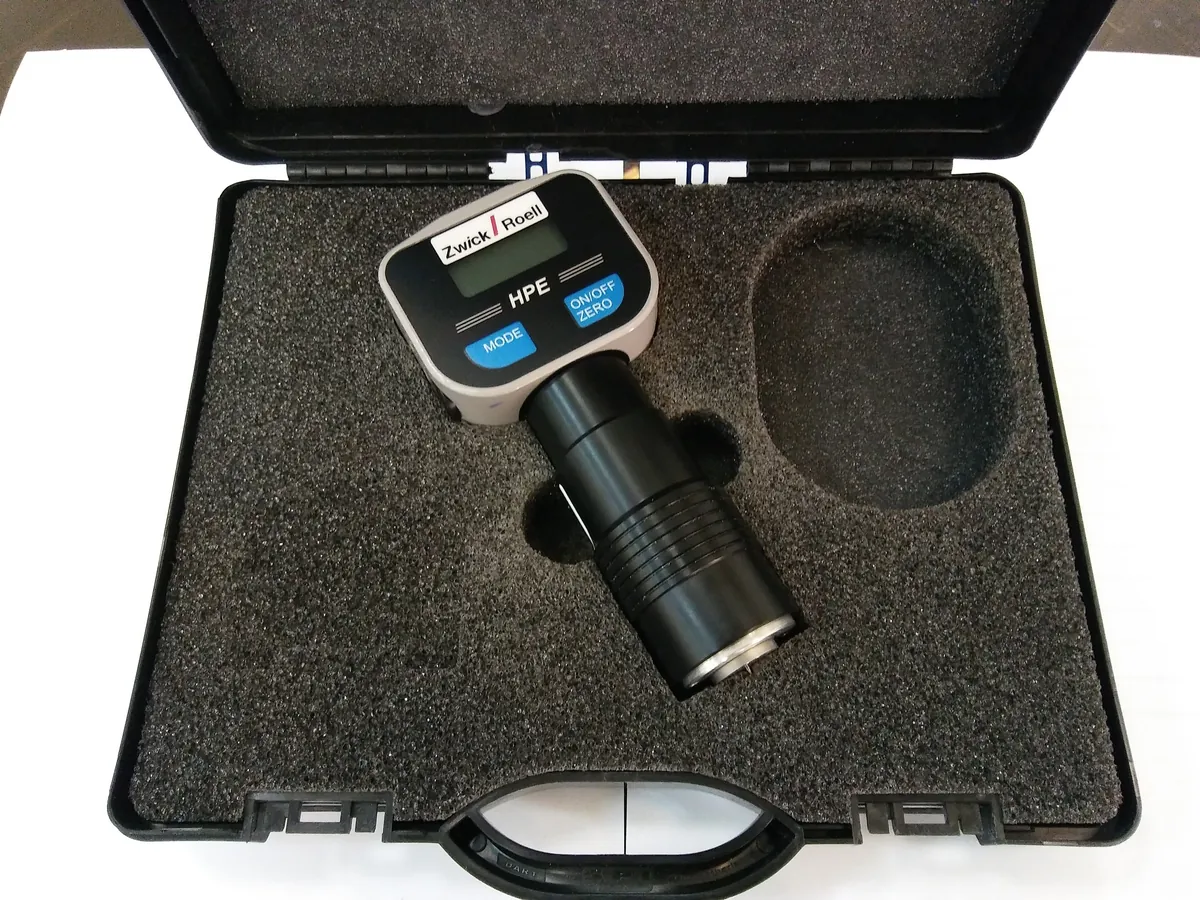
Shore durometer
Presses a spring-loaded indentor into rubber or plastic and reads how far it goes in on a 0–100 scale. Shore A is used for soft rubbers and elastomers; Shore D for hard rubbers and rigid plastics.
- Rubber & elastomers
- Polymers & plastics
- Automotive
- Footwear
- Packaging
- Medical devices
PREVENTIVE MAINTENANCE
Maintenance checklist
Daily / each use
- Check zero and the reading on a reference test block
- Clean the indentor and foot
- Inspect the indentor tip for damage
Monthly
- Check the operating stand's descent speed and level
- Check reference blocks are within their validity
Annual
- Full calibration of indentor extension, indentor geometry and spring force at several scale points by an accredited lab
- Replace worn indentors or springs
SAFETY
Safety precautions
Before you work on the Durometer
- The indentor is sharp, especially on Shore D. Keep fingers clear and fit the protective cap after use.
- Handle heavy masses on the operating stand carefully.
In LimsPulse · Calibration Management
Keep every Durometer in control: usage logs, calibration and maintenance schedules, and automatic blocking of overdue instruments.