Fridge / freezer · Calibration procedure
Temperature mapping
Logs temperature at several positions inside the refrigerator or freezer to find warm and cold spots and prove that the storage area stays within its range.
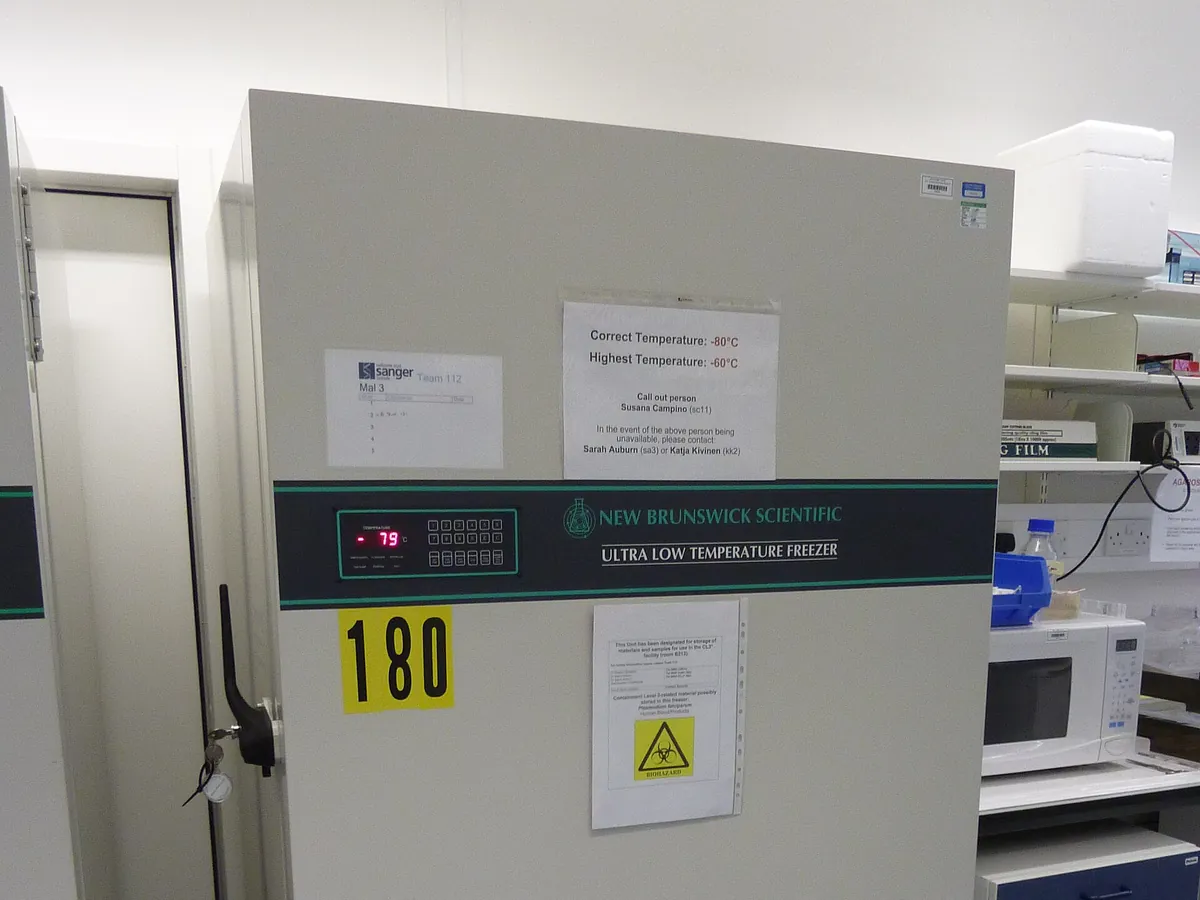
PURPOSE
Why this is checked
Temperature near the door, the cooling plate and the top shelf can differ from the display reading. Mapping proves which positions are safe for storing material and where to place the monitoring probe.
Frequency
At qualification, then typically annually, and after relocation, major repair or a change in use, as defined in your SOP.
Learn how the Fridge / freezer worksYOU WILL NEED
Standards & tools
- Calibrated temperature data loggers traceable to national standards (commonly 9 for a standard unit, more for large units and cold rooms)
BEFORE YOU START
Prerequisites
- Display probe calibrated
- Mapping protocol approved (positions, duration, interval, door-opening test)
- Unit stable for at least 24 hours
PROCEDURE
Step by step
- 1Place loggers at the corners and centre of the top, middle and bottom shelves, near the door and next to the display probe.
- 2Log every 1–5 minutes for the protocol period, commonly 24–72 hours, empty and then loaded.
- 3Include a door-opening test and a defrost cycle (freezers) within the logging period.
- 4Optionally switch off power for a short period to measure hold-over time, if the protocol requires.
- 5Download data; report minimum, maximum and mean at each logger and the recovery time.
RECORD
Example observation table
| Logger | Position | Min (°C) | Max (°C) | Mean (°C) |
|---|---|---|---|---|
| T1 | Top front | 3.9 | 6.8 | 4.8 |
| T2 | Top rear | 4.1 | 6.2 | 5.1 |
| T3 | Middle rear (near cooling plate) | 2.9 | 5.4 | 4.2 |
| T4 | Middle front | 4.6 | 6.7 | 5.6 |
| T5 | Middle centre | 3.8 | 5.6 | 4.5 |
| T6 | Bottom rear | 4.2 | 5.9 | 5.0 |
| T7 | Door shelf | 4.9 | 7.6 | 6.1 |
| T8 | Bottom front | 3.7 | 5.8 | 4.6 |
| T9 | Next to display probe | 4.3 | 6.3 | 5.3 |
CALCULATION
How to calculate the result
Overall min = lowest logger minimum; Overall max = highest logger maximum; Mean = average of logger means
- Range 2–8 °C
- Overall minimum = 2.9 °C (T3), above 2 °C
- Overall maximum = 7.6 °C (T7, door shelf), below 8 °C but close to the limit
- Mean of logger means = (4.8 + 5.1 + 4.2 + 5.6 + 4.5 + 5.0 + 6.1 + 4.6 + 5.3) ÷ 9 = 45.2 ÷ 9 = 5.02 °C
- The unit passes; the door shelf is the warmest position and should not be used for critical material
ACCEPTANCE CRITERIA
Pass if
- All loggers within the storage range for the whole study: typically 2–8 °C for a refrigerator and as defined (e.g. −25 °C to −10 °C, or the product label range) for a freezer.
- Recovery after the door-opening test within the time in the protocol.
IF IT FAILS
What to do
- Restrict storage to positions that passed, or remove the unit from use.
- Service the unit (door seal, fan, controller) and repeat mapping.
- Assess the impact on material stored since the last passing mapping.
In LimsPulse · Calibration Management
LimsPulse schedules this calibration, records the result against limits, and blocks the instrument everywhere if it fails or goes overdue.