Physical testing
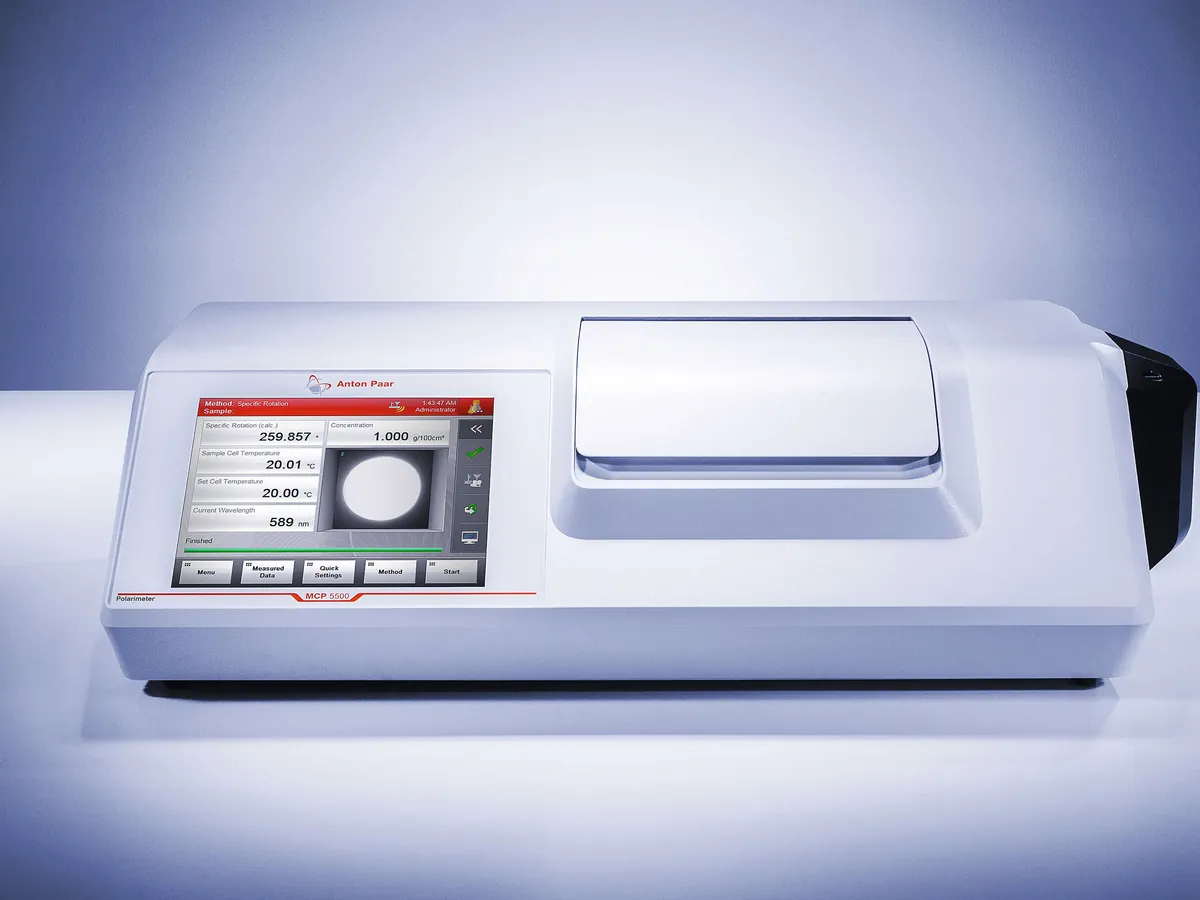
Polarimeter
Measures how much a solution of a chiral substance rotates the plane of polarised light. The result is used to calculate specific optical rotation, an identity and purity test for many APIs.
- Pharmaceutical
- Food & sugar
- Flavours & fragrances
- Chemicals
- Academic research
TROUBLESHOOTING
Common problems, causes and fixes
Unstable or noisy reading
Likely causes
- • Air bubble in the light path
- • Turbid sample
- • Temperature not yet stable
What to do
- • Refill the tube and move bubbles into the bubble trap
- • Filter the solution
- • Wait until the cell temperature is stable
Blank does not read zero
Likely causes
- • Dirty or strained windows
- • Tube placed in a different orientation
- • Contaminated solvent
What to do
- • Clean or replace the windows
- • Always insert the tube the same way
- • Use fresh solvent
Low light / 'low transmission' error
Likely causes
- • Strongly coloured or concentrated sample
- • Lamp ageing
- • Dirty optics
What to do
- • Use a shorter tube or dilute as the monograph allows
- • Replace the lamp
- • Clean the windows and compartment
Quartz plate check out of limit
Likely causes
- • Plate dirty or at the wrong temperature
- • Instrument scale drift
- • Wrong wavelength selected
What to do
- • Clean the plate and let it equilibrate
- • Repeat; if it still fails, call service
- • Check the wavelength setting
Results drift during a series
Likely causes
- • Mutarotation of the sample
- • Room or cell temperature changing
- • Evaporation of a volatile solvent
What to do
- • Measure at the time the monograph states
- • Check temperature control
- • Cap the tube and measure quickly
In LimsPulse · Calibration Management
Keep every Polarimeter in control: usage logs, calibration and maintenance schedules, and automatic blocking of overdue instruments.