Physical testing
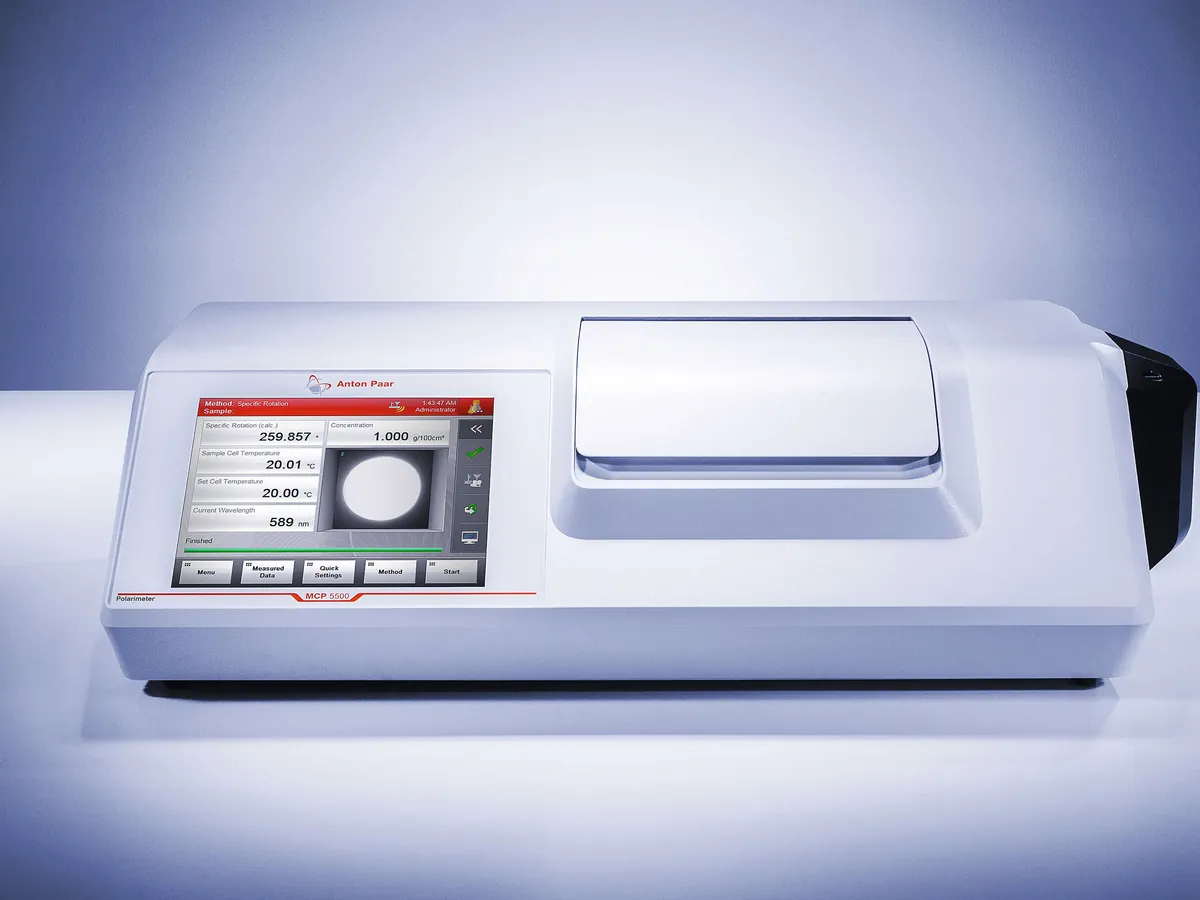
Polarimeter
Measures how much a solution of a chiral substance rotates the plane of polarised light. The result is used to calculate specific optical rotation, an identity and purity test for many APIs.
- Pharmaceutical
- Food & sugar
- Flavours & fragrances
- Chemicals
- Academic research
Follow your site SOP
This is a typical operating sequence for learning. Your instrument model and approved SOP take precedence.
STAGE 1
Before you start
- 1Check the calibration label and that the daily check with a quartz plate (if required) has passed.
- 2Switch on and allow the lamp and temperature control to stabilise (often 15–30 minutes).
- 3Set the measuring temperature and wavelength stated in the monograph.
- 4Clean the tube and windows; check the windows are not scratched.
- Never use a cracked or scratched tube; window strain itself rotates light.
STAGE 2
Blank / zero
- 1Fill the tube with the solvent used for the sample, avoiding bubbles.
- 2Place the tube in the instrument with the same orientation you will use for the sample.
- 3Take the reading and zero the instrument, or record the blank value for subtraction.
- Bubbles in the light path give unstable or wrong readings; tilt the tube so bubbles move into the bubble trap.
STAGE 3
Measurement
- 1Rinse the tube two or three times with the sample solution, then fill it.
- 2Place the tube in the instrument and wait for the temperature to reach the set value.
- 3Take at least five readings, or the number your SOP asks for, and record the mean.
- 4Subtract the blank, if it was not zeroed, and calculate the specific optical rotation.
- Filter turbid solutions before filling; particles scatter light.
- Measure within the time stated in the monograph; some substances change rotation in solution (mutarotation).
STAGE 4
After use
- 1Empty the tube, rinse with solvent and water, and dry it.
- 2Store tubes and quartz plates in their cases.
- 3Complete the instrument log.
In LimsPulse · Calibration Management
Keep every Polarimeter in control: usage logs, calibration and maintenance schedules, and automatic blocking of overdue instruments.