Multiparameter Water Quality Meter
A portable or benchtop meter, often with a submersible sonde, that measures several water quality parameters at once, such as pH, conductivity, dissolved oxygen, temperature, turbidity and ORP.
- Environmental monitoring agencies
- Water and wastewater utilities
- Aquaculture
- Mining and industrial effluent
- Research and education
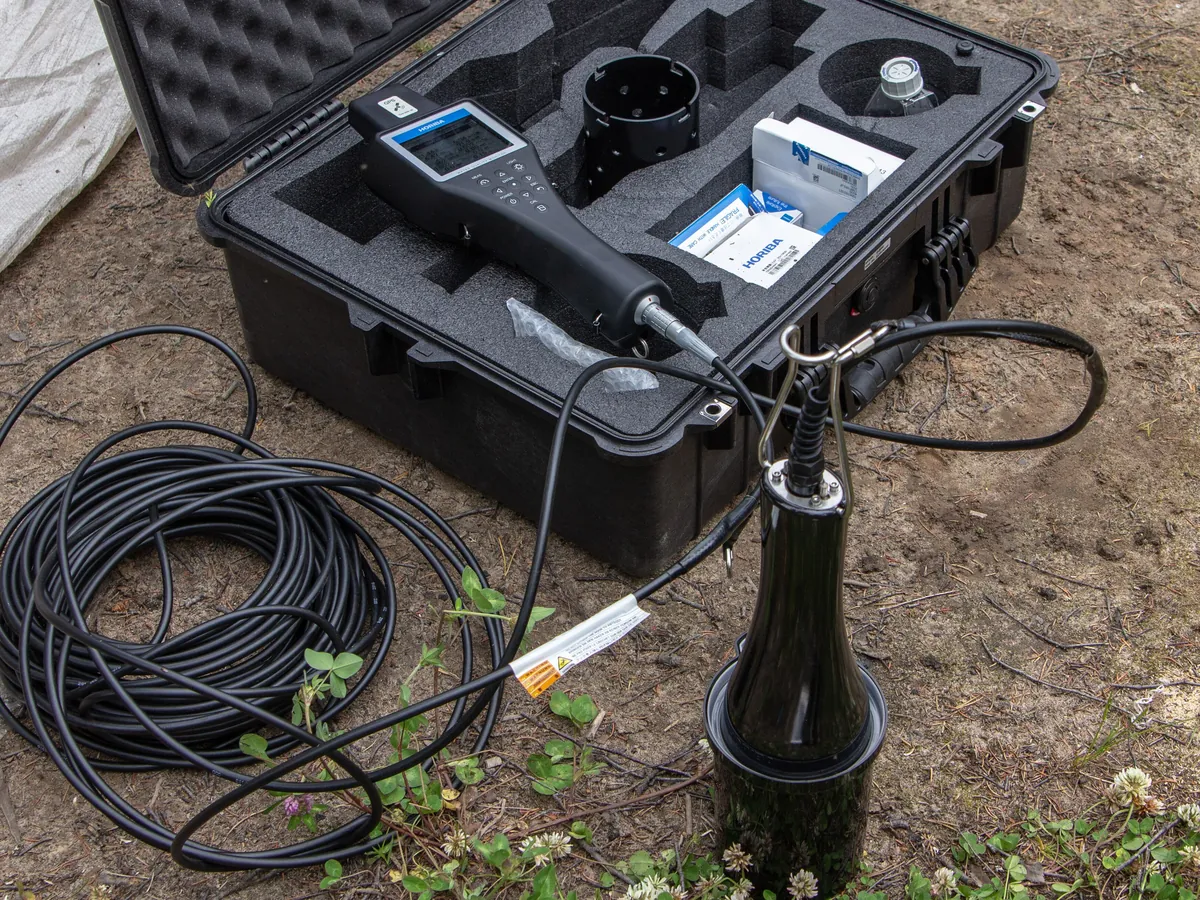
What is Multiparameter meter?
Many water quality parameters change quickly once a sample is taken. Temperature, pH and dissolved oxygen should ideally be measured on site. A multiparameter meter carries several sensors so that a field team can measure them together in one dip, or log them continuously in a river, lake or treatment tank.
Each sensor works on its own principle: a glass electrode for pH, a conductivity cell, an optical (luminescent) or membrane sensor for dissolved oxygen, a nephelometric sensor for turbidity, and a thermistor for temperature. The meter applies temperature compensation and stores readings with time, date and often GPS location.
Because every sensor drifts, the meter must be calibrated with standards before use, usually each day of field work. Results are only as good as the calibration and the care taken with the probes.
Used for
- Field measurement of pH, temperature, conductivity and DO during sampling of rivers, lakes and groundwater
- Process monitoring in aeration tanks and treatment plant outfalls
- Profiling lakes and reservoirs at different depths
- Long-term unattended logging in surface water stations
- Checking effluent before discharge
How it works
- 01
Calibrate
Each sensor is calibrated with fresh standards (buffers, conductivity standard, air-saturated water, turbidity standards).
- 02
Deploy
The sonde is placed in the water, or a sample is taken in a clean container.
- 03
Equilibrate
Readings are allowed to stabilise, with gentle movement for DO sensors that need flow.
- 04
Read and log
Values are recorded with temperature, time and location.
- 05
Post-check
A standard is re-measured at the end of the day to confirm the sensors have not drifted.
Advantages
- Several parameters in one reading, saving time on site
- Measures unstable parameters before they change in the bottle
- Data logging with time and location stamps
- Rugged, waterproof and battery powered for field use
Limitations
- Each sensor needs its own calibration and maintenance
- Sensors foul quickly in wastewater (biofilm, oil, solids)
- Accuracy is lower than dedicated laboratory instruments for some parameters
- Replacement sensors and sensor caps are costly
- Results depend on correct temperature compensation and adequate equilibration time
1 calibration procedure
Methods that use Multiparameter meter
Keep every Multiparameter meter in control: usage logs, calibration and maintenance schedules, and automatic blocking of overdue instruments.